
Views: 0 Author: Site Editor Publish Time: 2026-07-09 Origin: Site


Fleet managers and equipment engineers face a constant operational challenge daily. You must protect high-displacement engines in extreme particulate environments. At the same time, you need to avoid crippling your budget through endless consumable replacements. Historically, liquid-based filtration dominated this harsh landscape. Today, it has evolved into a highly specialized solution tailored for specific applications.
This article provides a comprehensive technical and commercial evaluation of these rugged systems. We will explore exactly when and why you should utilize them over modern dry alternatives. You will learn about bulk dust capacity, intricate operational mechanisms, and essential maintenance realities. We will also help you weigh the financial impacts of replacing paper elements versus allocating labor for servicing. By the end, you will know exactly how to safeguard your fleet efficiently.
Bulk Dust Capacity: Oil-bath filters excel in environments with massive airborne particulate loads where standard dry filters would clog rapidly.
Supply Chain Independence: They eliminate the need for continuous restocking of proprietary paper filter elements, requiring only standard engine oil for maintenance.
Labor vs. Consumables Trade-off: While saving on replacement parts, oil-bath systems require meticulous, labor-intensive maintenance and proper waste-oil disposal.
Application Specificity: Best suited for stationary agricultural processing, legacy mining equipment, and remote operations with poor access to spare parts.
Abrasive dust presents a constant, devastating threat to heavy machinery operating worldwide. Silica particles act precisely like microscopic sandpaper inside a hot engine block. When these contaminants bypass weak intake seals, they enter the highly sensitive combustion chamber directly. Cylinder scoring happens almost immediately as the piston moves up and down. Piston rings wear down prematurely, losing their critical seal against the cylinder wall. Your equipment loses compression quickly, burning excess fuel and producing weak power. Eventually, operators face complete engine rebuilds, which paralyze operations. These catastrophic mechanical failures drain operational budgets rapidly. They also cause unacceptable project delays, upsetting clients and ruining schedules.
Standard filtration methods often create a massive consumable bottleneck in the field. Think about an agricultural harvester working relentlessly in a dry wheat field during late summer. Consider an open-pit mining excavator surrounded constantly by fractured rock dust. Airborne particulate loads remain incredibly thick in these specific locations. Standard dry paper elements clog rapidly under these extreme operating conditions. Operators must stop the machine and replace them constantly to prevent suffocation. This frequent replacement cycle leads to severe, costly downtime. You spend too much money buying and shipping spare parts. You need a highly durable heavy duty air filter to survive these brutal daily environments without failing.
What defines success in these harsh, uncompromising zones? A successful filtration system must consistently achieve three major goals. First, it must provide sustained, steady intake airflow under all circumstances. It cannot choke the engine under heavy load or acceleration. Second, it needs immense bulk dust holding capacity to trap pounds of dirt. Finally, it must keep ongoing operational expenses highly manageable. Fleet managers must carefully balance the savings on spare replacement parts against the labor hours required for routine maintenance.
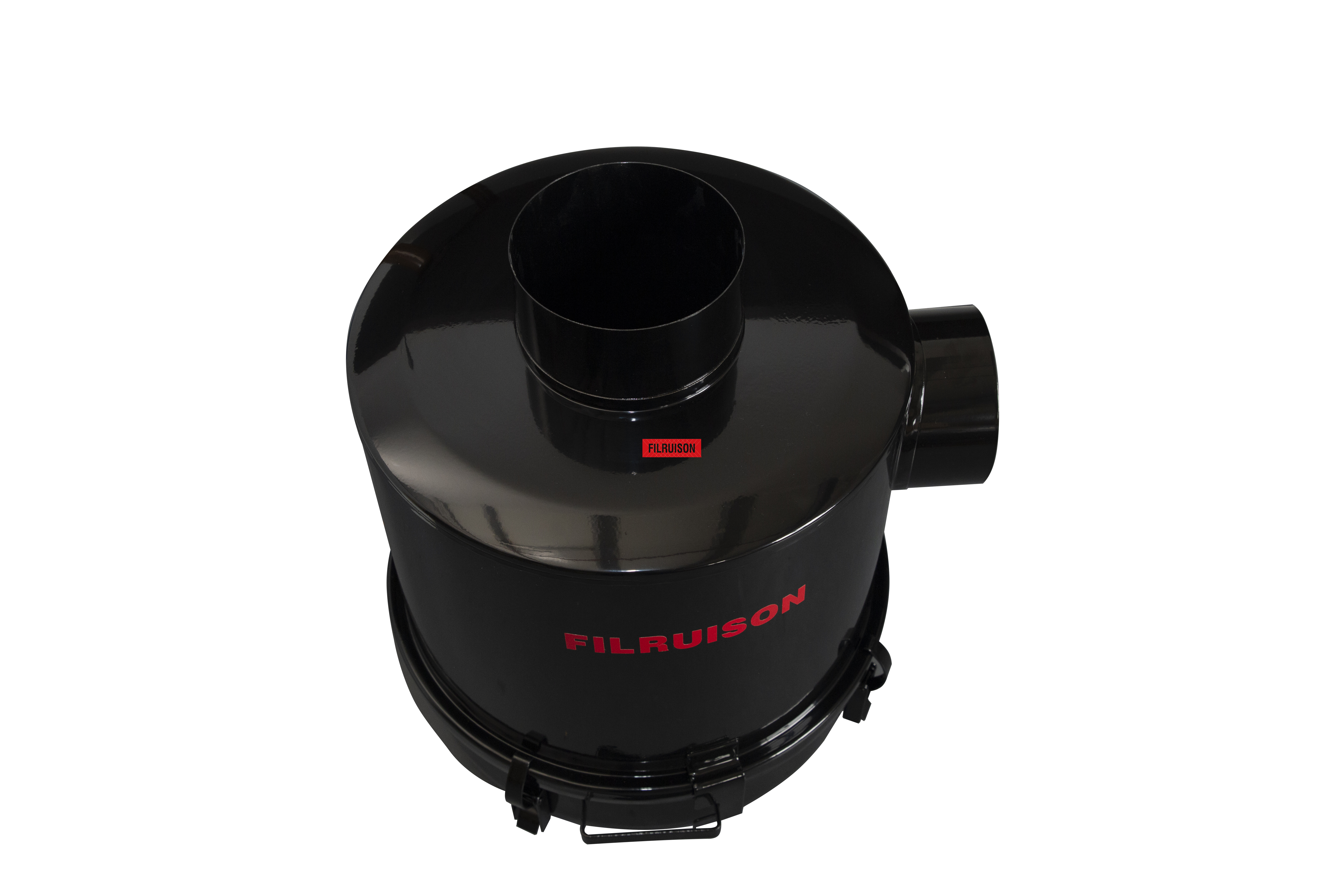
How does an Oil-bath Air Filter actually function deep inside the housing? The entire process relies on fundamental physics, fluid dynamics, and momentum. It uses continuous mechanical scrubbing instead of relying on microscopic paper sieves.
Here is the detailed three-stage filtration process:
Velocity and Directional Shift: Incoming dirty air enters the main intake housing from the outside atmosphere. The internal design forces this air downward aggressively toward a deep liquid reservoir. The air stream accelerates rapidly through a narrow passage. Then, it makes a sharp, sudden directional shift upward. Inertia prevents the heaviest, densest dust particles from making this tight turn. They maintain their downward momentum, crash straight into the fluid pool, and sink safely to the bottom.
The Oil Misting Process: The rushing airflow aggressively agitates the surface of the liquid. This intense, continuous turbulence creates a very fine mist inside the chamber. The fast-moving air stream picks up these tiny droplets and carries them upward. They rapidly enter a highly dense wire mesh separation element located just above the fluid pool.
The Scrubbing Action: The thick wire mesh becomes thoroughly coated in sticky fluid. Remaining airborne dust hits this complex metallic maze at high speeds. The dust gets trapped instantly upon impact. A self-cleaning loop begins immediately inside the housing. Dirty fluid droplets gather mass, become heavy, and drip back down into the main reservoir. This continuous washing action constantly exposes fresh, clean liquid to the mesh element.
This mechanical design guarantees remarkable airflow consistency throughout the workday. Standard paper elements restrict airflow steadily as they fill up with microscopic debris. Liquid-based systems operate entirely differently. The fluid nature of the bath maintains relatively consistent airflow resistance up to its absolute maximum capacity limit. Your heavy engine breathes easily even when the lower sump holds several pounds of thick, heavy dirt.
Best Practice: Always maintain the precise fluid level indicated clearly on the lower bowl casing.
Common Mistake: Underfilling the reservoir prevents proper misting action entirely. This dangerous error allows dry dust to pass right through the mesh and into the engine.
Fleet managers must objectively evaluate both competing technologies before making a final procurement decision. You should compare them rigorously across several critical technical dimensions.
First, consider filtration efficiency and standard micron ratings. Modern multi-stage dry systems offer superior absolute efficiency in laboratory tests. They capture incredibly fine microscopic particles easily, often stopping contaminants as small as two microns. Legacy liquid systems cannot trap these tiny contaminants quite as effectively. They allow highly fine dust to slip through the metallic mesh.
Second, look closely at overall dust holding capacity. Dry elements rely entirely on their available pleated surface area. They fill up quickly and block air when operating in massive dust clouds. A liquid sump handles enormous volumes of bulk dirt easily. It swallows heavy particulate matter continuously without immediately restricting the vital intake airflow.
Third, evaluate the long-term financial impact on your department budget. Dry filters involve high consumable part expenses over their lifespan. You buy proprietary replacements constantly from distributors. However, they require exceptionally lower labor time. Mechanics simply pop open a latch and swap them out in minutes. Liquid systems eliminate expensive replacement element costs entirely. You only buy minor amounts of standard replacement fluid locally. However, they demand significantly higher labor costs for proper, thorough cleaning and reassembly.
Finally, factor in durability and moisture resistance in outdoor environments. Liquid units remain completely impervious to heavy rain, freezing snow, and high humidity. Water simply enters the housing and sinks harmlessly to the bottom of the bowl beneath the fluid. Conversely, heavy moisture can easily degrade or structurally collapse dry paper elements. A wet paper element tears quickly under powerful engine vacuum, destroying all engine protection instantly.
Evaluation Dimension | Dry Paper Filters | Oil-Bath Systems |
|---|---|---|
Filtration Efficiency | Extremely high (captures micro-particles) | Moderate (allows some fine dust through) |
Dust Holding Capacity | Low to Moderate (clogs quickly in bulk dust) | Extremely high (holds pounds of dirt) |
Financial Impact | High parts cost, low labor cost | Zero parts cost, high labor cost |
Moisture Resistance | Poor (media collapses when wet) | Excellent (unaffected by rain or snow) |
Servicing these rugged, traditional units involves a harsh, practical reality check for any maintenance team. The protocol demands meticulous attention to detail and patience. Technicians cannot simply toss a used part into the garage trash can and walk away.
First, workers must carefully unlatch the heavy lower bowl from the main housing. They drain the thick, heavily contaminated sludge into a secure, approved container. Next, they wash the delicate metal mesh thoroughly using strong industrial solvent. They must clean out every tight corner of the housing to remove hardened sediment. Finally, they refill the bowl to the exact indicator line using fresh, clean fluid. This process takes significant time and requires a dedicated cleaning station.
This procedure introduces specific operational risks into your daily workflow. Overfilling the reservoir creates severe, immediate dangers for the equipment. Operating heavy equipment at extreme tilt angles causes similar operational problems. The powerful engine vacuum can ingest liquid directly from the tilted bowl. This highly dangerous phenomenon is universally known as oil pull-over. In diesel engines, the system burns this ingested liquid as unregulated, uncontrolled fuel. It can lead to a catastrophic engine runaway, resulting in total engine destruction within seconds.
Environmental and compliance factors also complicate modern implementation heavily. Servicing these filters generates contaminated liquid waste and dirty chemical solvent. You must dispose of these toxic materials properly according to law. Strict Environmental Protection Agency (EPA) and local municipal guidelines apply to every single drop. Compliant disposal procedures add direct overhead and heavy administrative burdens to your regular maintenance operations.
Best Practice: Always use the exact same weight and grade of fluid currently running in your engine crankcase to ensure proper misting viscosity.
Common Mistake: Rushing the cleaning process leaves hardened sludge permanently in the lower bowl, drastically reducing the overall dust holding capacity.
Choosing the absolute correct technology depends heavily on your specific, daily operational environment. You must audit your fleet conditions objectively before committing to a filtration platform.
When should you specify a liquid-based system?
Choose them for highly remote, isolated operations. Shipping and storing fragile, bulky dry elements becomes logistically impossible when you operate hundreds of miles from a supply line. You can easily transport standard fluid drums anywhere.
Use them on stationary engines running in continuously extreme dust environments. Rock crushers, agricultural feed mills, and stationary generators represent perfect use cases. They remain perfectly level and face endless clouds of thick dirt daily.
Specify them during the historical restoration or continuous daily use of legacy agricultural equipment. Older mechanical engines tolerate slight efficiency drops well and benefit from original equipment designs.
When should you migrate to dry multi-stage systems?
Transition your fleet immediately if you operate primarily in standard urban construction or typical highway environments. Normal, moderate dust levels simply do not justify the messy, time-consuming maintenance process.
Migrate if your maintenance facility faces strict environmental waste disposal limitations. High hourly mechanic labor rates also make snapping in dry elements much more economical overall.
Switch entirely to dry elements for highly modern, computerized engines. New machines absolutely require ultra-fine micron filtration. You must protect highly sensitive turbochargers and delicate electronic emissions sensors from microscopic damage.
To help visualize this important engineering choice, here is a decision matrix chart summarizing the key factors:
Operating Condition | Recommended Filtration Strategy | Primary Justification |
|---|---|---|
Remote Mining/Logging | Liquid-Based System | Eliminates dependency on fragile spare parts delivery. |
Stationary Rock Crushing | Liquid-Based System | Handles extreme bulk dust; no tilt-angle risks. |
Highway Freight Transport | Dry Multi-Stage System | Low dust levels; requires fast, clean maintenance. |
Modern Tier 4 Diesel Engines | Dry Multi-Stage System | Demands absolute micro-particle filtration for sensors. |
The historic liquid-based filtration system is absolutely not obsolete. It remains a highly specialized, incredibly rugged tool designed specifically for extreme logistical and environmental conditions.
They dominate successfully in remote, isolated locations where spare replacement parts remain scarce or unavailable.
They handle immense bulk dirt volumes far better than standard pleated paper.
They require meticulous, careful maintenance protocols to avoid dangerous engine runaway risks.
We strongly advise fleet operators to calculate their actual, long-term maintenance expenses carefully. You must factor in mechanic labor hours, toxic disposal fees, and machinery downtime before switching filter types blindly. Finally, consult directly with a heavy-duty filtration specialist today. Audit your fleet's unique operating environment and current part failure rates to guarantee maximum engine protection moving forward.
A: Yes, on an absolute micron level. Paper captures finer particles effectively. However, the liquid bath handles a significantly higher volume of large particles without choking engine airflow.
A: Generally, experts do not recommend this for modern, electronically controlled diesels. Sensitive sensors and tight clearance issues cause major problems. They remain highly viable for older mechanical engines.
A: Typically, you should use the exact same weight and grade used in the machine's crankcase. Always adjust for seasonal temperature variations. This ensures proper viscosity for the internal misting action.
A: The shift occurred due to several factors. Rising labor costs made messy maintenance unappealing. Stricter environmental regulations regarding waste disposal played a huge role. Furthermore, breakthroughs in synthetic dry media offered sufficient capacity with simple, zero-spill replacement.
