
Views: 0 Author: Site Editor Publish Time: 2026-08-11 Origin: Site


Industrial engines operating in high-dust environments face accelerated wear and catastrophic failure if particulate ingestion is not strictly controlled. Mining excavators, agricultural combines, and construction loaders ingest massive volumes of airborne debris daily. While pre-cleaners are standard equipment on most heavy machinery, selecting the right air pre-cleaner manufacturer remains a complex procurement challenge. Relying on generic, off-the-shelf units without proper airflow matching or verified separation efficiency leads to restricted intake, increased fuel consumption, and premature filter blinding.
To protect capital equipment and reduce operational downtime, fleet directors and procurement engineers must evaluate an engine air precleaner manufacturer based on their engineering capabilities, testing transparency, and application-specific expertise. You need a partner capable of matching centrifugal separation technology to your exact engine displacement and environmental hazards.
The relationship with your manufacturer extends far beyond the initial purchase order. Heavy-duty applications demand ongoing engineering support, warranty backing, and supply chain reliability. When equipment operates in remote quarries or expansive agricultural fields, a simple component failure halts production entirely. A dedicated manufacturer provides continuous technical assistance to ensure your air intake systems perform under changing environmental conditions, offering replacement parts and troubleshooting guidance when field conditions shift.
We must contrast commodity suppliers with specialized manufacturers. Commodity vendors sell universal parts out of a catalog, hoping a one-size-fits-all approach works. Specialized manufacturers engineer solutions for specific engine displacements, hood clearances, and vibration profiles. They understand that a 15-liter diesel engine running in a rock quarry requires vastly different airflow dynamics than a 4-liter natural gas generator sitting on a well pad. Customization ensures the pre-cleaner integrates seamlessly without altering OEM intake restriction limits.
A successful manufacturer partnership delivers measurable, field-verified results. You should expect zero dust bypass and a massive extension of primary filter life. High-quality units remove up to 99% of airborne debris before it reaches the filter media. This level of performance requires precise engineering, a deep understanding of centrifugal separation technology, and a commitment to continuous product improvement based on real-world failure analysis.
| Criteria | Commodity Supplier | Specialized Manufacturer |
|---|---|---|
| Airflow Matching | Generic sizing charts based on pipe diameter | Precise CFM mapping based on engine RPM and displacement |
| Testing Data | Marketing videos and internal claims | Independent ISO 5011 laboratory reports |
| Mounting Options | Standard hose clamps only | Custom brackets, vibration isolators, and remote kits |
| Application Focus | Light-duty and on-highway trucks | Severe-duty mining, agriculture, and construction |
A top-tier industrial precleaner supplier must offer a deep portfolio of solutions. Different operating environments require different separation technologies. Evaluate the manufacturer's expertise across non-powered, exhaust-scavenged, and powered systems to ensure they can meet your specific fleet requirements.
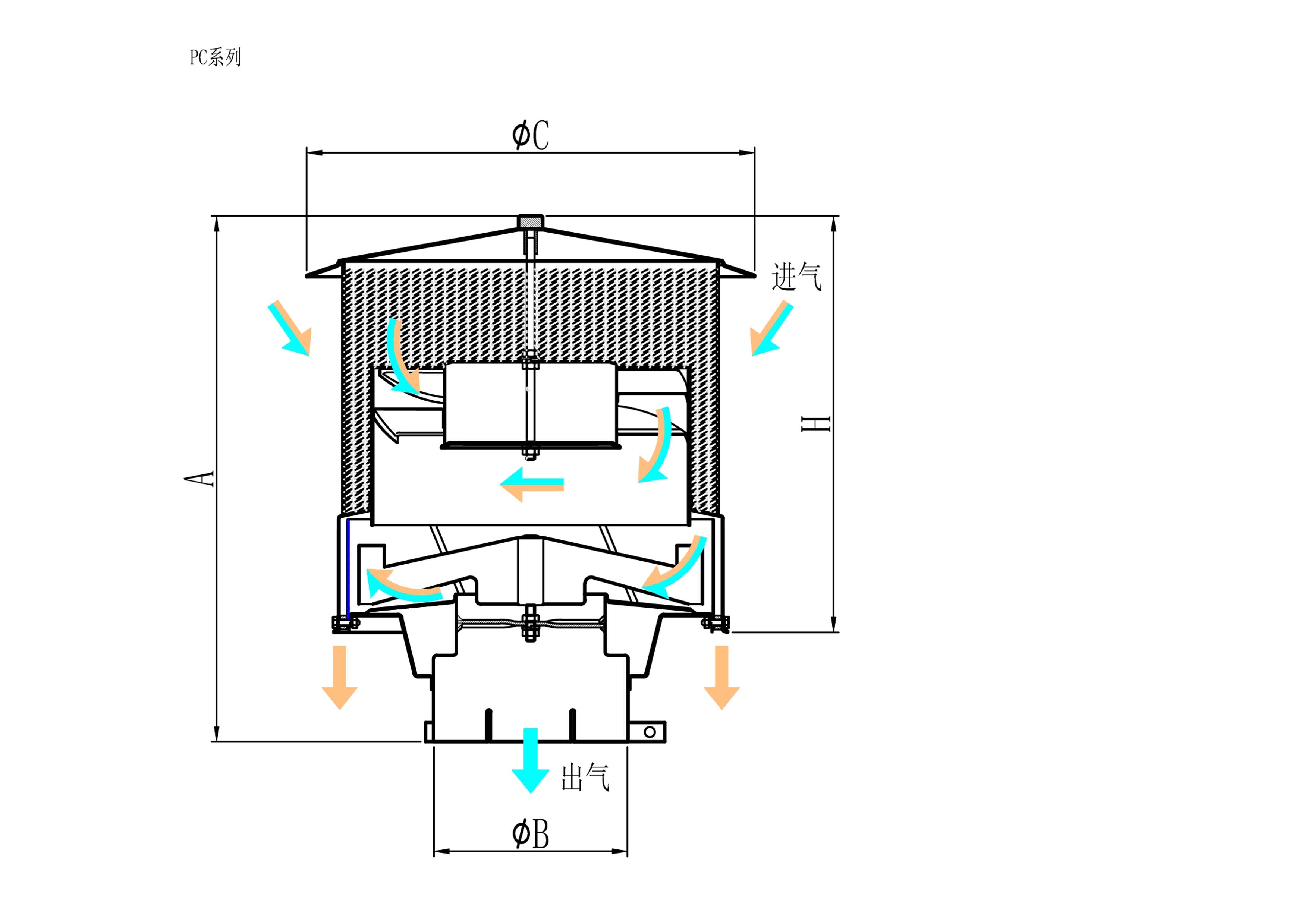
Non-powered centrifugal systems rely entirely on engine vacuum to draw air through stationary vanes. This action spins the incoming air, creating centrifugal force. Heavy particulates are pushed to the outside wall of the housing and ejected through a discharge port. The manufacturer must design the internal impeller to maximize rotational velocity without causing excessive restriction. These units work exceptionally well on engines that maintain consistent, high RPMs.
Exhaust-scavenged, or venturi, systems connect directly to the engine's exhaust stack. The exhaust flow creates a vacuum that actively pulls separated contaminants from the pre-cleaner housing and expels them out the tailpipe. You must evaluate whether the manufacturer offers robust venturi plumbing kits that withstand extreme exhaust temperatures. These systems excel in environments with heavy, wet debris like forestry or snow removal.
Powered systems utilize integrated electric motors to spin the internal impeller. Manufacturers recommend these active pre-cleaners for extreme low-speed or ultra-high-dust environments. Landfill compactors, stationary crushers, and street sweepers often lack sufficient engine vacuum to drive passive centrifugal units effectively. A powered system guarantees continuous, high-efficiency separation regardless of the engine's operating RPM.
Cubic Feet per Minute (CFM) matching is the absolute most critical factor in pre-cleaner selection. An undersized unit chokes the engine, triggering restriction gauges and causing overheating. An oversized unit fails to generate enough centrifugal force to separate dust, allowing dirt to pack the primary filter. The manufacturer must assess the engine's minimum and maximum airflow requirements across its entire operational RPM range.
Engine type compatibility also dictates internal design geometry. Diesel, gasoline, and natural gas engines present distinct intake pulsation signatures. A reliable manufacturer customizes airflow dynamics to accommodate these differences. They ensure the pre-cleaner maintains steady separation efficiency despite varying intake pulses, preventing dust from bypassing the ejection port during pressure drops.
Engineering support is necessary to verify OEM compliance. The pre-cleaner must not push the total air intake restriction beyond the engine manufacturer's specified limits. Your supplier should provide detailed restriction curves for every model they produce, allowing your maintenance team to calculate the exact pressure drop added to the intake system.
Structural engineering capabilities separate premium manufacturers from basic suppliers. Industrial equipment features diverse hood designs, exhaust routings, and space constraints. The manufacturer must offer multiple installation configurations to accommodate these variations across a mixed fleet.
Direct-on-hood or intake-pipe mounting places the unit directly in the airstream above the engine compartment. The manufacturer must ensure the housing and clamping mechanisms withstand direct vertical vibration and harsh environmental exposure. Heavy-duty stainless steel T-bolt clamps and reinforced mounting collars are essential to prevent the unit from vibrating loose and falling off the machine.
Remote-mount installations utilize flexible ducting to pipe clean air to the engine. When tight hood clearances prevent direct mounting, the pre-cleaner sits on a remote bracket mounted to the ROPS or chassis. You must assess the manufacturer's engineering support for these setups. They should supply high-temperature, wire-reinforced ducting that resists collapsing under heavy engine vacuum, along with heavy-gauge steel brackets.
Top-tier manufacturers achieve up to 99% contaminant removal in real-time. They accomplish this through optimized vane geometry, precise ejection port sizing, and smooth internal airflow paths. The system must maintain high efficiency across a wide range of particle sizes, from large wood chips down to microscopic silica dust.
Different industries generate vastly different particulate types. Quarrying produces fine, highly abrasive silica dust that destroys piston rings in hours. Agriculture generates lightweight organic chaff, soybean fuzz, and crop debris that quickly blinds standard filters. Forestry equipment encounters heavy, wet sawdust and pine needles. The manufacturer must demonstrate their ability to handle your specific environmental hazards without clogging, stalling, or requiring constant manual cleaning.
Verifiable data is non-negotiable in heavy-duty procurement. A credible manufacturer must provide third-party testing results to back up their efficiency claims. You should look for specific references to standards like ISO 5011, which governs inlet air cleaning equipment for internal combustion engines. This standard provides a repeatable, scientific baseline for evaluating restriction, capacity, and fractional efficiency.
Many suppliers rely on proprietary "torture tests" for marketing purposes. They might dump buckets of dirt into a running engine on video. While visually impressive, these tests often lack scientific rigor and repeatability. You must critically evaluate these claims. Separate marketing hyperbole from repeatable engineering data. Demand actual ISO 5011 laboratory reports before making a procurement decision for your fleet.
Industrial environments destroy fragile components rapidly. Compare the materials used by different manufacturers. Premium units utilize heavy-gauge steel, powder-coated aluminum, or glass-reinforced engineered polymers. UV-resistant plastics are crucial for components exposed to direct sunlight for thousands of hours, preventing the housing from becoming brittle and shattering from impact.
Vibration resistance determines the lifespan of the installation. Evaluate the manufacturer's mounting hardware closely. Look for heavy-duty clamps, rubber collar dampeners, and reinforced brackets. The unit must endure severe thermal cycling—from freezing winter mornings to scorching summer afternoons—and high-impact tolerance in heavy-duty applications like mining, demolition, and rock crushing.
Financial evaluation requires looking beyond the initial purchase price of the pre-cleaner. You must calculate the break-even point of investing in a premium unit. High-efficiency pre-cleaners drastically reduce the volume of dirt reaching the primary filter, often extending filter life by five to ten times compared to an unprotected intake.
This reduction translates directly to massive operational savings. Extending primary and secondary air filter replacements keeps equipment running longer between service intervals. Fewer filter changes mean less downtime, lower consumable expenses, and reduced labor costs. A premium unit pays for itself rapidly in severe dust environments, often within the first few months of operation.
A properly sized pre-cleaner maintains optimal air-to-fuel ratios. When filters clog, intake restriction rises. The engine struggles to pull in enough air, causing it to run rich. This wastes fuel, increases exhaust emissions, and leads to premature diesel particulate filter (DPF) plugging. By keeping the primary filter clean, the pre-cleaner sustains factory fuel efficiency levels.
Design for maintenance heavily impacts labor hours. Active self-cleaning and self-ejecting mechanisms require zero daily attention from operators. Passive units with clear plastic collection bowls require manual emptying, sometimes multiple times a shift. Choose a manufacturer that prioritizes maintenance-free designs to reduce labor burdens and eliminate the risk of operator neglect causing engine damage.
Installing an incorrectly sized unit from an unverified supplier presents a massive operational risk. Under-sizing chokes the engine, increases intake restriction, and causes severe overheating. Over-sizing fails to create enough centrifugal velocity inside the housing, allowing dust to bypass the system completely and pack the primary filter.
Mitigate this risk by partnering with a supplier that demands technical data before selling a unit. A professional manufacturer requires your engine make, model, displacement, and operating RPMs before quoting a system. They use this data to map the exact CFM requirements and recommend the perfect housing size for your specific machine.
Equipment downtime caused by missing parts is unacceptable in production environments. A manufacturer's inability to deliver replacement components, mounting bands, or fulfill bulk fleet orders disrupts your operations. Global supply chain volatility exacerbates this risk, especially with overseas suppliers.
Audit the supplier's manufacturing footprint. Investigate their inventory holding practices and distribution network. A reliable partner maintains sufficient local stock, offers expedited shipping options, and demonstrates a track record of on-time deliveries for critical fleet applications.
Improper installation of aftermarket components can interfere with OEM intake sensors. If a poorly designed pre-cleaner alters the Mass Air Flow (MAF) sensor readings, creates turbulent air, or exceeds maximum restriction limits, the engine manufacturer may void the warranty.
Select a manufacturer that provides comprehensive engineering installation guides. They should offer dedicated mounting kits and guarantees of OEM compliance. Proper documentation, engineered brackets, and straight-pipe standoffs ensure the installation meets all factory specifications and keeps your warranty intact.
Choosing an air pre-cleaner manufacturer is a critical engineering decision that directly impacts engine longevity. It requires prioritizing technical transparency, material durability, and precise airflow matching over the lowest initial price. Protecting heavy-duty engines in high-dust environments demands a verified, specialized partner.
A: Non-powered centrifugal units rely on engine vacuum to spin air and eject dust. Venturi-scavenged systems connect to the exhaust, using exhaust vacuum to pull and expel separated contaminants. Powered systems use integrated electric motors to spin the impeller, making them ideal for low-RPM or stationary environments where engine vacuum is insufficient.
A: It utilizes centrifugal force to separate and eject up to 99% of mass airborne particulates, such as dust, chaff, and snow, before they can reach the primary filter media. This prevents premature clogging and significantly extends the service intervals of the main air filter.
A: CFM requirements depend on engine displacement, maximum RPM, and volumetric efficiency. A specific formula calculates this airflow demand. You must consult with the manufacturer, providing your exact engine specifications, to ensure the pre-cleaner is perfectly matched to avoid restriction or poor separation.
A: Demand independent laboratory testing data. Credible manufacturers provide documentation showing compliance with ISO 5011 standards. Avoid relying solely on marketing videos or proprietary torture tests. Real-world case studies and third-party lab reports offer the most reliable proof of performance.
A: Yes. As an air filter clogs, engine intake restriction increases, causing the engine to run rich and burn excess fuel. By keeping the primary filter clean and maintaining unrestricted airflow, the pre-cleaner helps the engine sustain its optimal air-to-fuel ratio, preventing fuel waste.
A: Modern self-ejecting and exhaust-scavenged models are generally maintenance-free, continuously expelling debris during operation. Older or basic bowl-style models require daily visual inspections and manual emptying of the collection bowl to prevent dust from overflowing into the intake.

