
Views: 0 Author: Site Editor Publish Time: 2026-09-13 Origin: Site


Replacing heavy-duty air filters costs a small fortune. For fleet managers and solo operators, routine cleaning looks like an incredibly attractive alternative. Imagine staring at a $200 primary filter caked in silica dust. Throwing it away feels like burning cash. But cleaning it improperly? That single mistake could cost you an entire engine. The harsh reality is simple. While cleaning filters saves your budget, approaching the task with the wrong equipment guarantees catastrophic machinery failure.
With countless gadgets and nozzles flooding the market, field mechanics are often left guessing. Which methods are genuinely safe? In this guide, we strip away the marketing fluff. You will discover exactly how to navigate filtration maintenance from an engineering perspective. Learn which tools extend media life and which common garage staples belong in the trash.
Maintaining optimal airflow dictates engine efficiency, fuel economy, and overall machinery lifespan. Yet, routine maintenance methodology is frequently misunderstood in the field. The razor-thin line between extending a filter's life and destroying it relies entirely on your equipment. Executing proper filter service is not just about removing dirt; it is about preserving the microscopic structural integrity of the media.
Engine "dusting" happens when abrasive particles bypass a compromised filter. Fine silica, dirt, and sand enter the combustion chamber. Using an improper device to clear debris easily creates microscopic pinholes in the pleated media. You might not see these micro-tears with the naked eye. However, they are massive gateways for damaging particulates.
Once inside the block, this rogue dust mixes with engine oil. It creates a highly abrasive compound acting like liquid sandpaper. This deadly mixture rapidly accelerates wear on piston rings, cylinder walls, and turbocharger compressor blades. The ultimate result? Massive loss of compression, excessive oil consumption, and total engine failure. Rebuilding a dusted diesel engine easily exceeds tens of thousands of dollars. Suddenly, the initial savings of a rushed cleaning job disappear entirely.
From a financial perspective, cleaning filters rather than replacing them offers a substantial return on investment. Heavy-duty air filters in agriculture, mining, and construction routinely cost between $50 and $250 per unit.
Consequently, investing in a purpose-built maintenance device pays for itself quickly. Safely clear a single primary element three to four times before its structural integrity naturally degrades. By doing so, fleet managers can slash annual filter replacement budgets by up to 75%.
| Maintenance Approach | Initial Tool Cost | Filter Cost (Per Unit) | Annual Cost (Assuming 10 Changes/Year) | Engine Risk Level |
|---|---|---|---|---|
| Constant Replacement | $0 | $150 | $1,500 | Very Low |
| Improper Cleaning (High PSI) | $15 (Air gun) | $150 | $150 (if cleaned 9 times) | Extremely High (Risk of Dusting) |
| Proper Cleaning (Specialized Tool) | $150 - $300 | $150 | $450 (Replaced after 3 safe cleans) | Low (If protocols are followed) |
Before reaching for any tool, identify the exact architecture of your filtration media. Applying the wrong physical or chemical method guarantees immediate structural failure.
The vast majority of standard automotive and heavy industrial filters use tightly pleated cellulose or a synthetic-cellulose blend. These dry elements rely on microscopic pores to trap dirt. Unfortunately, they are incredibly fragile. Aggressive tapping or high-velocity air pressure easily separates the delicate fibers. This expands the micron gaps and renders the unit useless.
Common in aftermarket setups, these utilize multiple layers of surgical cotton gauze. A protective wire mesh suspends the media, treated with tacky oil to catch fine dust. Never use compressed air here. Pneumatic pressure blows the tackifying oil out and distorts the delicate weave. They demand specific chemical degreasers and a gentle water rinse.
These units bridge the gap between fragile dry paper and high-maintenance oiled cotton. Woven from proprietary synthetic yarns, they do not require a sticky oil layer. Generally, maintain them using mild, water-based solutions followed by a gentle rinse. Similar to oiled counterparts, never subject them to high-pressure air drying. This will warp the synthetic strands.
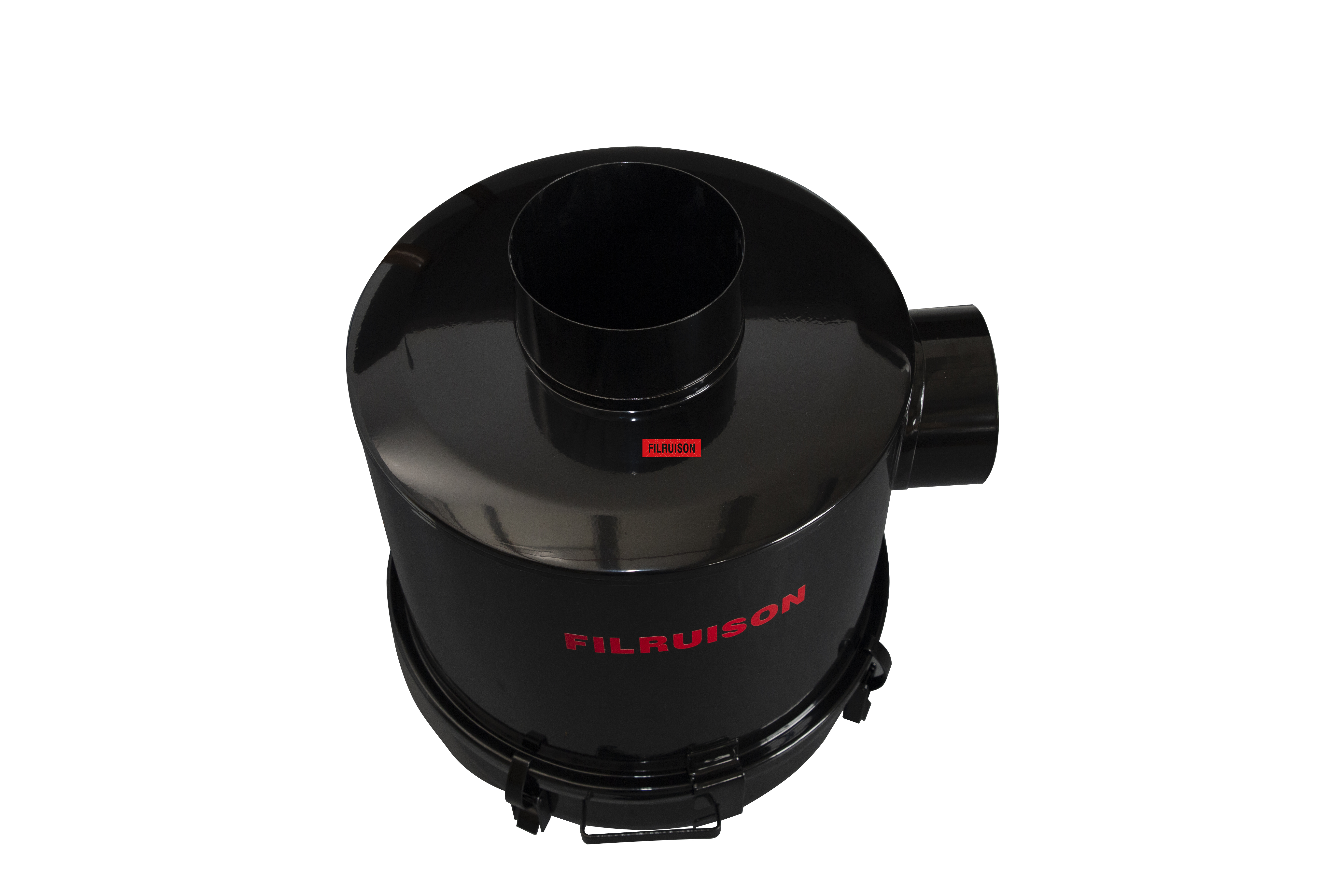
Crucially, not all machinery relies on modern pleated media. Extreme dust environments—like deep trenching or mining—often demand rugged solutions. Many heavy excavators and specialized earth-moving equipment utilize an oil-bath system. For example, high-capacity machinery might require a robust setup like a 21 m³/min oil-bath air filter to handle massive airflow without choking.
This classic system forces dirty air down through a pool of liquid oil. Heavy particulates get trapped in a sludge before the air passes upward through a wire mesh element. Maintaining this system requires a completely different mindset. Forget air blasters. Focus on draining the accumulated sludge, scrubbing the metal oil cup, and refilling it with fresh fluid.
Achieving a pristine clean without compromising the media requires engineered equipment. The following devices represent the gold standard in modern shop practices.
For large dry cellulose elements, a regulated, low-pressure rotational wand is the ultimate solution. Standard shop guns concentrate destructive pressure into a single point. In contrast, specialized wands feature a long metal shaft equipped with omni-directional air ports.
Insert the wand into the hollow center of a cylindrical filter. It distributes a gentle, regulated volume of air evenly across the interior pleats. This outward-facing pressure safely lifts the dust cake back out the exact way it came in. The cellulose bonds remain unstressed.
Physical contact with filter media should be kept to a minimum. However, there are scenarios where an ultra-soft filter cleaning brush proves highly effective. Bristle rigidity is the critical factor. Only natural-hair or highly flexible synthetic detailing brushes should touch the paper.
Gently sweep the brush across the outermost ridges to dislodge heavy, caked-on mud or agricultural chaff. Never press the bristles deeply into the V-shaped valleys. Doing so simply packs the dirt tighter into the microscopic pores.
For washable oiled cotton and synthetic media, the only acceptable approach involves a purpose-made liquid cleaning kit. These packages contain formulated detergents designed to chemically break down stubborn dirt and old oil. They do this without degrading the cotton gauze or melting urethane rubber seals. The entire process relies on chemical dissolution rather than brute mechanical force.
From an engineering and field maintenance perspective, the consensus is absolute. Prioritizing convenience over protocol leads to catastrophic equipment failure. Banish the following ubiquitous garage items from your routine.
The standard shop air blow gun is the leading cause of filter destruction worldwide. Most commercial compressors run between 90 and 120 PSI. Pointing a high-velocity air stream directly at a fragile paper element instantly severs the cellulose bonds.
Furthermore, carelessly blowing from the outside (the dirty side) toward the inside forcefully drives abrasive silica straight through the media. The filter might look visually clean. In reality, its protective efficiency is fatally compromised.
Scrubbing pleats with a stiff wire or rigid nylon brush is highly destructive. Unforgiving bristles instantly fray paper or cotton fibers. Once frayed, uniform micron gaps widen, granting large dust particles a free pass.
Under no circumstances should you aim a pressure washer at an air filter. The high-velocity water jet shreds cellulose paper into pulp within seconds. It warps structural wire mesh and unravels cotton weaves. Even on the lowest setting, the kinetic force remains too concentrated.
Mechanics in a hurry sometimes reach for brake cleaner or harsh industrial solvents. These aggressive chemicals are highly corrosive to binding glues and urethane plastisol. Exposure causes the filter to separate from its base, allowing dirty air to bypass the media entirely.
The heavy machinery and commercial automotive sectors are currently witnessing a massive shift toward sustainable, predictive maintenance. Recent industry analyses indicate that the days of relying on crude, unregulated shop air are rapidly ending.
Driven by skyrocketing diesel engine replacement costs and prolonged supply chain delays, operators are rethinking their strategies. Increasingly stringent environmental sustainability targets also play a major role. Fleet managers are heavily adopting specialized pneumatic cleaning systems and robust pre-filtration technologies. This trend highlights a broader industry consensus. Investing in precision maintenance technology is no longer a luxury. It is a baseline requirement for protecting high-value assets and reducing long-term operational overhead.
Executing a proper clean requires patience, good lighting, and a methodical approach. Skipping steps dramatically increases the likelihood of damage. Adhering to strict safe filter maintenance protocols is vital for preserving your machinery.
Carefully remove the filter from its housing. Prevent loose dirt from tumbling into the exposed engine intake tube. Inspect the rubber end-caps for dry rot and check the outer wire mesh for deep dents.
Next, gently tap the solid urethane end cap against your palm or a soft rubber mat. Do not strike it against a steel workbench or tractor tire. Violent impacts dent the metal housing and shatter internal glue seals. The sole goal is dislodging the heaviest loose dust cakes.
Insert your specialized low-pressure wand into the center cavity. Activate the airflow. The omni-directional nozzles blow air outward in a 360-degree pattern. Slowly and steadily move the wand up and down the entire length of the interior.
You will see a dense cloud of dust ejecting from the exterior pleats. Continue this sweeping motion until the dust cloud diminishes. If necessary, use an ultra-soft detailing brush to sweep away stubborn organic debris on the outer edges.
This final step is non-negotiable. Cleaning is useless if the media gets compromised during the washing phase.
Take the freshly cleaned filter into a dark room. Place a high-lumen LED flashlight inside the hollow center, pointing the beam outward. Slowly rotate the cylinder and meticulously inspect the exterior.
Look for bright, sharp pinpricks of light shining through the media. A healthy filter allows light to glow softly and evenly. If you see a distinct, sharp beam piercing through a tiny hole, the filter has suffered a micro-tear. Discard it immediately. Reinstalling a torn element results in instant engine dusting.
Heavy machinery operates in unforgiving, abrasive environments. Imagine a combine harvester facing dense chaff, or an excavator deep in a silica-choked trench. These environments require meticulous care beyond standard practices.
Most heavy machinery utilizes a dual-filter intake system for maximum safety. This includes a massive primary outer filter and a smaller, secondary inner filter. You must treat these two components entirely differently.
The primary filter captures ninety-nine percent of incoming bulk dirt. You can safely clean this element multiple times using low-pressure blasters.
In stark contrast, the secondary filter requires a completely hands-off approach. It acts as a final emergency fail-safe. If the primary filter tears, the secondary filter is the only barrier left. Never attempt to clean it. Applying any air filter tool will cause invisible structural damage. When it gets dirty, throw it away. Industry standards dictate replacing the safety filter every third time the primary filter is changed.
| Feature | Primary Outer Filter | Secondary Inner Filter |
|---|---|---|
| Function | Captures 99% of bulk dirt and debris. | Acts as an emergency fail-safe barrier. |
| Cleaning Status | Safe to clean with specialized tools. | NEVER clean. Always replace when dirty. |
| Replacement Cycle | After 3 to 6 safe cleanings. | Every third primary filter replacement cycle. |
| Tool Compatibility | Low-pressure blasters and gentle wands. | None. Tools will destroy the media. |
| Visual Check | Inspect for tears after every cleaning. | Inspect for any dust bypass signs. |
Selecting the proper equipment is paramount. The market is flooded with gadgets claiming perfect results. Yet, unverified devices cause more harm than good. A cheap, poorly designed nozzle can easily destroy a $250,000 piece of machinery. We need to evaluate tools based on strict engineering criteria.
When specifying a maintenance device, look for these non-negotiable features:
Many operators hesitate to purchase specialized equipment, viewing it as unnecessary overhead. Break down the math, and the ROI is undeniably rapid.
Consider a tractor requiring a clean filter every week during harvest. At $150 per filter, that is a $600 monthly expense. A professional low-pressure blaster costs roughly $200. By reusing the same element four times, you save $450 in just one month. The tool pays for itself in less than two weeks. For a fleet of ten tractors, the savings scale massively, preserving over $4,000 monthly during peak working seasons.
| Maintenance Method | Cost per Filter | Filters Needed | Total Monthly Cost |
|---|---|---|---|
| Replace Only | $150.00 | 4 | $600.00 |
| Clean with Tool | $150.00 (Base) | 1 | $150.00 |
| Tool Investment | $200.00 (One-time) | N/A | $200.00 |
| First Month Savings | N/A | N/A | $250.00 Saved |
| Future Month Savings | N/A | N/A | $450.00 Saved |
Ultimately, the line between extending equipment life and causing early engine death is drawn by your tools. Proper, purpose-built devices define successful filtration maintenance. Outdated methods and crude garage tools will invariably destroy your engine.
Protect your investments. Avoid high-pressure air nozzles, stiff wire brushes, and aggressive solvents. Transition your standard operating procedures to include regulated, low-pressure blasters.
If your machinery operates in extreme dust conditions where standard dry paper fails rapidly, it might be time to rethink your entire intake architecture. Upgrading to an industrial oil-bath filtration system can drastically reduce maintenance frequency and engine wear. To explore professional-grade filtration solutions, durable oil-bath air filters, and expert maintenance tools tailored for heavy machinery, visit Sykingtech today and ensure your engines breathe clean air for years to come.
Generally, you can safely clean a heavy-duty dry paper filter three times before structural integrity fails. Premium, heavy-reinforced filters may allow up to six cycles, depending on manufacturer guidelines. Because cellulose naturally degrades, track your wash cycles by marking the outer rubber housing with a permanent marker after each service.
Yes, provided it is used correctly. Only use the vacuum on the outside (dirty side) to gently pull loose dirt away. Exercise extreme caution never to scrape the hard plastic nozzle against the paper. This easily crushes pleats or tears fibers. Always hover the nozzle slightly away from the surface.
Be exceptionally careful with physical friction on cotton gauze. If you must use a brush, employ only an ultra-soft detailing brush. Never brush it dry. Apply a specialized chemical cleaning solution, allow it to dissolve the dirt, and gently sweep the soft bristles across the top. Stiff nylon or wire brushes will permanently unravel the weave.
The most reliable verification is the flashlight test. After cleaning, place a bright LED flashlight inside the hollow cylinder in a dark room. Bright, distinct pinholes of light piercing through mean the filter has failed. Additionally, routinely inspect the intake tube behind the filter housing. Fine dust residue inside the tube is a guaranteed sign of media bypass.
From an engineering standpoint, the maximum safe air pressure for cleaning dry cellulose media is 30 PSI (approx. 2 Bar). Exceeding this threshold significantly increases the risk of micro-tears in the paper fibers. Always use a specialized wand with a built-in regulator to ensure the pressure remains strictly within this safe operational limit.
In highly abrasive, heavy-dust environments (like mining or deep earth-moving), oil-bath air filters often outperform standard dry filters. Instead of relying on tiny paper pores that clog rapidly, an oil-bath system traps large volumes of heavy dirt in a liquid sludge basin. This allows for continuous, high-capacity airflow without the constant need for replacement, making it highly efficient for specific heavy-duty applications.
