
Views: 0 Author: Site Editor Publish Time: 2026-08-12 Origin: Site


Sanitation fleets operate in continuous, high-particulate environments where standard OEM air filtration systems are quickly overwhelmed, leading to premature failure. Rapid air filter loading in high-dust applications causes engine dusting, decreased fuel efficiency, and excessive maintenance downtime for sweeper trucks and refuse collectors. Mitigating these risks requires installing a specialized pre-filtration system. Selecting the correct unit demands precise matching of engine airflow requirements with environmental dust conditions to protect assets and reduce overall operational burdens. We see this constantly in municipal garages where trucks return with plugged intakes after a single shift. You need a mechanical solution that intercepts the debris before it reaches the paper media. Relying solely on factory-installed housings guarantees you will spend excessive hours pulling trucks off routes just to blow out or swap paper elements. A proper mechanical separator changes this dynamic entirely, keeping the engine breathing clean air even in the worst municipal sweeping conditions.
Sanitation vehicles endure constant low-speed driving in dense, self-generated dust clouds. Standard filters fail mechanically under these conditions because they are designed for highway use, not continuous heavy particulate exposure. Rapid clogging creates a vacuum effect inside the intake housing. This vacuum pulls fine particulates past filter seals directly into the engine block. The operational impact includes increased fuel consumption, accelerated piston ring wear, and frequent filter replacements. Dust suppression spray bars on street sweepers combine water mist with dry PM10 dust. This creates a slurry that cements standard paper filters. Mechanics often refer to this severe condition as mud-plugging. When mud-plugging occurs, the paper pleats collapse under the suction force of the turbocharger. The engine starves for air, exhaust gas temperatures spike, and unburned fuel washes the cylinder walls. You end up with oil dilution and accelerated bearing wear. Standard housings simply lack the pre-separation capability to handle wet, heavy debris loads.
To understand the severity of this issue, consider the daily route of a standard mechanical broom sweeper. The vehicle travels at three to five miles per hour. It generates a continuous cloud of silica dust, brake dust, and organic matter. The cooling fan blows this cloud directly toward the air intake. Without an air pre-cleaner for sanitation vehicles, the primary filter absorbs 100% of this load. A standard heavy-duty air filter might hold two to three pounds of dirt before reaching its maximum restriction limit. In a heavy sweeping application, the intake can ingest that amount of dirt in a single week. The maintenance crew is then forced to replace the filter constantly, which drives up operational burdens and keeps the truck in the bay instead of on the street.
Evaluating a mechanical separator requires establishing baseline metrics. You must measure the percentage of filter life extension. You should track the reduction in measurable intake restriction using a dash-mounted or under-hood gauge. You also need to monitor the overall decrease in maintenance labor hours spent servicing the intake system. The operational mandate remains clear. The system must handle continuous heavy debris and moisture without requiring daily manual intervention. If a mechanic has to empty a dust bowl every afternoon, the system is failing its primary purpose of reducing maintenance labor.
Success means the primary filter lasts at least three to four times longer than the baseline. It means the restriction gauge stays in the green zone for months instead of weeks. It also means the intake tubing between the filter housing and the turbocharger remains spotless. Any trace of dust in that tube indicates a failure in the sealing of the system or a ruptured filter element caused by excessive restriction.
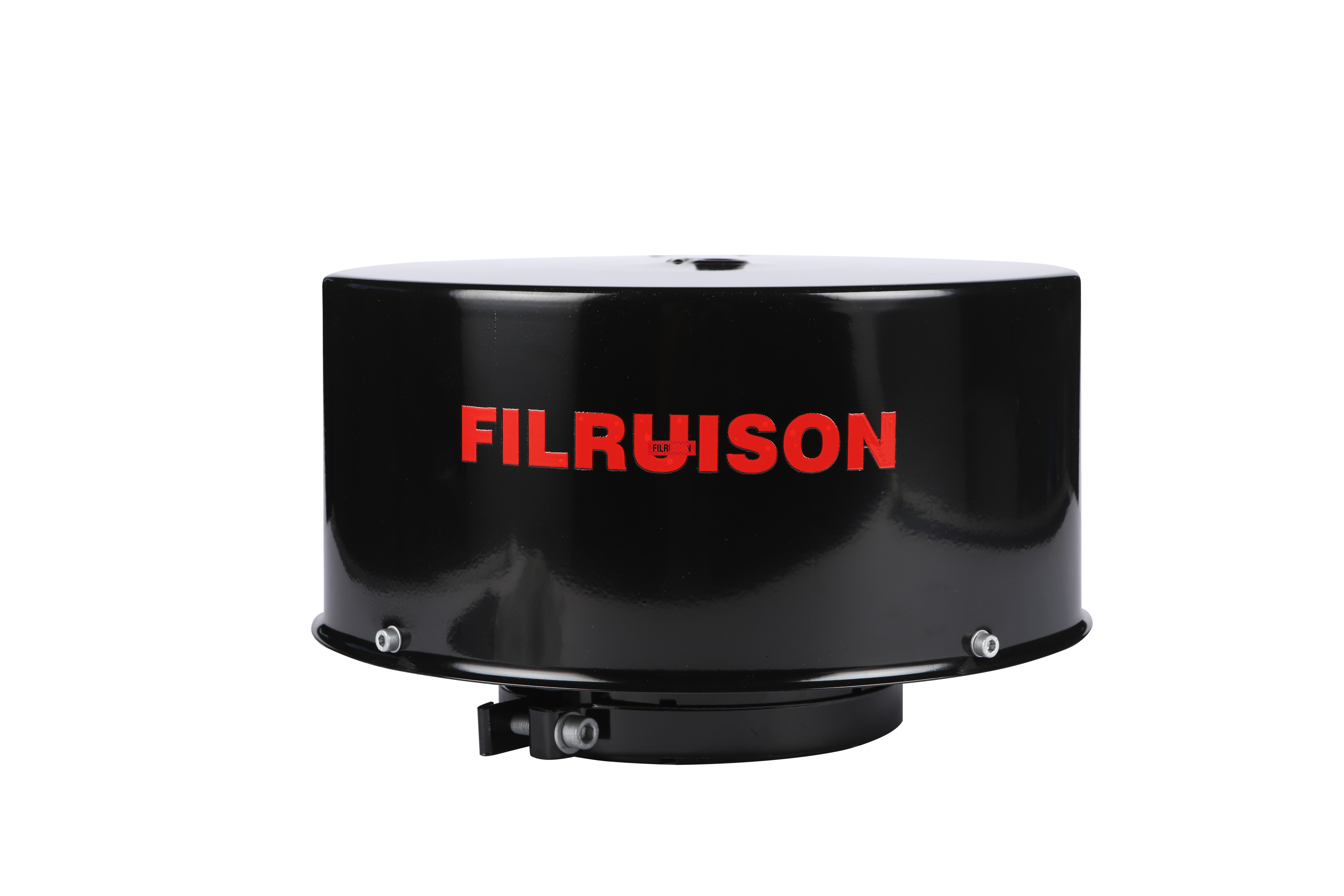
Static vane vortex models use fixed, angled vanes. They force incoming air into a high-speed swirl. This action casts heavy dust, sand, and water outward to ejection slots. They have no moving parts to wear out. They remain highly resilient to large debris impacts. However, they require consistent high airflow velocity to maintain effective separation. If the engine idles for long periods, the air velocity drops, and the centrifugal force weakens. This allows dust to pass through to the filter. These units are incredibly durable and can take a physical beating from low-hanging branches or debris.
Dynamic spinner rotor models feature an internal, free-spinning rotor. The incoming airflow drives this rotor to mechanically eject contaminants. They offer exceptional separation efficiency at mid-range airflow rates. The spinning rotor physically bats the dirt particles out of the housing. Conversely, they are susceptible to bearing wear. They can bind if exposed to highly adhesive organic waste. If a sweeper is picking up wet leaves and pine needles, that debris can wrap around the rotor shaft. Once the rotor stops spinning, the unit becomes a restriction rather than a separator. Regular inspection of the rotor is mandatory in these environments.
Powered units utilize a dedicated electrical fan or motor. They draw in air and separate dust independently of engine RPM. They are highly effective for low-speed, high-dust applications like street sweepers. Engine suction alone is often insufficient to maintain a strong centrifugal vortex in these scenarios. Because the electric fan runs at a constant speed, the separation efficiency remains at its peak even when the truck is idling. This is a massive advantage for vehicles that spend hours creeping along curbsides at low engine RPMs.
They do introduce electrical complexity. You have to wire them into the vehicle's electrical system, usually tied to the ignition switch so they run whenever the engine is on. They also present additional failure points compared to passive models. If the electric motor fails, the unit stops separating dust, and the primary filter will plug rapidly. You must monitor the operation of the powered unit daily. Drivers should be trained to listen for the hum of the pre-cleaner motor during their pre-trip inspections.
Atmospheric ejection expels debris directly out of the pre-cleaner housing. Dust exits into the surrounding air via ejection slots or a duckbill discharge valve. These are easier to install and common in retrofits. You simply clamp them onto the intake stack. The downside is that the ejected dust falls right back into the engine compartment or around the vehicle. In a severe dust environment, this can create a localized dust cloud around the intake.
Exhaust scavenged systems connect to the vehicle exhaust. They use exhaust gas velocity to pull dust from the pre-cleaner. The dust expels out the tailpipe. They are highly efficient but require complex plumbing. You have to route a scavenge hose from the pre-cleaner all the way to a venturi fitting welded into the exhaust pipe. The exhaust flow creates a strong vacuum that actively sucks the separated dirt out of the pre-cleaner. This prevents any dust from accumulating around the intake. However, routing that hose away from moving parts and extreme heat sources requires careful fabrication.
You must calculate required CFM based on engine displacement, maximum RPM, and volumetric efficiency. Turbocharger factors also alter this calculation. Oversizing a non-powered sweeper truck engine precleaner reduces centrifugal efficiency. Dust passes through due to low air velocity. Undersizing causes severe air starvation and engine overheating. You cannot simply measure the diameter of the intake pipe and buy a pre-cleaner that fits. A six-inch pipe on a low-RPM engine flows much less air than a six-inch pipe on a high-RPM engine.
To calculate the CFM, you need the engine displacement in cubic inches and the maximum governed RPM. The formula is Displacement x RPM / 3456. If the engine is turbocharged, you multiply that result by the boost ratio. Once you have the maximum CFM, you select a pre-cleaner where that CFM falls right in the middle of its operating range. This ensures adequate velocity for separation at lower RPMs without causing excessive restriction at high RPMs.
| Engine Displacement (Liters) | Max RPM | Aspiration | Estimated CFM Requirement |
|---|---|---|---|
| 6.7L (408 cu in) | 2400 | Turbocharged (1.5 Boost) | Approx. 425 CFM |
| 9.0L (549 cu in) | 2200 | Turbocharged (1.8 Boost) | Approx. 630 CFM |
| 12.0L (732 cu in) | 2100 | Turbocharged (2.0 Boost) | Approx. 890 CFM |
Evaluate the specific type of debris the fleet encounters. This includes fine silica dust, heavy organic leaf matter, abrasive road salt, or moisture-laden mist. High-quality pre-cleaners separate up to 90% of rain and water spray. They stop moisture before it reaches the filter media. Match the pre-cleaner design to the particulate type. Consider louver spacing, rotor type, and ejection port size. This prevents clogging of the pre-cleaner itself. If you operate in a region with heavy autumn leaf fall, a pre-cleaner with narrow intake louvers will plug up with leaves instantly. You need a model with a wide-open screen or large louver spacing.
Moisture is the enemy of paper filter elements. When a sweeper uses its water spray bars to suppress dust, it creates a fine mist that gets sucked into the intake. If that mist reaches the paper filter, the paper swells and restricts airflow. A good centrifugal separator throws those water droplets to the outside wall of the housing and ejects them before they can travel down the intake pipe. This capability alone justifies the installation on any wet-sweeping equipment.
Calculate the break-even point by comparing the initial cost of the pre-cleaner and installation against current annual expenditures on primary and secondary air filters. Factor in the reduction of unplanned downtime. Include the extended engine lifecycle in your evaluation. When a truck is sitting in the shop getting its air filter blown out, it is not sweeping streets. The labor cost of the mechanic, the cost of the replacement filter, and the lost productivity of the vehicle add up rapidly. A heavy-duty pre-cleaner usually pays for itself in filter savings alone within the first six to eight months of operation.
You also have to consider the protection of the engine. A single dusting event, where dirt bypasses a ruptured filter and enters the cylinders, will destroy an engine. The abrasive dirt acts like sandpaper on the piston rings and cylinder liners. You will see a massive increase in oil consumption and a loss of compression. Rebuilding a diesel engine is a massive expense. The pre-cleaner acts as an insurance policy against catastrophic dust ingestion.
Compare self-cleaning models against manual-dump bowl models. Manual bowls are often impractical for high-dust sanitation fleets due to rapid fill rates. Maintenance crews must service pre-cleaners regularly. They should check the integrity of the one-way discharge valves. They need to verify free rotation of spinners. They must clean static vanes of sticky organic buildup. If a duckbill valve tears or gets stuck open, the engine will suck unfiltered air backward through the ejection port, bypassing the separation process entirely.
Mechanics need to understand that installing a pre-cleaner does not mean they can ignore the intake system. It changes the maintenance focus from constantly swapping paper filters to periodically inspecting the mechanical separator. The overall labor time drops significantly, but the inspections remain critical. A plugged pre-cleaner will choke the engine just as quickly as a plugged paper filter.
Adding any component to the air intake inherently increases airflow restriction. This can trigger engine fault codes or reduce power. Mandate the use of air restriction gauges during pilot testing. Ensure the combined system remains well below OEM maximum restriction limits. Most heavy-duty diesel engines have a maximum allowable intake restriction of 20 to 25 inches of water. The factory filter housing and piping might account for 8 to 10 inches of that allowance. If you add a pre-cleaner that adds another 10 inches of restriction, you leave almost no room for the filter to load with dirt before the engine throws a code.
You must select a pre-cleaner with a low initial restriction drop. Review the manufacturer's flow charts carefully. Look for the restriction value at your engine's maximum CFM. If the restriction is too high, you may need to step up to a larger pre-cleaner or switch to a powered active unit that does not rely on engine suction and therefore adds zero restriction to the intake tract.
Micro-leaks between the pre-cleaner and the primary filter housing allow dust to bypass the system entirely. Specify the use of heavy-duty constant-torque clamps. Use reinforced silicone hoses. Perform post-installation pressure testing to ensure a hermetic seal. Standard worm-gear clamps will loosen over time due to the heavy vibration of a sanitation truck. Constant-torque clamps have a spring mechanism that maintains tension even as the rubber hoses expand and contract with temperature changes.
When mounting the unit, you must account for the weight. A heavy metal pre-cleaner hanging off the end of a plastic intake pipe will eventually snap the pipe. You must fabricate steel support brackets that bolt directly to the chassis or the engine block. The bracket must support the entire weight of the pre-cleaner, leaving the rubber intake hoses to handle only the airflow and the vibration isolation. Never use the intake plumbing as a structural support.
For sanitation fleets, a sanitation truck dust separator is not an optional accessory. It serves as a critical protective component necessary to ensure engine survival and operational profitability. Prioritize precise CFM matching first. Select between powered and non-powered units based on the vehicle average operating speed, moisture exposure, and dust load density. Instruct fleet managers to audit current filter replacement intervals. Calculate specific engine CFM requirements accurately. Initiate a pilot test on a single high-use vehicle before fleet-wide rollout.
A: A properly sized pre-cleaner removes up to 90% of airborne debris before it reaches the primary filter. This efficiency can extend filter life by three to five times, depending on the severity of the dust environment and the specific type of debris encountered on the route.
A: Yes. An undersized unit restricts airflow, causing air starvation, overheating, and power loss. An oversized non-powered unit fails to generate enough centrifugal force, allowing dust to bypass the system and rapidly plug the primary filter.
A: Non-powered units rely on engine suction to create a centrifugal vortex for dust separation. Powered units use an integrated electric fan to actively draw in and clean air, making them ideal for low-speed, low-RPM operations where engine suction is weak.
A: Centrifugal force separates heavier water droplets and wet debris from the air stream. The moisture is then expelled through ejection slots or discharge valves before reaching the dry paper filter media, preventing the filter from swelling and collapsing.
A: Static vane models use fixed blades to swirl incoming air and have no moving parts, making them highly durable. Dynamic rotor models feature a free-spinning internal fan driven by airflow to mechanically bat contaminants out of the housing.
A: Self-ejecting models require minimal maintenance but should be inspected monthly for blockages in the ejection ports. Manual dump bowl models require daily or weekly emptying, depending on the dust load and operating hours.
A: Yes. A pre-cleaner removes heavy debris and bulk dust, but primary and secondary filters are still required to capture microscopic particulates and protect the engine from fine dust ingestion.
