
Views: 0 Author: Site Editor Publish Time: 2026-10-16 Origin: Site


Classic tractors, vintage vehicles, and heavy-duty industrial machinery relied on a robust, albeit messy, technology for decades. Their engines needed to breathe clean air in unforgiving environments. Before modern pleated paper elements arrived, liquid-based filtration dominated the industry. This legacy system uses a fluid pool and a dense wire mesh. It traps dust and abrasive debris long before those particles can score delicate cylinder walls.
Today, vehicle restorers and machinery operators frequently ask a critical question. Do these vintage systems actually choke the engine? These legendary metal housings earn universal respect for their rugged durability in harsh conditions. However, modern automotive engineering often identifies them as a significant source of breathing resistance. This comprehensive guide breaks down the physical mechanics of these vintage setups. We will analyze how their internal fluid dynamics compare to modern dry paper filters and explain how this restriction impacts overall performance on the job site.
Before the 1960s, the Oil Bath Filter served as the undisputed standard for cars, commercial trucks, and heavy agricultural equipment. Paved roads were rare, and airborne dust posed a constant threat to internal combustion components. Engineers needed a reliable method to handle massive amounts of particulate matter without requiring operators to constantly buy replacement parts.
The operation begins the moment the intake stroke creates a vacuum. Ambient air is drawn forcefully down a central intake tube. At the bottom of this metal tube, the high-velocity air abruptly hits a reservoir pool of fluid. Dirt and debris carry more mass than the air transporting them. Their physical momentum causes them to plunge straight into the liquid, where they become permanently trapped. Following this violent collision, the air is forced to make a sharp 180-degree turn. It reverses direction to flow upward through a densely packed wire mesh.
In addition, this wire mesh acts as a highly dynamic secondary filtration stage. The continuous upward flow of air physically pulls tiny droplets of fluid up into the wire fibers. This wicking action creates a constantly wetted, sticky maze. It captures the finer, microscopic dust particles that managed to survive the initial U-turn. As the fluid in the mesh becomes saturated with dirt, gravity takes over. The heavy, contaminated liquid drips back down into the bottom reservoir, while fresh fluid is continuously drawn upward. This self-cleaning cycle proves highly effective, yet it requires substantial vacuum force to sustain.
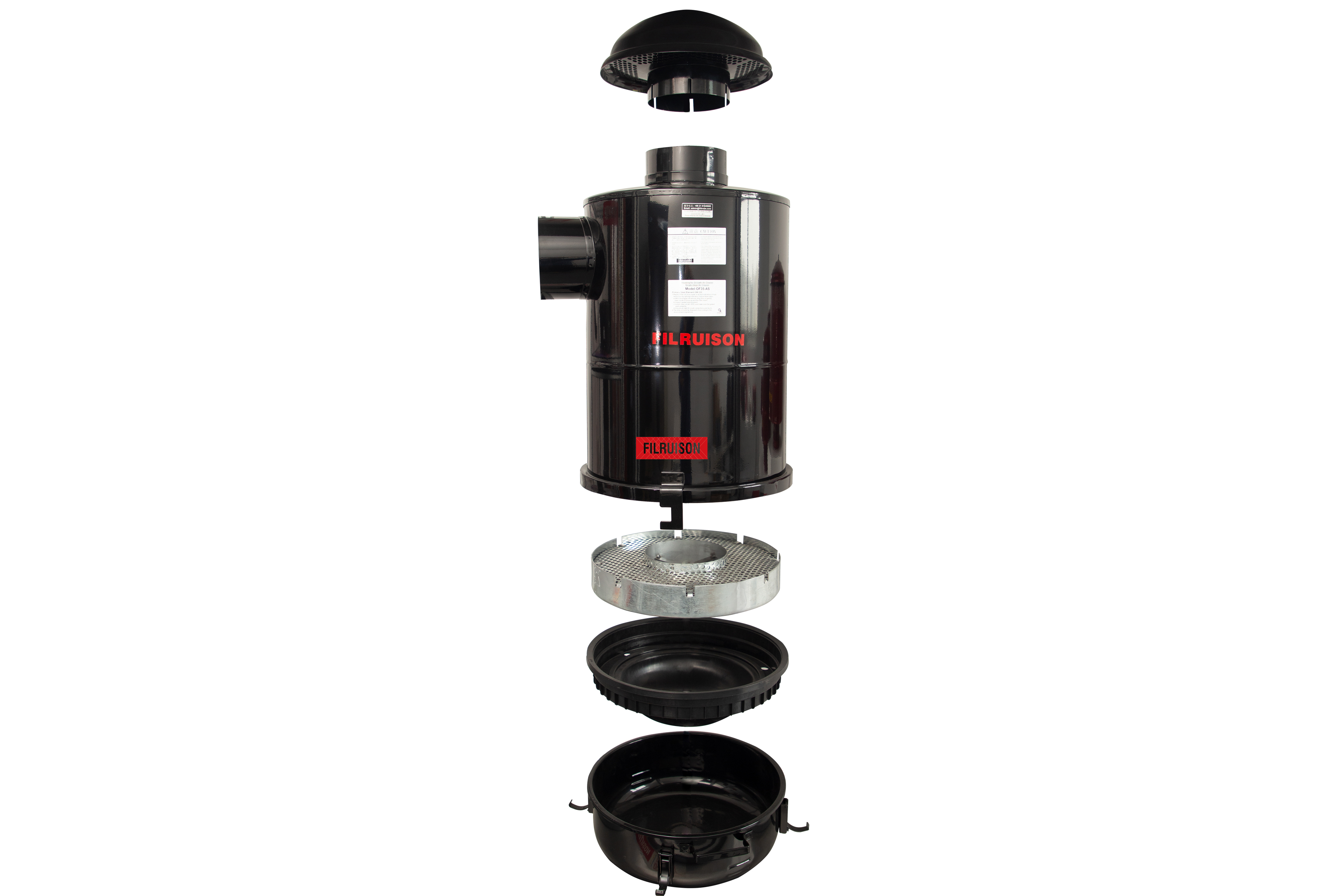
The direct answer is yes. However, operational context dictates the real-world impact. By design, dragging a column of ambient air through a viscous fluid and a dense metallic mesh demands substantial mechanical work from the engine.
In fluid dynamics and automotive engineering, we quantify this resistance as Pressure Drop. This crucial metric represents the difference in air pressure measured just before the air enters the housing compared to the pressure measured immediately after it exits into the intake manifold. Because the air must forcefully navigate a liquid barrier and packed wire, these vintage systems naturally exhibit a much higher pressure differential than modern, thin, pleated paper filters. The motor expends valuable energy simply to draw in the oxygen required for combustion.
Specifically, the severity of this restriction is not linear. It changes dynamically based on engine speed and load. Imagine a classic tractor lugging a heavy plow through a sun-baked field at a steady, low RPM. Under these working conditions, the volume of air required remains relatively low, making the restriction negligible. In contrast, heavily accelerating a classic truck on the highway demands a massive, immediate volume of air. The faster the air tries to move through the fluid and mesh, the more the physical resistance compounds. It acts as a noticeable, power-robbing bottleneck.
To truly understand the impact of filtration on performance, we must look at the basic combustion equation. An internal combustion engine operates essentially as a sophisticated air pump. Generating energy efficiently requires a highly precise stoichiometric ratio of air and fuel. If the oxygen supply is hindered, the entire combustion process suffers.
When a filtration system creates high breathing resistance, it forces the pistons to work much harder during the intake stroke. They struggle just to pull air into the cylinders. Engineers refer to this wasted mechanical energy as pumping losses. Instead of transferring all generated energy to the crankshaft to propel the machinery forward, a measurable portion is wasted fighting against the restriction in the intake tract.
Ultimately, this restricted breathing has a direct and measurable impact on Engine Power. If the carburetor or fuel injection system is not perfectly tuned to account for the lower volume of incoming air, the system runs with a richer air-to-fuel ratio. This means too much fuel and not enough oxygen. The real-world empirical symptoms of this imbalance are highly apparent to equipment operators. You will notice sluggish acceleration, a reduced top speed, lower overall horsepower, and significantly decreased fuel economy.
The automotive and heavy-duty industries experienced a massive shift in the 1960s with the widespread adoption of dry paper elements. This revolution changed equipment design by offering a filtration medium that could be folded into deep pleats. These pleats provided a massive surface area for air to pass through within a remarkably compact space.
When evaluated on a flow bench, engineers measure airflow in Cubic Feet per Minute. Generally speaking, modern paper elements allow a substantially higher volume of air to pass through compared to a liquid-based system of the exact same physical dimensions. Because the paper element relies on microscopic dry pores rather than a dense metallic mesh and a heavy liquid barrier, the motor draws in air much more freely. This maximizes volumetric efficiency under heavy loads.
We must also consider a counter-intuitive factor known as the clogging rate. While a clean paper element flows significantly better, a dirty one quickly becomes a severe liability on a job site. As paper traps dirt, its microscopic pores permanently block up. This causes the flow resistance to spike rapidly. Conversely, a liquid-based system holds massive amounts of dirt in its bottom cup before its internal flow dynamics severely degrade.
| Feature | Vintage Liquid-Based System | Modern Dry Paper Filter |
|---|---|---|
| Initial Airflow Capacity | Moderate. Exhibits higher initial restriction. | High. Minimal initial restriction. |
| Dirt Holding Capacity | Exceptionally High. Dirt safely settles in fluid. | Moderate. Pores block completely over time. |
| Maintenance Method | Wash mesh, dispose of sludge, refill fluid. | Discard old element, install new cartridge. |
Looking at contemporary heavy-duty machinery sectors, the evolution of air filtration reflects a broader industry mandate. Modern engineering analyses continually demonstrate that eliminating pumping losses is absolutely crucial. Global manufacturers must meet stringent environmental regulations, including EPA Tier 4 Final and EU Stage V standards for off-highway diesel engines. Consequently, major OEMs have largely phased out traditional liquid-based filtration in favor of high-capacity, multi-stage dry paper elements paired with cyclonic pre-cleaners.
However, an interesting counter-trend is emerging in specific niche markets. In regions plagued by extreme particulate matter, such as sub-Saharan mining operations or intense dry-land agricultural zones, operators face crippling costs from constantly replacing clogged paper filters. This pain point has sparked a renewed interest in modernized liquid-pool filtration systems among specialized B2B buyers. The current industry trend involves hybridizing these robust housings. Engineers are designing better aerodynamic internal baffles to lower the inherent restriction, while maintaining that unmatched, infinite dirt-holding capacity that heavy industries desperately need to minimize commercial downtime.
Selecting the right filtration system is not just about choosing between wet or dry. It requires matching the specific airflow demands of your engine to the rated capacity of the housing to prevent power loss.
For instance, if you are outfitting industrial equipment, you must verify the exact flow requirement. A modern liquid-based housing designed for a mid-sized excavator might be rated strictly for a 3.5 cubic meters per minute flow rate. If you attempt to push 5.0 cubic meters per minute through that exact same housing, the internal fluid dynamics will collapse. The pressure drop will multiply exponentially, and the high vacuum will likely suck raw fluid directly into the intake manifold.
When selecting a system, follow these engineering guidelines. First, calculate your engine airflow demand at maximum RPM. Second, match the flow rate precisely. Choose a housing explicitly rated for your required volume. Finally, evaluate your operating environment. If you run on paved roads, a dry paper element maximizes horsepower. If you operate in a silica dust cloud for ten hours a day, a properly sized liquid system will save your engine and your maintenance budget.
While these legacy housings are incredibly robust, they are not invincible. Ignoring the required maintenance schedule transforms the system from a protective asset into a severe mechanical liability. Over time, the heavy dust and dirt trapped in the bottom reservoir mix with the liquid. This mixture eventually turns into a thick, muddy sludge reminiscent of wet concrete.
When the fluid turns to sludge, the self-cleaning wicking action of the wire mesh completely stops. The mesh becomes permanently clogged with dry, caked-on dirt. The sludge at the bottom leaves no room for incoming air to circulate. This creates a severe choking effect that exponentially increases Intake Resistance. The motor is essentially suffocated, struggling against a solid wall of mud to draw in oxygen.
If the blockage reaches a critical level, the results prove catastrophic. The engine vacuum does not simply stop pulling; it pulls harder. In extreme cases of neglect, this high vacuum actually sucks the dirty, abrasive sludge straight out of the housing, through the intake, and directly into the delicate combustion chamber. This introduces heavy grit to the piston rings and cylinder walls, causing rapid, irreversible mechanical wear. The strain it puts on internal components is immense.
Despite the clear performance drawbacks in modern highway vehicles, this technology remains highly respected in specific heavy-industry sectors. Many off-road enthusiasts, vintage tractor operators, and heavy machinery owners refuse to switch to paper elements.
In a severe dust storm, an active mining site, or a dry farming field, the atmosphere remains thick with heavy particulate matter. Under these extreme conditions, the microscopic pores of a standard dry element clog completely. This chokes the motor in a matter of hours. A liquid-based housing, however, can literally swallow pounds of dirt before failing. Because the debris sinks to the bottom of the reservoir, the air pathway remains relatively open for vastly longer periods. This ensures continuous operation when commercial downtime is simply not an option.
Furthermore, sourcing a specific, proprietary paper cartridge for a piece of machinery in highly remote areas or developing regions can be logistically impossible and highly expensive. The legacy liquid system offers infinite reusability. An operator does not need to wait for a parts delivery. They simply wash out the housing and pour in a cup of standard motor oil to get the equipment safely back to work. This makes it an incredibly cost-effective and self-reliant solution for off-grid operations.
If you operate a classic vehicle or industrial machinery equipped with this vintage setup, proper maintenance is the only way to keep it flowing optimally. Following a strict maintenance protocol ensures the motor breathes as freely as the design allows. This minimizes unnecessary Airflow Restriction and protects your bottom line.
Here are actionable engineering practices to prevent power loss:
A vintage liquid-based filtration system does restrict airflow more than a modern paper element. By forcing the engine to pull air through a dense mesh and a pool of viscous fluid, it inherently creates a higher pressure drop that can reduce top-end power and volumetric efficiency.
However, operational context is everything. For high-performance, high-RPM street driving, the pumping losses make this technology obsolete. Yet, for low-RPM, high-dust applications like vintage agriculture or remote heavy machinery, these systems remain an engineering marvel of durability and infinite reusability. If you own a classic vehicle or industrial equipment, adhering to strict maintenance practices will keep your system breathing smoothly and protect your engine from catastrophic wear.
If you are looking to upgrade your heavy-duty machinery, optimize your engine's breathing, or find a reliable replacement housing tailored to your specific flow requirements, exploring professional-grade filtration solutions is your next step. Ensure your equipment runs at peak efficiency by sourcing high-quality, precisely engineered filtration products from trusted industry leaders at Syking Tech.
Yes, many aftermarket conversion kits exist for classic cars and tractors. These kits allow you to hide a modern paper element inside the original metal housing. This approach preserves the vintage, factory aesthetic while significantly improving breathing capability and drastically reducing messy maintenance requirements.
Absolutely. Using a heavier weight fluid, like 90W gear oil instead of standard 30W motor oil, makes it much harder for the vacuum to pull air through the liquid. This directly increases breathing resistance and starves the motor of oxygen. Always adhere strictly to the manufacturer-recommended viscosity to maintain proper flow dynamics.
Cleaning frequency depends entirely on your operating environment. In clean, paved-road conditions, servicing the housing once a year or every few thousand miles is generally sufficient. However, in heavy dust, off-road, or agricultural settings, it may require daily inspection and cleaning to prevent sludge buildup and restriction spikes.
The most obvious signs include a noticeable drop in engine power, sluggish acceleration, and increased fuel consumption. Visually, if you inspect the bottom cup and find thick, muddy sludge instead of fluid liquid, or if the wire mesh is heavily caked with dry dirt, the system is severely clogged and actively choking your engine.
Yes, in most cases. Converting to a dry paper element eliminates the heavy pumping losses associated with pulling air through a liquid pool. This reduction in intake restriction allows the engine to breathe easier, which can free up previously lost horsepower and noticeably improve throttle response, especially at higher RPMs.
No. Modern performance oiled filters utilize a microscopic layer of fluid sprayed onto a thin cotton gauze. They are specifically designed for maximum flow and minimal pressure drop. Traditional vintage systems force incoming air through a literal pool of liquid and dense wire, which is fundamentally much more restrictive.
