
Views: 0 Author: Site Editor Publish Time: 2026-08-12 Origin: Site


Harvest season generates extreme particulate environments. Heavy field dirt, ultra-fine agricultural flour dust, and chaff rapidly overwhelm standard OEM agricultural air intakes. Relying solely on primary air filters in these conditions leads to frequent filter blow-outs, premature engine wear, increased fuel consumption, and costly mid-field downtime for daily maintenance. Incorporating an external mechanical barrier ahead of the primary air cleaner assembly removes a massive portion of airborne debris before it can ever reach the main filter element. Upgrading to a specialized air pre-cleaner for combine harvester machinery shifts the maintenance strategy from reactive filter replacement to proactive debris ejection, protecting the engine block and maximizing harvest uptime.
A successful harvest requires uninterrupted engine performance. This baseline performance is heavily compromised when airborne debris restricts combustion airflow. Combine harvesters operate in some of the most challenging environments imaginable. Clouds of dirt, pulverized plant matter, and exhaust soot surround the machine constantly. When engines cannot breathe freely, they lose horsepower. Operators notice sluggish response times and higher operating temperatures. Maintaining clean airflow is a fundamental requirement for keeping the engine running through long harvest days. The sheer volume of air a modern diesel engine consumes means that even a low concentration of dust in the air translates to pounds of dirt entering the intake system over a single shift. Without proper pre-separation, the primary filter bears the entire burden of this debris load.
Different crops generate different types of particulate matter. Soybean dust is notoriously fine and sticky, often coating intake surfaces with a stubborn film. Corn harvest produces heavier trash, including bits of cob and leaf matter that can physically block intake screens. Wheat and barley generate sharp, abrasive chaff that can damage filter media if drawn in with enough velocity. Understanding the specific particulate profile of your harvest environment helps in selecting the right filtration strategy. The goal is always to intercept this material as early in the intake process as possible.
Standard paper or synthetic filters are insufficient for heavy agricultural dust. They are designed to catch fine particles, not bulk debris. Rapid dust loading increases restriction across the filter media. This forces the engine to run rich, burning more fuel than necessary. Elevated exhaust gas temperatures follow closely behind. When a paper filter clogs, the vacuum pressure inside the intake system spikes. This pressure can physically tear the filter media. Once a tear occurs, unfiltered dirt bypasses the system entirely. It enters the combustion chamber, causing immediate and severe internal wear.
The surface area of a standard OEM filter is finite. Once the pleats fill with dirt, airflow drops exponentially. Operators often attempt to extend filter life by blowing them out with compressed air. This practice is risky. High-pressure air can easily enlarge the microscopic pores in the paper media, allowing larger particles to pass through during subsequent use. Furthermore, blowing out filters rarely removes all the embedded dirt, meaning the filter starts its next cycle already partially restricted. Relying on this method as a primary defense strategy is a losing battle against the volume of dust generated during harvest.
High humidity, morning dew, or sudden light rain creates a unique hazard. Moisture mixes with fine crop dust directly on the primary filter face. This mixture bakes into an impenetrable clay-like crust. We call this the mudding phenomenon. It chokes the engine almost instantly. A dry filter can often be blown out with compressed air. A mudded filter is usually ruined permanently. The crust blocks airflow so severely that the engine may stall out completely under load. Preventing moisture from reaching the dust-laden paper is critical for continuous operation.
The mudding effect is particularly problematic during early morning or late evening harvesting when dew points are reached. The intake system draws in moisture-laden air, which condenses on the cooler surfaces of the filter housing and media. When dry dust hits this condensation, it immediately forms a paste. This paste hardens as the engine heat eventually dries it out, creating a solid barrier. Mechanical pre-separation is the only effective way to remove water droplets from the air stream before they can interact with the dust on the filter media.
Stopping machinery daily to manually blow out filters carries hidden costs. Every minute spent servicing filters is a minute lost cutting crops. Labor costs accumulate quickly when operators stop multiple times a day. Furthermore, field-side filter maintenance introduces severe risks. Removing a dirty filter in a dusty field often knocks loose dirt directly into the intake tube. We call this accidental dust ingestion or engine dusting. Even a teaspoon of dirt entering the intake during maintenance can score cylinder walls. It ruins piston rings and leads to catastrophic engine failure.
Consider the logistics of a multi-machine harvest operation. If one combine stops for filter maintenance, it can disrupt the flow of grain carts and trucks, causing a ripple effect of inefficiency across the entire crew. The financial impact of this downtime far exceeds the cost of the filters themselves. Implementing a system that extends service intervals from daily to weekly, or even seasonally, provides a massive boost to overall operational productivity. The focus must shift from managing clogged filters to preventing them from clogging in the first place.
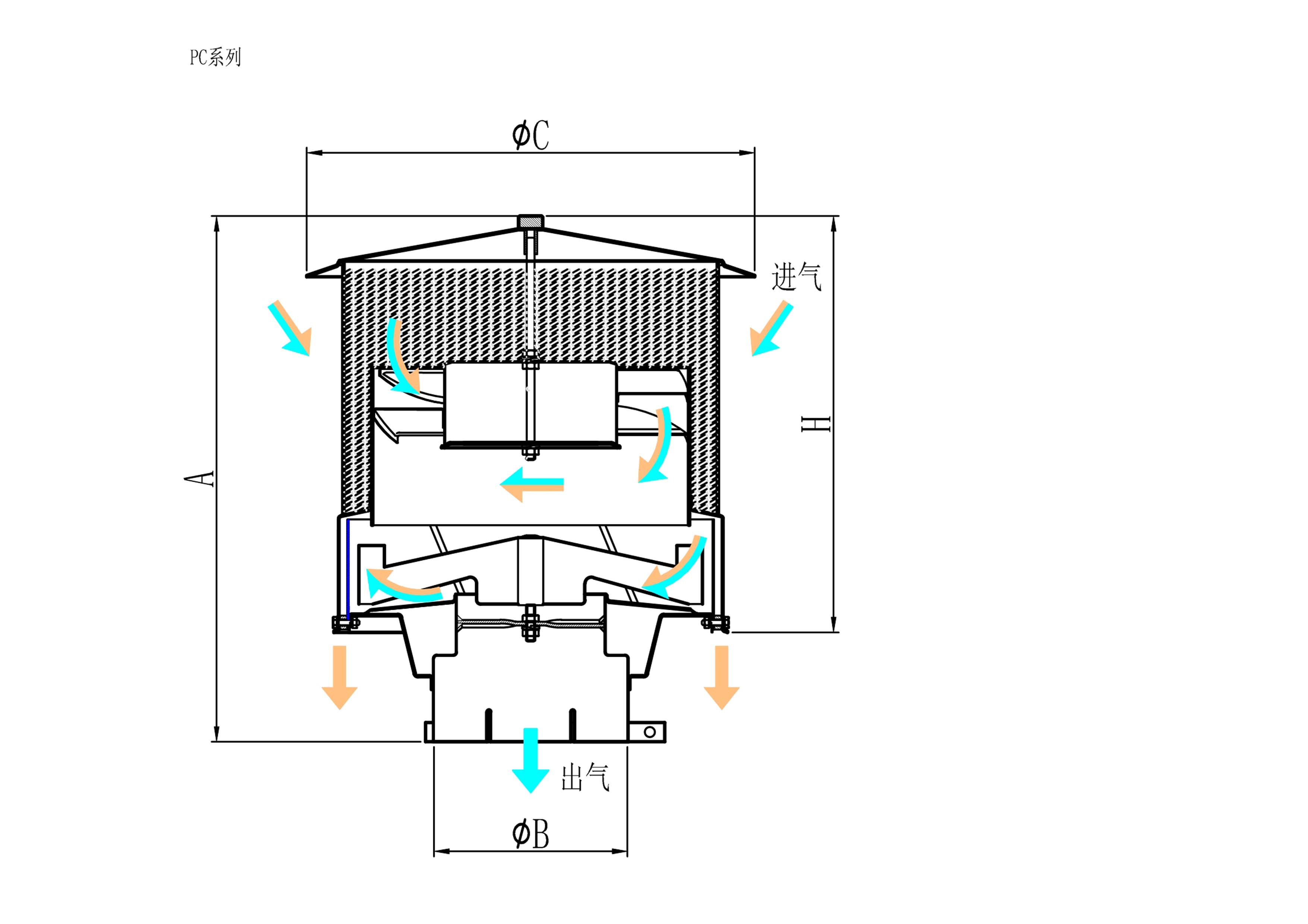
A combine intake dust separator sits ahead of the main air cleaner. It utilizes stationary directional vanes to spin incoming air. This spinning action creates intense centrifugal force. The force drives heavier-than-air particles to the outer wall of the housing. Clean air, being lighter, remains in the center of the vortex. This clean air then travels down the intake pipe to the primary filter. The mechanical separation happens instantly. It requires no moving filter media. The geometry of the housing dictates the efficiency of the separation process.
The velocity of the air is the driving factor in this process. As the engine draws air, the fixed vanes force it into a tight spiral. The heavier the particle, the more momentum it carries, and the harder it is thrown against the outer wall. This is why centrifugal separators are highly effective against heavy dirt and sand, but require specific designs to handle ultra-fine, lightweight dust. The internal aerodynamics must be precisely engineered to maintain the vortex without creating excessive restriction that would starve the engine of air.
Older bowl configurations trap dirt in a transparent plastic container. These classic tractor pre-cleaners require frequent manual emptying. If the operator forgets to empty the bowl, the collected dirt gets sucked down into the main filter. This defeats the entire purpose of the device. Modern continuous-ejection systems actively expel dirt back into the environment. They use a louver or exhaust draw to eject debris without storing it. These systems eliminate the need for daily bowl dumping. They provide continuous protection regardless of how much dust the machine encounters.
The shift from collection to ejection was a major advancement in agricultural machinery maintenance. Collection bowls are simply not viable for the volume of dust a modern combine encounters; they would fill up in a matter of hours. Continuous ejection systems leverage the air pressure differentials created by the spinning vortex to push the separated debris out through specific ports. This self-cleaning action ensures the pre-cleaner maintains its efficiency over long periods without operator intervention.
Centrifugal force does not just separate dry dust. It also flings away rain and morning dew. Water droplets are heavier than air. The spinning vortex drives them to the outer ejection ports just like dirt. This dynamic prevents water from reaching the primary paper filter element. Keeping the paper media dry is essential for preventing the mudding phenomenon discussed earlier. A dry filter maintains its structural integrity longer. It also ensures consistent airflow during damp morning harvests or sudden afternoon showers.
This moisture separation capability extends the operating window for the harvester. Operators can start earlier in the morning when dew is still on the crop, and continue working through light drizzle without fear of instantly ruining their primary air filter. The pre-cleaner acts as a weather shield, ensuring that only dry, relatively clean air makes it into the sensitive intake tract. This is a critical advantage in regions with unpredictable harvest weather.
The market offers several distinct architectures for a harvester engine precleaner. Buyers must understand the mechanical differences to make an informed choice. Each technology has specific strengths and weaknesses based on operating conditions. Selecting the wrong type can lead to poor performance or unnecessary maintenance headaches.
These units rely solely on engine intake draw. The vacuum pulls air through fixed vanes, spinning the air mass. Some models feature an internal free-running rotor powered by the airflow. They offer low maintenance and require no electrical wiring. They have zero power draw and are highly reliable in dry dust. However, separation efficiency drops significantly at low engine RPMs. The engine must pull enough air to maintain the velocity needed for centrifugal separation. They require highly precise CFM matching to function correctly.
Because they depend entirely on the engine's suction, passive units are most effective when the combine is operating at full throttle under load. During idling or low-speed maneuvering, the air velocity drops, and the centrifugal force weakens, allowing more dust to pass through. Despite this limitation, their simplicity and ruggedness make them a popular choice for many standard agricultural applications where the machine spends the vast majority of its time at high RPMs.
This system uses a scavenger hose connected to the exhaust system. The exhaust flow creates a Venturi-effect vacuum. This vacuum actively pulls separated dust out of the pre-cleaner housing. It then blows the dirt out the exhaust stack. They provide highly efficient continuous ejection. They are excellent for ultra-fine flour dust and heavy agricultural soot. The main drawback is a more complex installation process. There is also a potential for exhaust back-pressure issues if the scavenging kit is improperly installed.
The active scavenging provided by the exhaust connection ensures that the pre-cleaner housing remains completely clear of debris, even in the most extreme dust conditions. This makes them ideal for crops like soybeans or lentils, which produce massive amounts of fine, clinging dust. However, routing the scavenger hose requires careful planning to avoid hot exhaust components and moving parts. The exhaust ejector must also be welded or clamped precisely to create the correct Venturi vacuum without restricting exhaust flow.
Powered systems utilize an integrated electric fan. This fan draws in air and ejects debris independently of engine RPM. They offer consistent, high-velocity separation efficiency. They work perfectly whether the engine is idling or at full throttle. They provide ultra-low restriction to the intake system. However, they require electrical integration into the combine's harness. This introduces electric motors and moving parts. These components can be vulnerable to extreme agricultural vibration and harsh field conditions.
The primary advantage of a motorized unit is its ability to provide maximum protection at all times, regardless of what the engine is doing. This is particularly beneficial during field-side unloading or maintenance when the engine is idling but dust is still swirling around the machine. The electric fan ensures a constant, powerful vortex. The trade-off is the added complexity of wiring and the potential for motor failure in high-vibration environments. Regular inspection of the electrical connections and fan blades is necessary.
| Technology Type | Primary Mechanism | Key Advantage | Main Disadvantage |
|---|---|---|---|
| Passive Centrifugal | Engine intake vacuum | No electrical parts, highly reliable | Efficiency drops at low engine RPM |
| Exhaust-Aspirated | Venturi vacuum from exhaust | Excellent for ultra-fine flour dust | Complex installation, exhaust back-pressure risk |
| Powered/Motorized | Integrated electric fan | Consistent efficiency at all RPMs | Vulnerable to vibration, requires wiring |
Matching the pre-cleaner to the engine's maximum CFM is a mathematical necessity. Undersizing the unit chokes the engine. It reduces horsepower and increases fuel consumption drastically. The engine struggles to pull enough air through a restrictive housing. Oversizing the unit is equally problematic. An oversized pre-cleaner fails to create sufficient air velocity. Without high velocity, there is no centrifugal force. The dust simply passes straight through the housing and into the primary filter. You must consult the engine manual to find the exact CFM requirements before purchasing.
Calculating CFM requires knowing the engine displacement, maximum RPM, and volumetric efficiency. Most pre-cleaner manufacturers provide sizing charts based on engine make and model, but verifying the numbers is always recommended. If your combine has been modified or tuned for higher horsepower, its CFM requirements will be higher than the factory specifications. Installing a pre-cleaner based on outdated or incorrect CFM data guarantees poor performance and potential engine damage.
The physical height of the intake stack matters greatly. Some aftermarket modifications lower the pre-cleaner intake by even 12 inches. We call this the foot-lower trap. Lowering the stack inadvertently places the inlet directly in the heavy path of chaff. The feeder house and header kick up massive clouds of debris. Keeping the intake high above this dust cloud reduces the initial debris load. Always maintain or increase the factory stack height when installing a new pre-cleaner unit.
The air quality improves significantly with every foot of elevation above the header. While a taller stack might seem more vulnerable to low-hanging branches, the benefit of drawing cleaner air far outweighs the risk in most field environments. If clearance is a genuine issue, consider a pre-cleaner design that mounts horizontally or utilizes a low-profile housing, rather than simply cutting down the vertical stack and exposing the intake to heavier dust concentrations.
Evaluate the outside diameter (OD) of the intake pipe carefully. You must ensure the new unit fits securely over the existing metal or plastic stack. Adapter sleeves are often necessary for a tight seal. Any air leak below the pre-cleaner allows unfiltered dust to bypass the system. Consider the structural integrity required to support the pre-cleaner's weight. Long vertical stacks may flex under the added top weight. Heavy units require robust clamping mechanisms to prevent them from vibrating loose during operation.
When using adapter sleeves, ensure they are made of durable, UV-resistant rubber or high-grade silicone. Standard PVC or cheap rubber will degrade quickly under the intense sun and heat of a harvest environment, leading to cracks and air leaks. The clamps must be heavy-duty T-bolt style, not standard worm-gear clamps, to provide the clamping force necessary to hold a heavy pre-cleaner secure on a vibrating combine stack.
Operators must balance the upfront capital expenditure of a premium pre-cleaner against long-term operational savings. High-quality units require a noticeable initial investment. However, the payback period is often surprisingly short. You save money on replacement parts, labor, and fuel. Protecting a diesel engine justifies the cost of a premium intake protection system. Cheap, poorly designed units often cost more in the long run due to engine damage and frequent filter replacements.
The calculation goes beyond just the cost of paper filters. Consider the fuel savings. A restricted air filter forces the engine to work harder, consuming more diesel to produce the same horsepower. Over a 500-hour harvest season, a 3% decrease in fuel efficiency due to intake restriction translates to hundreds of gallons of wasted fuel. A pre-cleaner maintains optimal airflow, ensuring the engine operates at peak efficiency throughout the season.
Calculate the average cost of combine air filters. Multiply that by the reduction in replacement frequency. A standard machine might require three primary filter changes per season in heavy dust. A machine equipped with a quality pre-cleaner might only need one filter change per season. The savings on paper filters alone often pay for the pre-cleaner within two harvest seasons. You also eliminate the labor costs associated with stopping the machine to perform those changes.
Furthermore, reducing the frequency of filter changes minimizes the risk of accidental engine dusting. Every time the filter housing is opened in the field, there is a chance for dirt to enter the clean side of the intake. By keeping the housing sealed for the entire season, you eliminate this risk entirely. The peace of mind knowing the engine is protected is a significant, albeit intangible, part of the return on investment.
Maintaining optimal air-to-fuel ratios prevents unburned fuel waste. A clean filter allows the engine to breathe easily and burn fuel efficiently. Eliminating silicon ingestion prevents catastrophic cylinder scoring. Dirt acts like sandpaper inside the engine block. It wears down piston rings and contaminates the engine oil. Clean oil and tight piston rings extend the life of the engine by thousands of hours. The long-term value of avoiding a premature engine rebuild is immense.
Oil analysis reports consistently show lower silicon levels in engines equipped with high-efficiency pre-cleaners. Lower silicon means less abrasive wear on bearings, cams, and cylinder walls. This extends the safe interval between oil changes and ensures the engine maintains its compression and power output over its entire lifespan. The pre-cleaner is essentially an insurance policy for the most expensive component on the combine.
A heavy pre-cleaner at the top of a tall intake stack acts as a lever arm. Rough field conditions create intense side-to-side whipping motions. This leverage can cause structural fatigue at the base of the intake pipe. Stress fractures allow dirty air to bypass the filter entirely. Recommend secondary bracing of the intake pipe to the cab structure or chassis. A simple rubber-isolated bracket prevents stress fractures and keeps the assembly secure.
Inspect the base of the intake stack regularly for hairline cracks, especially if operating in rough, rutted fields. If you notice excessive movement of the pre-cleaner during operation, fabricate a support bracket immediately. Do not wait for the pipe to fail. The bracket should allow for some flex to absorb vibration, using rubber isolators, rather than rigidly bolting the stack to the cab, which could transfer cab vibrations into the intake system.
Even self-cleaning systems require physical checks. Fine, sticky crop residues like canola dust or corn trash can cause problems. They can wrap around internal rotors or clog ejection slots. Establish a routine maintenance interval. Check rotor rotation and clear screen grates during daily machine greasing. A quick visual inspection ensures the ejection ports remain clear and functional.
During the daily walk-around, shine a flashlight into the ejection ports to verify they are clear. If you are using a passive unit with a spinning rotor, listen for the sound of the rotor spinning down after the engine is shut off. A smooth, long spin-down indicates the bearings are in good condition. If it stops abruptly, the bearings may be failing or debris is jamming the mechanism, requiring immediate attention.
Address concerns regarding aftermarket modifications carefully. Some engine manufacturers are strict about intake restrictions. Advise buyers to consult their equipment dealer before installation. Ensure the chosen pre-cleaner does not void OEM engine warranties. It must also comply with local emissions standards. Reputable pre-cleaner manufacturers provide restriction data to prove their units meet OEM specifications.
Keep documentation of the pre-cleaner's specifications and the installation date. If a warranty claim arises regarding engine performance, having proof that the pre-cleaner operates within the engine manufacturer's allowable restriction limits is vital. Most modern combines have intake restriction sensors that will trigger a cab alarm if the pre-cleaner is causing an issue, providing an early warning before any damage occurs.
An air pre-cleaner is a necessary preventative tool for combine harvesters operating in high-dust agricultural environments. Protecting your engine from abrasive dirt ensures a successful and profitable harvest season. Start the selection process by calculating your specific engine CFM requirements. Measure the intake pipe OD accurately. Assess the specific type of harvest dust you encounter daily to determine the ideal ejection technology.
A: A quality unit removes between 80% and 99% of airborne debris. The exact efficiency depends on particle size, dirt density, and the specific pre-cleaner technology used. Heavier dirt particles separate much easier than ultra-fine flour dust.
A: Properly sized units add negligible restriction to the intake system. However, undersized units will choke the engine and trigger filter restriction sensors. Always match the unit to your engine's maximum CFM rating.
A: Centrifugal action flings water droplets outward before they reach the main filter. This prevents moisture from mixing with dust on the paper media. It stops mud from baking onto the filter and choking the engine.
A: Older bowl-style units require daily manual emptying. Modern continuous-ejection models actively expel dirt and only require a quick daily visual check. You just need to ensure the ejection louvers are not clogged with sticky chaff.
A: Yes, provided you select the correct size and mounting adapters. You must match the CFM rating and pipe diameter. Always verify that the installation does not interfere with moving parts or void OEM warranties.
