
Views: 0 Author: Site Editor Publish Time: 2026-08-06 Origin: Site


Operating heavy equipment in high-dust environments like mining, forestry, agriculture, or construction accelerates engine wear and forces premature air filter replacements. Relying solely on standard filtration in extreme conditions leads to rapid intake restriction. This causes unscheduled maintenance downtime and creates a high risk of catastrophic engine dusting or turbocharger failure. Standard paper media simply cannot handle the sheer volume of particulate matter generated by haul trucks, excavators, or agricultural headers working in dry, abrasive conditions.
Upgrading the intake system with a high-efficiency engine air pre-cleaner for heavy equipment shifts maintenance from reactive to predictable. It intercepts debris before it reaches the primary filter and safeguards long-term equipment profitability. By separating the heaviest and most abrasive particles from the airstream early, operators stabilize engine performance, reduce emergency field interventions, and lower annual consumable expenses.
Rapid dust loading on a standard primary air filter creates an immediate bottleneck in the engine's respiratory system. As the filter media clogs with silica, dirt, or chaff, intake restriction spikes. This forces the engine to work harder just to pull in the necessary oxygen for combustion. The immediate result is a compromised air-to-fuel ratio. Diesel engines running rich due to air starvation experience elevated exhaust gas temperatures (EGTs). High EGTs degrade engine oil prematurely and put immense thermal stress on exhaust valves and turbocharger housings.
Beyond thermal stress, high intake restriction causes severe fuel inefficiency and noticeable power loss. Operators often compensate by pushing the machine harder. They burn more fuel while accomplishing less work. The cascading financial impact becomes severe when machines must be pulled off the line for emergency filter swaps. An excavator or haul truck sitting idle while a technician drives out to the site to replace a choked filter represents lost production time that you cannot recover.
Faced with frequent filter clogging, field operators often resort to manually cleaning paper elements. The most common, yet highly destructive, field practice involves blowing out filters with compressed air. While tapping or blowing out a filter might visually remove the outer cake of dust, it causes catastrophic hidden damage. Standard shop air pressure easily exceeds the structural limits of cellulose or synthetic filter media.
This practice creates microscopic tears in the filter pleats. These tears are invisible to the naked eye but act as open highways for fine particulate matter. Once you reinstall the compromised filter, highly abrasive silica gains direct access to the engine cylinders. Silica dust acts like liquid sandpaper inside the combustion chamber. It scores cylinder walls, destroys piston rings, and rapidly degrades engine oil viscosity. What seems like a quick fix to save a few dollars on a replacement filter often results in a complete engine rebuild.
To understand why premature filter replacement hurts engine protection, you must understand the physics of filtration. A partially loaded filter actually has a higher fractional efficiency than a brand-new filter. As a light cake of dust forms on the media surface, it creates an additional filtration layer. This traps smaller particles better than the raw paper alone. Industry professionals call this the filter loading paradox.
Premature filter replacement interrupts this high-efficiency phase. Operators often prompt this based on visual inspection rather than restriction indicator lights. Every time you open a housing, you risk knocking loose dirt directly into the clean air intake tube. A successful filtration intervention requires extended service intervals, stabilized fuel consumption, and zero dust bypass into the combustion chamber. You should only change filters when the restriction gauge indicates maximum allowable vacuum, not based on arbitrary visual checks.
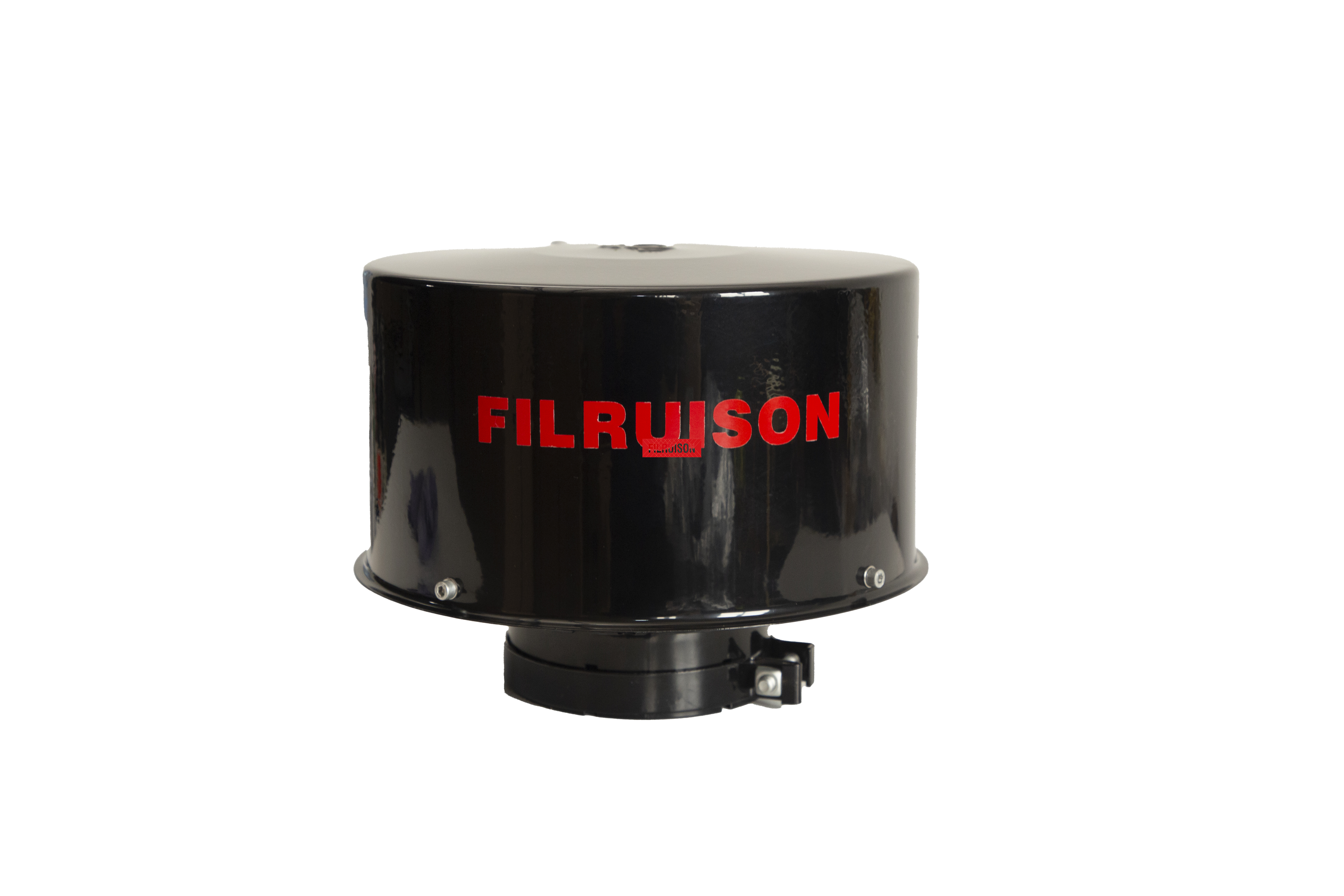
The core mechanism behind any effective pre-cleaning system is centrifugal force. Instead of relying on a physical barrier to trap dirt, these devices manipulate the airflow itself. As dirty air enters the unit, it is forced through stationary vanes or spinning impellers. This imparts a rapid rotational velocity to the airstream, creating a miniature cyclone inside the housing.
Because dirt, dust, and chaff are heavier than air, their mass causes them to be thrown outward against the inner walls of the pre-cleaner housing by centrifugal force. The clean air, being lighter, remains in the center of the vortex and is directed straight down into the engine's intake pipe. Intercepting these larger particles before they ever reach the pleated paper media maintains a cleaner, more consistent airflow for combustion.
The mechanical separation process generally follows these distinct stages:
Different operational environments require different separation technologies. Understanding the categories ensures you apply the right tool to the specific environmental hazard.
The most immediate and measurable benefit of a heavy machinery air precleaner is the mathematical extension of filter life. Consider a wheel loader operating in a dusty quarry that requires a primary air filter change every 100 hours. By installing a pre-cleaner that removes 80% of the incoming dust mass, the filter only sees 20% of the debris it previously handled.
This shifts the changeout interval from 100 hours to potentially 500 hours. This 5x extension drastically reduces the annual volume of filters purchased. More importantly, it slashes the labor hours required for maintenance teams to perform these swaps. This frees technicians to focus on preventative maintenance rather than reactive filter management.
| Filtration Setup | Average Filter Life (Hours) | Maintenance Frequency | Risk of Engine Dusting |
|---|---|---|---|
| Standard Factory Intake | 100 - 250 | High (Reactive) | High (Due to frequent housing opening) |
| Passive Pre-Cleaner Added | 400 - 800 | Medium (Predictable) | Low |
| Powered/Scavenged Pre-Cleaner | 800 - 1500+ | Low (Scheduled) | Very Low |
Modern heavy equipment relies heavily on turbochargers to deliver the necessary air volume for high horsepower output. Turbocharger compressor wheels spin at excess of 100,000 RPM. At these speeds, even fine dust particles act like microscopic projectiles. Pre-cleaners shield the turbocharger compressor blades from micro-abrasions and leading-edge erosion caused by fine dust.
Furthermore, preventing silica from bypassing the intake system protects the engine oil. When dust enters the combustion chamber, it inevitably washes down the cylinder walls and contaminates the crankcase oil. Silica-laden oil accelerates main and rod bearing wear, degrades camshaft lobes, and significantly reduces overall engine life. Stopping the dirt at the intake is the most effective way to maintain oil cleanliness.
An engine breathing through a restricted filter struggles to maintain efficiency. The engine management system may attempt to compensate for the lack of air by adjusting injection timing or fuel delivery, but the physical lack of oxygen limits combustion efficiency. A clean equipment intake pre-cleaner sustains optimal intake restriction over a much longer operational window.
This sustained airflow prevents the over-fueling conditions common in restricted diesel engines. Operators notice that the machine retains its factory-rated power output throughout the entire service interval, rather than feeling sluggish as the filter slowly chokes. Consistent power delivery translates directly to consistent fuel consumption and predictable operational costs.
Procurement teams must evaluate the initial capital expenditure of upgrading intake systems against the recovered operational costs. Calculating ROI requires a clear framework based on three main pillars: the reduction of annual filter purchases, eliminated emergency maintenance labor, and recovered machine uptime.
If a pre-cleaner saves thousands in filter elements and prevents a single catastrophic dusting event, the payback period is often measured in weeks, not years. The calculation should also factor in the logistical savings of storing, transporting, and disposing of fewer bulky air filters on remote job sites.
The most critical technical factor in pre-cleaner selection is airflow matching. Pre-cleaners are not one-size-fits-all components. You must precisely match them to the engine's specific Cubic Feet per Minute (CFM) demand at its normal operating RPM. This is a non-negotiable evaluation metric.
Improper sizing introduces severe trade-offs. Oversized pre-cleaners lack the internal air velocity required to generate adequate centrifugal force. This results in poor separation efficiency and allows dust to pass through to the filter. Conversely, undersized units create an immediate airflow restriction, starving the engine of air from the moment they are installed. Always consult the engine manufacturer's airflow specifications before selecting a unit size.
The type of debris dictates the type of pre-cleaner required. Environmental compatibility ensures the unit functions without becoming a maintenance liability itself. In agricultural settings, sticky chaff, lint, and large organic matter require pre-cleaners with wide ejection slots and self-cleaning rotors to prevent plugging.
In mining or quarry applications, the hazard is fine, highly abrasive silica dust. These environments require high-velocity centrifugal separation capable of pulling dense, microscopic particles out of the airstream. Matching the pre-cleaner type to the specific hazard ensures maximum efficiency and prevents the unit from clogging.
Retrofitting heavy machinery with aftermarket intake components introduces physical integration risks. Heavy-duty pre-cleaners add weight to the end of intake pipes or machinery hoods. In high-vibration environments like rock crushing or forestry, this added mass can cause metal fatigue, leading to cracked intake tubes or broken mounting points.
Mitigate these risks by utilizing reinforced mounting brackets and heavy-duty silicone hump hoses to isolate vibration. Minimize horizontal extensions. Mount the unit as close to the vertical axis of the intake pipe as possible to reduce leverage. Additionally, ensure the final installation height and position do not obstruct the operator's line of sight from the cabin.
You must dispel the myth of a 100% maintenance-free system. While pre-cleaners drastically reduce filter maintenance, they introduce their own minor inspection requirements. Ignoring the pre-cleaner can lead to blockages that defeat its purpose entirely.
Operators must incorporate specific checks into their daily walkaround inspection protocols. This includes checking for blocked ejection ports, clearing debris screen build-up (such as leaves, plastic bags, or heavy chaff), and inspecting dust cups on collector-style models. For atmospheric units, technicians should periodically verify that the internal rotor or impeller bearings spin freely and are not seized by fine dust intrusion.
To maximize engine life and operational uptime in severe-duty environments, you must move beyond standard factory filtration. Implementing the right pre-cleaning technology stops dirt before it becomes a maintenance emergency.
A: Depending on the dust concentration and the specific pre-cleaner's efficiency, it typically extends primary filter life by 3 to 5 times by removing up to 90% of airborne debris before it reaches the media.
A: Only if it is improperly sized. A correctly specified unit matched to the engine's CFM will maintain or lower the overall system intake restriction over its operating cycle by preventing premature filter clogging.
A: Yes, though it is minimal. Routine visual inspections are required during standard preventative maintenance to ensure intake screens are clear of large debris, dust collection cups are emptied, and internal rotors spin freely.
A: Using a pre-cleaner is vastly superior and safer. Cleaning filters with compressed air is highly discouraged by manufacturers as it risks creating micro-tears in the filter media, leading to severe engine dusting.
A: Scavenged systems utilize a connection to the exhaust system to create a vacuum that pulls dust out of the pre-cleaner. Atmospheric units use internal spinning rotors to eject dust directly back into the surrounding environment.
A: CFM is calculated using the engine's displacement, maximum operating RPM, and volumetric efficiency. It is highly recommended to use the engine manufacturer's specific airflow data to ensure accurate sizing.
A: Always rely on the restriction indicator light or a restriction gauge. Filters perform at their highest filtration efficiency once a light cake of dust has formed. Changing them prematurely increases the engine's exposure to dust bypass.
