
Views: 0 Author: Site Editor Publish Time: 2026-08-13 Origin: Site


Operating agricultural equipment in high-dust, heavy-chaff environments constantly threatens engine longevity, accelerates primary air filter degradation, and risks downstream damage to delicate fuel systems. Relying solely on standard air filtration leads to frequent filter replacements, unplanned downtime during critical seasonal windows, and the risk of catastrophic engine dusting or carburetor and fuel injection system failures if a compromised filter allows fine particulate bypass. Selecting an optimized air pre-cleaner for tractor engine requires moving beyond generic aftermarket parts. It demands a technical evaluation of engine airflow (CFM) requirements, contaminant profiles, and separation technologies to effectively intercept up to 95% of airborne debris before it reaches the primary filter.
Engine dusting remains one of the most severe mechanical threats in modern agriculture. When you operate machinery in dry, dusty conditions, silica, dirt, and agricultural chaff constantly bombard the intake system. If these abrasive materials bypass a compromised primary filter, they enter the combustion chamber. Once inside, they act like liquid sandpaper. This causes premature piston ring wear, cylinder wall scoring, and a rapid loss of engine compression. Furthermore, fine particulate contamination directly damages carburetors and modern high-pressure fuel-injection systems. Dirt disrupts the precise metering of fuel, leading to poor fuel-to-air mixtures, rough idling, and eventual mechanical failure. You must stop this dirt before it ever enters the primary intake tract.
The physics of centrifugal separation provide a highly effective solution to this problem. A tractor air intake precleaner forces incoming air into a high-speed vortex. As the air spins, it uses mass and centrifugal force to push heavier debris particles outward toward the walls of the unit. The system then ejects these heavier particles from the clean air stream, either into a collection bowl or directly back into the atmosphere. This mechanical process achieves up to 95% separation efficiency without relying on restrictive paper or foam filter media. Because it relies on physics rather than physical barriers, it does not clog or restrict airflow when properly sized.
These systems offer broad adaptability across diverse agricultural fleets. You can install them on utility tractors, high-capacity combines, forage harvesters, and skid steers. They perform exceptionally well in shared high-debris environments where multiple machines operate simultaneously. Standardizing pre-cleaners across your entire fleet simplifies maintenance schedules and ensures consistent engine protection regardless of the specific machine or operator.
A successful implementation meets several specific performance criteria. First, it maintains optimal air-to-fuel ratios under heavy engine load, ensuring you do not lose horsepower during critical operations. Second, it eliminates primary filter overloading during the peak harvest season, keeping your machines running when you need them most. Third, it protects downstream fuel system components from micro-abrasions. Finally, it achieves a verifiable three to five times reduction in filter maintenance intervals without restricting intake airflow.
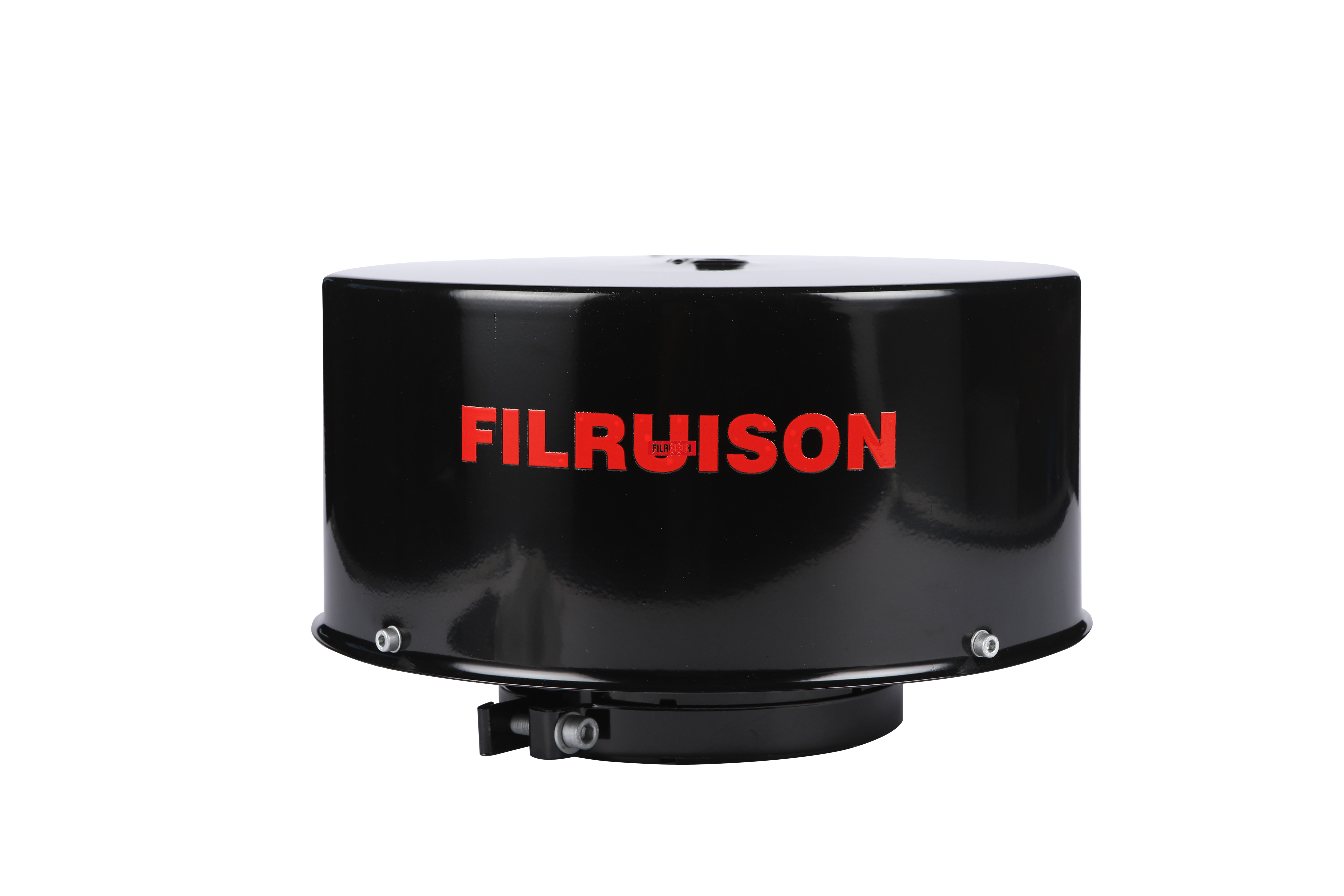
Choosing the right farm tractor dust separator means understanding the different separation technologies available on the market. Each design serves specific environmental conditions and operational requirements. You cannot simply pick a unit off the shelf; you must match the technology to your specific field conditions.
Static centrifugal pre-cleaners, often referred to as bowl or tube style units, use stationary internal vanes to create cyclonic airflow. As the engine draws air through the intake, these angled vanes force the air to spin. They feature no moving parts, which makes them highly durable and offers a low initial hardware cost. However, they require manual emptying of the clear plastic dust bowl. If the operator forgets to empty the bowl, the accumulated dirt will eventually get sucked directly into the primary filter. They also suffer from lower separation efficiency at variable engine RPMs, as the vortex speed drops when the engine idles.
Dynamic rotary pre-cleaners utilize an internal spinning rotor. The incoming airflow drives this rotor, spinning it at high speeds to actively eject up to 95% of contaminants through discharge ports. They provide continuous, self-cleaning, and maintenance-free operation. You do not have to empty any bowls or monitor dust levels. This makes them ideal for extreme-dust tillage environments where a static bowl would fill up in a matter of hours.
Exhaust-aspirated pre-cleaners route separated dust directly into the exhaust stream. They use a venturi effect created by the exhaust gases to pull debris away from the intake and blow it out the exhaust pipe. This offers true zero-maintenance debris ejection and handles massive volumes of dust effortlessly. However, implementation is complex. It requires modifying the exhaust stack, routing hoses across the engine bay, and ensuring the venturi system is perfectly calibrated to avoid exhaust backpressure.
You must also choose between OEM and aftermarket retrofit classifications. Standardized catalog models offer direct replacements for factory setups, ensuring a perfect fit but sometimes lacking advanced separation technology. Specialized aftermarket bolt-on systems provide targeted protection for specific crop types and extreme environments, often outperforming factory options.
Screened versus unscreened intakes dictate debris handling capabilities. Use screens to prevent large straw, leaves, and crop chaff from entering the unit and jamming internal rotors. Unscreened units work better in pure dust environments where chaff is absent, as screens can sometimes ice over in freezing rain or clog with wet mud.
| Pre-Cleaner Technology | Mechanism of Action | Ideal Operating Environment | Maintenance Requirements |
|---|---|---|---|
| Static Centrifugal (Bowl Style) | Stationary vanes create a vortex; dirt falls into a collection bowl. | Light to moderate dust; general utility work. | High. Requires daily visual inspection and manual dumping of the bowl. |
| Dynamic Rotary (Spinning Rotor) | Air-driven spinning rotor actively ejects dirt through side ports. | Fine dust, dry tillage, high-hour continuous operation. | Low. Self-ejecting design requires only periodic visual inspection of the rotor. |
| Exhaust-Aspirated | Venturi vacuum pulls dirt from the intake and routes it out the exhaust. | Heavy continuous dust; large-scale earthmoving and mining. | Very Low. System is entirely self-cleaning once installed correctly. |
Calculating engine airflow demand is your first and most critical step. You cannot guess this number. Use the standard formula: Engine Displacement in Cubic Inches multiplied by Maximum RPM, divided by 3456, multiplied by Volumetric Efficiency. For naturally aspirated diesel engines, volumetric efficiency is typically around 0.85. For turbocharged engines, it can exceed 1.5 depending on boost pressure. This calculation determines your specific CFM requirement. CFM dictates pre-cleaner size, not just the physical pipe diameter. A four-inch pipe on a low-RPM engine flows significantly less air than a four-inch pipe on a high-RPM turbocharged engine.
Oversizing a pre-cleaner destroys its effectiveness. Many operators mistakenly believe bigger is better. If a unit is rated for a much higher CFM than the engine produces, the internal vortex lacks the necessary velocity. Low velocity fails to separate dust from the air stream. The centrifugal force is too weak to push the dirt outward. The debris simply passes straight through the pre-cleaner and slams into the primary filter, rendering the unit completely ineffective.
Undersizing creates dangerous airflow restriction. An undersized unit acts as a severe choke point in the intake system. It starves the engine of oxygen under heavy load. When a diesel engine runs rich due to a lack of air, it increases exhaust gas temperatures (EGT). High EGTs can melt pistons, damage turbochargers, and severely reduce overall fuel efficiency. You will notice a distinct loss of power and excessive black smoke from the exhaust if your pre-cleaner is too small.
High-debris harvesting involves heavy chaff, straw, leaves, and large organic matter. Standard cyclonic bowls quickly fill and clog in combine or baling applications. A bowl that holds a few cups of dirt will fill in minutes when harvesting dry soybeans. You must use pre-screening to prevent physical blockages of the intake stack. A heavy-duty mesh screen stops large debris from entering the vortex chamber, allowing the pre-cleaner to focus on the finer dust particles.
Fine dust and silica dominate dry tillage conditions. When you pull a ripper through dry soil, it creates a cloud of talcum-like powder. High-efficiency dynamic rotors are absolutely necessary here. They separate these micro-particles before they blind the primary paper filter media. Static bowls often fail to catch this fine dust because it lacks the mass to fall out of the air stream easily. The active spinning rotor provides the extra mechanical force needed to eject silica.
Moisture and snow present unique challenges for intake systems. Pre-cleaners must handle rain and snow ingestion safely without freezing or clogging. Look for design features that prevent moisture from pooling in the intake system. Ensure internal rotors will not freeze solid during winter operation. Some units feature specific drainage ports to route water away from the intake pipe, protecting the engine from hydro-locking during heavy downpours.
Retrofitting requires precise intake pipe sizing and adapters. You must measure the outside diameter (OD) of your existing intake stack accurately using digital calipers. Do not rely on a tape measure. Use high-quality step-up or step-down rubber adapters if the pre-cleaner base does not perfectly match your pipe. You must ensure a hermetic seal. Any vacuum leaks between the pre-cleaner and the primary filter will draw in unfiltered air, completely bypassing the separation system and dusting the engine.
Direct pipe mounting is common for aftermarket units. They fit securely on the intake stack and tighten down with a heavy-duty T-bolt clamp. However, you must analyze weight limitations. Ensure the stack can support the unit's weight on your specific tractor model. A heavy metal pre-cleaner mounted on a thin plastic intake tube is a recipe for disaster.
Vibration and structural integrity demand serious attention. Heavy pre-cleaners mounted on long, unsupported plastic or thin-gauge metal intake pipes risk metal fatigue. Field vibrations from rough terrain will eventually snap weak pipes. Install additional steel bracing to secure the assembly to the cab frame or engine block. This prevents the intake stack from oscillating and breaking under the weight of the new unit.
Consider hood clearance and operator visibility before finalizing your mounting location. High-capacity pre-cleaners have a large physical footprint. Evaluate under-hood versus external stack mounting. Under-hood mounting protects the unit from tree branches but requires sufficient clearance above the engine. Ensure an external mount does not block the operator's line of sight during precision field work, such as cultivating or planting.
Daily maintenance workflows vary wildly by pre-cleaner type. Clear collection bowls require daily visual inspection and manual emptying. You must unclip the bowl, dump the dirt, wipe the sealing ring, and reinstall it securely. This adds labor hours to your morning equipment checks. If you run multiple machines, this time adds up quickly. Self-ejecting rotary models offer an "install and forget" workflow. They continuously eject dirt as you drive, requiring only a quick visual glance to ensure the rotor is spinning freely.
Follow step-by-step cleaning protocols for OEM systems to ensure longevity. Inspect the unit weekly for cracked plastics, loose clamps, or jammed rotors. Remove large debris like leaves or straw by hand. Use low-pressure compressed air to blow out accumulated dust from the ejection ports. Never use high-pressure water sprays or pressure washers directly on the unit. High-pressure water will destroy internal sealed bearings, snap static plastic vanes, and force water down the intake pipe.
Calculate your return on investment logically based on filter life extension. Compare the upfront cost of the pre-cleaner and installation hardware against your current primary filter replacement frequency. If you currently replace a primary filter four times a season, and a pre-cleaner extends that life to once a season, calculate the savings over a three-year period. Add the value of prevented downtime during critical planting or harvesting windows. The reduction in maintenance labor and the protection against catastrophic engine failure provide a rapid and measurable return on the initial hardware investment.
Choosing the right air pre-cleaner for a tractor engine is a strict exercise in matching engine CFM to separator efficiency. Do not simply buy the largest unit that fits your intake pipe, and do not settle for an undersized unit that chokes your engine. Proper sizing ensures maximum dust separation without starving the engine of air, maintaining horsepower and fuel efficiency while drastically extending filter life.
Audit your current filter replacement frequency to understand your baseline needs. Identify your primary environmental contaminant, whether it is heavy agricultural chaff or fine silica dust. Calculate your engine's maximum CFM accurately before looking at specific brands or models. Taking these technical steps ensures you select a unit that actually protects your equipment in the field.
A: Properly sized units cause negligible restriction. They are designed to flow freely within their rated CFM range. However, undersized units will act as a choke point, starving the engine of air, increasing exhaust temperatures, and lowering fuel economy.
A: The industry benchmark is a three to five times lifespan extension. This depends heavily on the operating environment. In extremely dusty tillage conditions, a high-efficiency rotary pre-cleaner can save multiple primary filters per season.
A: Yes. Removing micro-contaminants before they reach the engine intake protects downstream fuel delivery systems. It prevents fine silica dust from bypassing the primary filter, which would otherwise clog carburetor jets and accelerate wear on fuel injectors.
A: Yes, pre-cleaners are highly beneficial for turbo engines. You must ensure the CFM calculation accounts for the turbocharger's volumetric efficiency. Turbocharged engines draw significantly more air, requiring a larger capacity pre-cleaner than naturally aspirated engines of the same displacement.
A: For manual dump bowls, unclip the cover, empty the collected dust, and wipe the bowl clean. For self-ejecting rotors, visually inspect the ejection slots for blockages. Use low-pressure air to clear trapped debris. Avoid high-pressure water.
A: A pre-cleaner uses mechanical centrifugal separation to spin heavy dust out of the air stream. A pre-filter is a physical foam or mesh wrap placed over the primary filter element to catch large debris. Pre-cleaners are far more efficient.
A: You must match the unit's CFM operating range to the engine's maximum airflow demand. Calculate your engine's CFM, then select a pre-cleaner where your engine's CFM falls squarely in the middle of the unit's rated operating range.
