
Views: 0 Author: Site Editor Publish Time: 2026-08-01 Origin: Site


Heavy-duty machinery operating in high-dust environments faces a constant, invisible threat. Micro-abrasive silica dust, chaff, and debris easily bypass standard filtration systems. This particulate ingestion leads to premature engine wear, severe cylinder wall scuffing, and catastrophic turbocharger compressor wheel erosion. Standard OEM air filtration systems are quickly overwhelmed in these extreme conditions. This reality forces unacceptable maintenance frequencies and causes unplanned fleet downtime.
You need a mechanical prerequisite for heavy-duty engine survival. Centrifugal pre-filtration acts as the first line of defense. It separates destructive particles from the intake air before they ever reach the primary filter. Selecting the right technology is a major procurement decision. Partnering with a qualified centrifugal air pre-cleaner manufacturer directly dictates asset longevity and operational uptime.
Heavy-duty pre-filtration must meet a strict baseline requirement. It must separate high-mass particles without introducing parasitic drag on the engine's air intake. It cannot restrict the combustion air required for optimal performance. A well-designed centrifugal engine precleaner achieves this through applied physics, leveraging fluid dynamics to protect internal engine components.
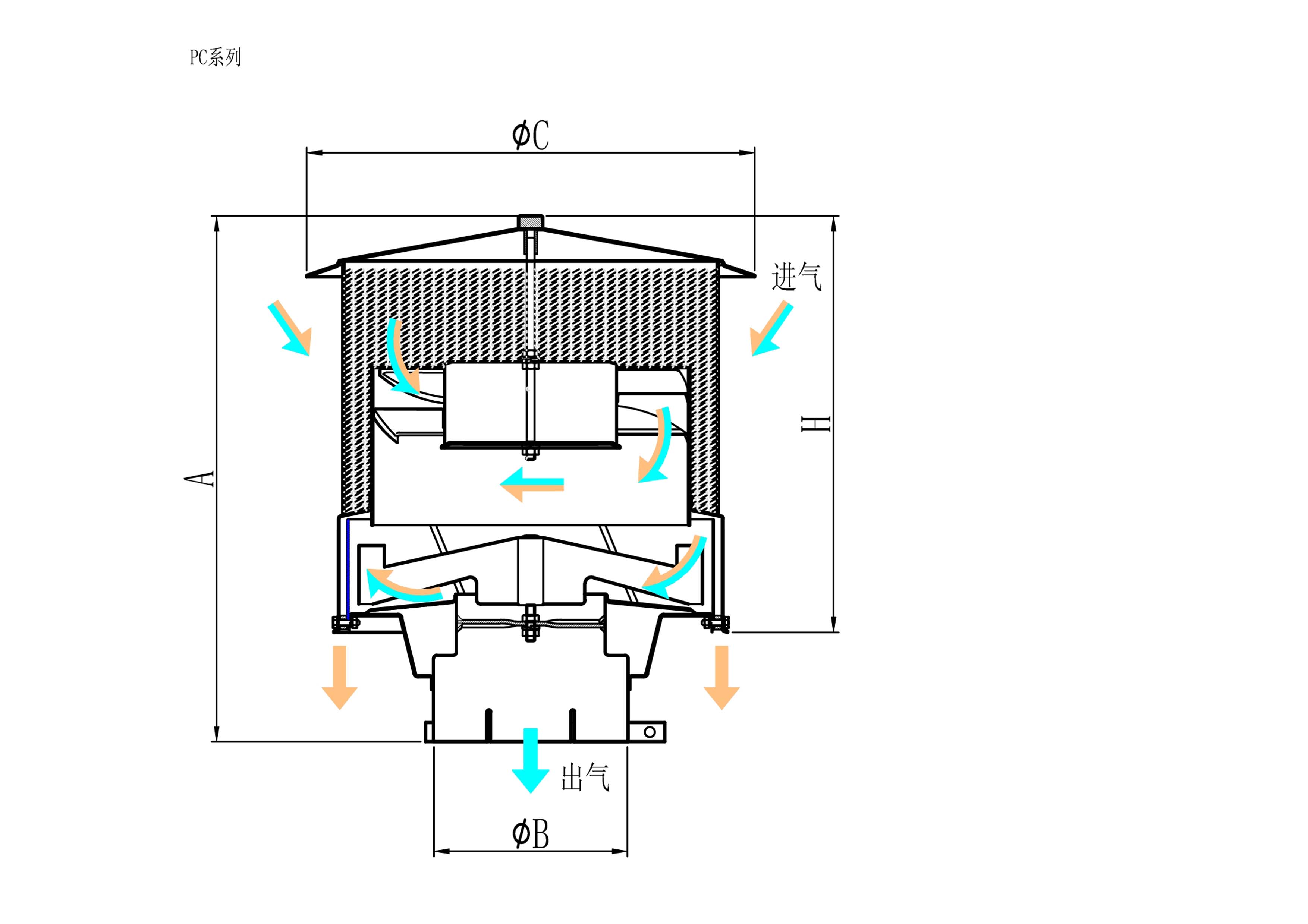
The separation process relies on fluid dynamics and inertia. Angled louvers or static vanes force incoming air into a high-speed vortex. As the air spins, centrifugal force drives heavier particles toward the outer wall of the housing. Silica dust, agricultural chaff, coal dust, and snow possess greater mass than the air molecules. This mass forces them out of the clean intake stream. The purified air then travels down the center of the vortex directly into the primary air filter.
In field applications, such as open-pit mining or large-scale harvesting, the concentration of airborne particulates can exceed 50 milligrams per cubic meter. Without a pre-cleaner, a standard 15-inch air filter can pack with dirt and collapse within a single 12-hour shift. By forcing the air into a vortex, the pre-cleaner ejects the bulk of this mass back into the environment. The primary filter is then left to handle only the finest sub-micron particles, extending its service life exponentially.
Understanding the drive mechanism helps you match the pre-cleaner to the application. Equipment that runs at a constant high RPM has different airflow dynamics than equipment that frequently idles or operates at variable speeds.
| System Type | Drive Mechanism | Best Application | Operational Characteristics |
|---|---|---|---|
| Passive (Velocity-Driven) | Engine vacuum draw | High, consistent RPM operations (e.g., generators, pumps) | Relies solely on intake airflow to spin internal rotors or generate dynamic vortex fields. Efficiency drops at low idle because the air velocity decreases. |
| Active (Motorized) | Integrated electric motor | Variable RPM and heavy idle (e.g., wheel loaders, excavators) | Spins the impeller at a constant rate. Ensures high-efficiency pre-cleaning regardless of engine speed, preventing dust ingestion during low-RPM operation. |
Once separated, the debris must exit the system. Manufacturers utilize three primary ejection methods, each with specific advantages and limitations based on the operating environment:
Not all pre-cleaners deliver equal protection. You must evaluate the underlying engineering to ensure optimal engine performance. A poorly designed unit can cause more harm than good by restricting airflow or failing to separate the specific type of dust present on your job site.
Engineers face a core trade-off between efficiency and restriction. Higher separation efficiency often requires tighter vortices. These tight vortex fields can increase intake restriction. You must evaluate a manufacturer's pressure drop data across various CFM ranges. A highly efficient unit that starves the engine of air will cause higher exhaust gas temperatures, increased fuel consumption, and severe turbocharger strain.
When reviewing specification sheets, look for the restriction measured in inches of water (inH2O) at your engine's maximum CFM. Most heavy-duty diesel engines have a maximum allowable intake restriction of 20 to 25 inH2O. The pre-cleaner, combined with the clean primary filter and intake piping, must stay well below this threshold to allow for filter loading over time.
Some suppliers inflate performance claims by testing solely with ISO Coarse dust. This large particulate is easy to separate. You must request testing data validated with ISO Fine dust. ISO Fine dust mimics real-world, high-wear sub-micron silica particles. True performance is proven against the finest, most abrasive contaminants.
ISO Fine dust has a much smaller particle size distribution, with a significant portion falling below 5 microns. These are the particles that slip past standard filters and cause cylinder polishing and ring wear. If a manufacturer only provides efficiency ratings based on ISO Coarse dust, their product will likely underperform in real-world mining or agricultural applications.
The operating environment dictates the required structural materials. Equipment working in corrosive environments or extreme temperatures requires specific material properties to prevent premature failure.
| Material Type | Advantages | Disadvantages | Ideal Use Case |
|---|---|---|---|
| Heavy-Gauge Steel | Highly impact-resistant, withstands extreme heat. | Prone to rust, heavy (increases vibration fatigue on mounts). | Forestry, demolition, high-impact zones. |
| Glass-Reinforced Polymer | Corrosion-proof, lightweight, excellent vibration dampening. | Susceptible to extreme UV degradation if not treated. | Mining, agriculture, marine applications. |
| Aluminum Alloy | Lighter than steel, good corrosion resistance. | More expensive, can dent under heavy impact. | On-highway trucks, weight-sensitive equipment. |
A reliable centrifugal engine precleaner must maintain its vortex across the engine's entire RPM band. It cannot only function at peak load. If the vortex collapses during acceleration or idling phases, dirty air bypasses the separation process. Ensure the unit provides consistent protection across all operational states. This is particularly important for equipment like wheel loaders that constantly cycle between low idle and full throttle during a loading operation.
Choosing the right hardware requires choosing the right partner. The manufacturing standards directly impact field reliability. You need a supplier that understands the harsh realities of heavy-duty equipment operation.
Vetting a professional centrifugal air pre-cleaner manufacturer requires strict criteria. Require documented compliance with ISO 5011 testing protocols and SAE standards. Demand transparent publication of efficiency and restriction curves. A reputable manufacturer will readily provide this engineering data and explain how it applies to your specific engine model.
Differentiate between manufacturers that supply direct-to-OEM and those that are strictly aftermarket producers. Direct-to-OEM suppliers undergo rigorous quality control and ISO/IATF 16949 auditing. They maintain robust design controls. This level of scrutiny guarantees a higher standard of manufacturing consistency, ensuring that the unit you buy today performs exactly like the unit you buy five years from now.
Standard catalog parts rarely fit specialized machinery perfectly. Assess the manufacturer's capability to provide custom integration. Look for custom mounting systems, specialized rain hoods, and low-profile designs for tight engine compartments. Custom intake pipe adapters are often necessary for seamless installation. A manufacturer that offers engineering support to design these custom adapters saves you significant fabrication time in the shop.
Heavy machinery operates in remote locations. You must choose a rotary air pre-cleaner supplier with global reach. Replacement wear-parts, such as bearings and rotors, must be available near remote job sites. Extended downtime waiting for international shipping is unacceptable when a million-dollar excavator is sitting idle due to a failed pre-cleaner bearing.
Beyond the physical product, the support ecosystem provided by the supplier ensures long-term success. You are investing in an engine protection strategy, not just buying a piece of plastic or metal.
Evaluate the return on investment by tracking specific operational metrics. Factor in the reduction of primary and secondary filter purchases. Calculate the decreased labor hours required for field maintenance. Monitor the extended engine overhaul cycles and the minimized machine downtime. A high-quality pre-cleaner often pays for itself within the first few months of operation simply by eliminating the need for daily filter blow-outs and replacements.
A standard industrial warranty should cover critical components. This includes bearing life in rotor-driven models and overall housing integrity. More importantly, you need direct access to application engineers. These experts can troubleshoot restriction issues and mounting challenges in the field. They ensure the system operates within safe parameters for your specific engine model, preventing costly installation errors.
Even the best technology fails if implemented incorrectly. Understanding the failure modes allows you to mitigate risks proactively and ensure the pre-cleaner functions as designed.
Incorrect sizing leads to engine starvation or inefficient separation. Over-sizing results in insufficient air velocity to create a vortex, leading to zero pre-cleaning. Under-sizing chokes the engine, increases exhaust gas temperatures, and damages the turbocharger. Strict adherence to engine CFM requirements at maximum RPM using manufacturer sizing charts is mandatory. Never size a pre-cleaner based solely on the diameter of the intake pipe.
Adding mass to the end of an intake stack alters its resonant frequency. This vibration can lead to cracked hoods or intake pipe failure over time. You must mandate reinforced mounting brackets and vibration isolators. Always adhere to the manufacturer's weight-distribution guidelines during installation. If the pre-cleaner is heavy, it must be supported by a bracket tied directly to the chassis or engine block, not just clamped to the end of a thin-walled intake tube.
Heavy rain, packing snow, or wet agricultural chaff can clog exhaust-scavenge tubes or freeze rotors. This saturation halts the separation process. Install specialized weather hoods for extreme conditions. Utilize active scavenge sweeps or integrate heated intake components to prevent freezing and clogging. In agricultural settings, screen meshes may be required to prevent large leaves and stalks from entering the pre-cleaner housing.
There is a dangerous misconception that self-cleaning units require zero oversight. While they reduce labor, they are not entirely maintenance-free. Establish routine visual inspection protocols. Check for rotor bearing wear, louver blockages, and exhaust aspirator tube integrity. Integrate these checks into your standard preventative maintenance schedules. A seized rotor turns a pre-cleaner into a restriction point, defeating its purpose entirely.
Centrifugal pre-cleaners are mandatory protective equipment for heavy-duty environments. They directly impact component life and engine uptime. By separating destructive particulates before they reach the primary filter, these systems prevent catastrophic wear and extend maintenance intervals.
Buyers must prioritize engineering data over the lowest initial purchase price. Select a manufacturer that offers transparent ISO testing data, precise CFM matching tools, and heavy-duty material construction. The right partnership ensures your equipment survives the harshest conditions.
Take the following steps to upgrade your filtration strategy:
A: A high-quality centrifugal pre-cleaner typically achieves a separation efficiency range of 85% to 95%+. This performance depends heavily on the particle mass, the size distribution of the dust, and the specific ISO 5011 testing standards used for validation.
A: Use the standard formula: (Engine Displacement in Cubic Inches x Maximum RPM) / 3456 x Volumetric Efficiency. Remember to apply the appropriate multiplier if the engine is turbocharged or aftercooled to ensure accurate airflow calculations.
A: All filters introduce some restriction. However, a properly sized pre-cleaner keeps restriction well below OEM maximum limits. It often improves long-term airflow by keeping the primary filter clean, preventing the severe restriction caused by a clogged standard filter.
A: Active systems use external electrical power to spin the separating mechanism, maintaining high separation efficiency even at low idle. Passive systems rely strictly on the speed of the intake airflow to generate the vortex, making them less effective at lower RPMs.
A: Inspection intervals depend on the operating environment. Perform visual checks for louver blockages, verify bearing spin in rotary models, and inspect connection seals during every standard preventative maintenance schedule to ensure optimal performance.
A: Rotary pre-cleaners use a mechanical spinning rotor to sweep and eject debris through a discharge port. Exhaust-scavenged systems use a vacuum created by exhaust gas velocity to pull debris out of the housing and eject it through the exhaust pipe.
A: While highly adaptable, installation depends on available hood clearance, intake stack diameter, and structural support for the added weight. A qualified rotary air pre-cleaner supplier can assist in resolving these integration challenges.
