
Views: 0 Author: Site Editor Publish Time: 2026-08-07 Origin: Site


Operating heavy-duty equipment in high-dust environments accelerates engine wear and rapidly overwhelms standard air filtration systems, leading to costly operational bottlenecks. Relying solely on primary pleated filters in agricultural, mining, or construction applications results in frequent filter replacements, unacceptable pressure drops, and increased risk of catastrophic engine dusting. Mitigating these risks requires intervening before the primary filter. Understanding the exact fluid dynamics, mechanical separation principles, and installation architectures of a cyclone air pre-cleaner for diesel engine applications is critical for specifying the correct unit, minimizing intake restriction, and maximizing equipment uptime. Equipment operators and maintenance managers must prioritize intake protection to ensure reliable performance under extreme conditions.
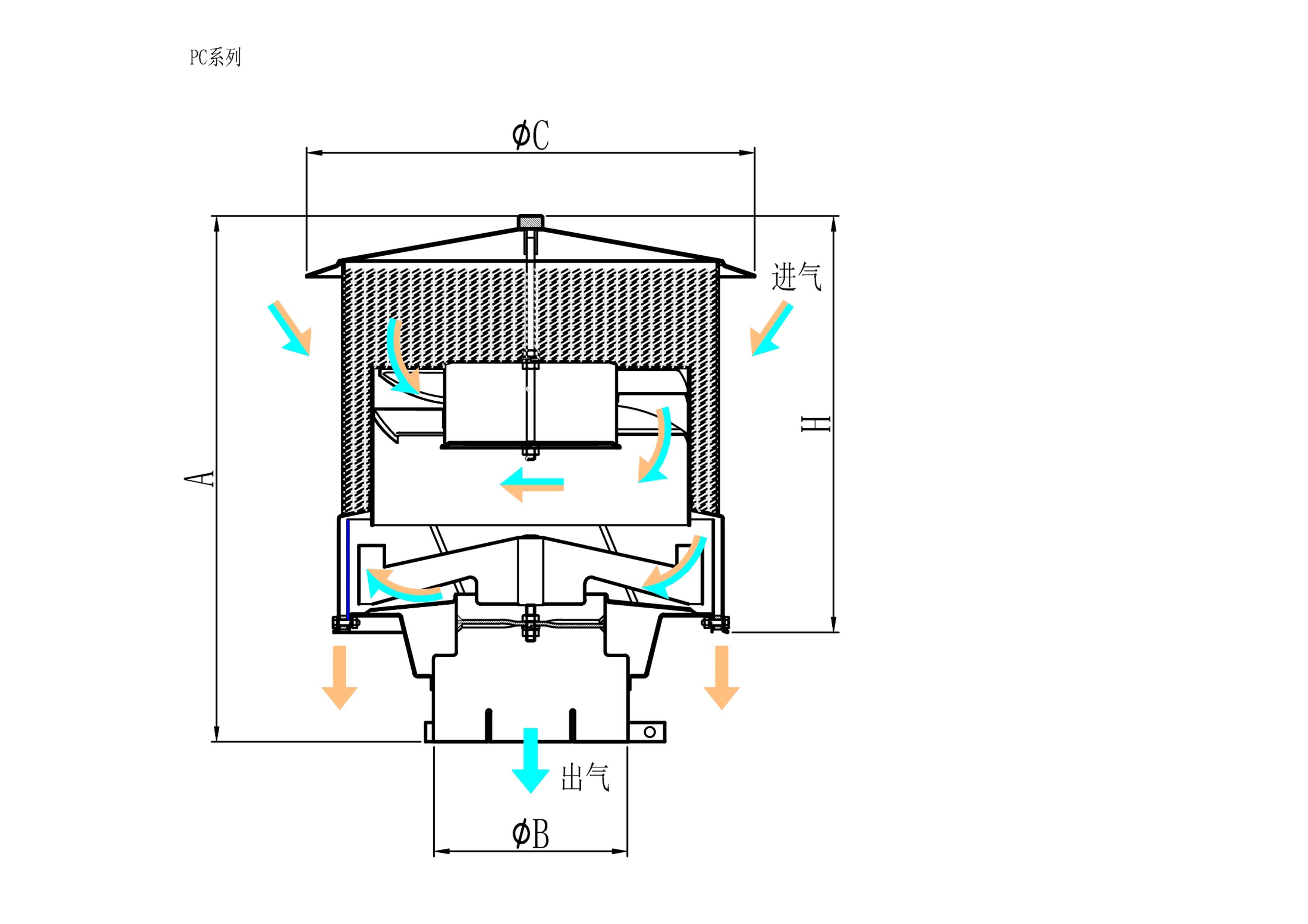
Incoming air enters the intake and travels through static, angled vanes or louvers. These structural elements convert linear airflow into a high-velocity rotational vortex inside the pre-cleaner chamber. The angle and spacing of these vanes dictate the initial velocity of the spin, setting the baseline for separation efficiency. Field observations show that vane pitch directly correlates with the initial pressure drop and the rotational speed of the air mass. Engineers design these vanes to maximize spin while keeping restriction within acceptable limits for heavy machinery.
As the air spins rapidly, centrifugal force takes over. This physical force drives heavier, denser particles like silica dust, coarse sand, and water droplets outward against the interior walls of the cyclone housing. Meanwhile, the lighter, cleaner air remains concentrated near the center axis of the chamber. The effectiveness of this stage depends entirely on the mass of the particles and the velocity of the vortex. Heavier particles are thrown outward much faster than fine, powdery dust.
Inside the housing, a co-axial flow pattern emerges. An outer, downward-directed vortex carries the heavy contaminants away from the intake stream. Simultaneously, an inner, upward-directed vortex forms in the low-pressure center, carrying the cleaned air directly toward the primary filter element. This dual-action flow is the defining characteristic of a cyclonic engine precleaner. Maintaining the stability of these two distinct airflows is necessary for preventing cross-contamination.
Friction against the housing walls causes the separated contaminants to lose kinetic energy. As they decelerate, gravity pulls them out of the primary airstream. They fall into an accumulator, dust cup, or ejection port, completely isolated from the clean air path. The design of the accumulator must prevent any turbulent air from reaching down and pulling the settled dust back into the vortex.
Air leaks at the dust cup or ejection valve severely disrupt the low-pressure core of the internal vortex. If outside air bleeds into the accumulator, it allows collected dust to re-entrain into the clean airstream. Mechanics often find that a simple cracked rubber gasket on a dust bowl can drop separation efficiency from 85% down to near zero. Regular inspection of these seals is a non-negotiable maintenance task.
At the base of the cyclone cone, the cleaned, lighter air reverses direction. It travels up the center tube, escaping the vortex chamber and flowing directly into the primary engine air filter, free of large particulate mass. This clean air reversal must happen smoothly to avoid creating additional backpressure against the turbocharger or intake manifold.
Standard cellulose or synthetic media filters blind over rapidly when exposed to high concentrations of large particulate matter. Single-stage systems lack the capacity to handle heavy dirt loads, causing intake restriction to spike prematurely and forcing equipment offline for maintenance. In environments like open-pit mines or large-scale harvesting operations, a standard filter might reach its maximum restriction limit in a matter of hours without pre-cleaning.
Different environments present unique challenges. Coarse abrasive sand physically damages filter media. Fine agricultural chaff clogs pleats instantly. Highly cohesive clay dust cakes onto surfaces, blocking airflow completely. Inertial separation provides the most effective frontline defense against these diverse threats. A diesel intake dust separator handles the bulk mass of these contaminants, leaving only the fine microscopic dust for the primary paper element to catch.
| Contaminant Type | Primary Environment | Impact on Standard Filters | Cyclone Separation Efficiency |
|---|---|---|---|
| Silica Sand | Mining, Construction | Abrasive wear, rapid loading | Very High (85-95%) |
| Agricultural Chaff | Farming, Harvesting | Surface blinding, pleat bridging | High (80-90%) |
| Coal Dust | Mining, Power Generation | Deep media penetration | Moderate (70-80%) |
| Water/Rain | All Outdoor Operations | Media swelling, structural collapse | Very High (90%+) |
Beyond dust, centrifugal force pushes water droplets to the outer walls just like solid dust. This prevents moisture from reaching the primary filter media, which causes swelling, structural collapse, and severe intake restriction. Wet paper filters lose their structural integrity and can be sucked directly into the intake manifold, causing catastrophic damage.
When primary filters fail or bypass due to overloading, unfiltered air enters the combustion chamber. This leads to catastrophic micro-abrasions on cylinder walls, piston rings, and turbocharger compressor wheels. Pre-cleaning drastically reduces the dirt load, minimizing the risk of total engine failure. Engine dusting is often irreversible and requires a complete out-of-frame overhaul to correct.
Modern heavy machinery often utilizes integrated dual-stage air cleaners, where cyclonic tubes are built directly into the primary housing. Conversely, external top-mount pre-cleaners serve as standalone units mounted on the intake stack. External units offer superior versatility for retrofitting older equipment and provide excellent visibility for manual inspections. Integrated units save space under the hood but can be more difficult to service when the cyclonic tubes become packed with cohesive mud or clay.
Choosing the right ejection system depends entirely on the maintenance culture and the severity of the environment. Active systems require more installation effort but pay off in reduced daily maintenance.
A single large cyclone housing offers simplicity and easy maintenance for standard applications. Multi-cyclone blocks utilize dozens of smaller tubes to handle varied airflow demands, providing higher separation efficiency in a more compact footprint, though they require more complex manufacturing. Multi-tube systems are highly efficient at capturing smaller micron particles because the smaller diameter tubes generate higher rotational velocities.
Matching the pre-cleaner's optimal operating range to the engine's specific airflow demands at peak operating RPM is absolutely necessary. Proper sizing ensures the air velocity inside the chamber generates sufficient centrifugal force for effective separation. You cannot size a pre-cleaner based on the diameter of the intake pipe alone; you must calculate the actual volumetric airflow of the engine.
Installing a unit rated for a higher CFM than the engine produces results in insufficient vortex velocity. The air moves too slowly to generate adequate centrifugal force, leading to poor dust separation and allowing contaminants to bypass directly to the filter. An oversized unit is essentially just an expensive rain cap.
Conversely, a pre-cleaner rated for a lower CFM creates an unacceptable pressure drop. This starves the diesel engine of oxygen, increases exhaust gas temperatures, and heavily reduces fuel economy while stressing internal components. High intake restriction forces the turbocharger to work harder, potentially leading to premature bearing failure.
Measure the baseline intake vacuum using a water manometer (in inches of water). Ensure the addition of the pre-cleaner remains well within the engine manufacturer's maximum allowable restriction limits to maintain optimal combustion efficiency. Most heavy-duty diesel engines have a maximum allowable intake restriction of 20 to 25 inches of water; the pre-cleaner should ideally add no more than 3 to 5 inches of water restriction at full load.
Adding weight to the intake stack requires careful consideration. High-vibration environments, such as track-type tractors or rock crushers, demand reinforced mounting brackets to prevent metal fatigue and structural failure of the intake piping. If the intake pipe cracks below the pre-cleaner, unfiltered air will bypass the entire system, leading to rapid engine dusting.
Retrofitting requires assessing spatial constraints. Ensure the unit clears the hood during operation and maintenance. Additionally, verify that the installation does not create dangerous blind spots for equipment operators working in tight spaces. On excavators and wheel loaders, line-of-sight is critical for safety, so low-profile pre-cleaners are often preferred.
Integrate rain caps, pre-screens, or debris screens over the intake. These components prevent massive debris like leaves, twigs, or plastic bags from entering and clogging the pre-cleaner's static vanes, which would instantly choke the engine. A simple mesh screen can prevent hours of downtime caused by a single plastic bag getting sucked into the vortex chamber.
A cyclonic pre-cleaner serves as a mandatory first-stage defense mechanism for diesel engines operating in high-particulate environments, though it never replaces primary filtration. The decision hinges on precise CFM matching, selecting the appropriate dust ejection method, and verifying acceptable pressure drop tolerances.
A: A properly sized unit removes 80% to 90% of the mass of airborne dust and debris before it reaches the primary filter.
A: It cannot. It only removes larger, heavier particles. A primary filter is still required to capture microscopic particles that cause engine wear.
A: Sizing is based strictly on the engine's Cubic Feet per Minute (CFM) airflow requirement, not the diameter of the intake pipe.
A: An air leak disrupts the pressure drop and vortex flow within the cyclone, severely reducing dust separation efficiency and causing contaminants to bypass directly to the main filter.
A: While it adds a slight initial intake restriction, a correctly sized unit prevents the severe restriction caused by a clogged filter, ultimately preserving engine power over time.
A: Bowl-types require manual emptying and seal inspections, while exhaust-scavenged or duckbill vacuator valve systems are largely maintenance-free.
A: The centrifugal force effectively separates heavier water droplets and rain, preventing moisture from degrading the primary paper filter media.
