
Views: 0 Author: Site Editor Publish Time: 2026-08-11 Origin: Site


Modern high-pressure common rail (HPCR) diesel engines operate under extreme tolerances and pressures. They demand exceptionally clean fuel to run efficiently over their intended lifespans. Real-world fuel supplies often fall short of these strict requirements. Particulate or water contamination introduces catastrophic risks to these precision systems. Even microscopic debris can cause severe injector failure and trigger unexpected, disruptive operational downtime.
A spin on diesel fuel filter acts as a vital, self-contained barrier defending the engine from these hazards. It threads directly onto a mounting head, making routine maintenance surprisingly straightforward. This component provides critical barrier protection between the fuel tank and the high-pressure pump.
This article breaks down the internal mechanics of these crucial components. You will discover how water separation works and gain an evaluation framework. We will explore how to select, stage, and maintain these filters effectively in commercial or heavy-duty applications.
Understanding internal filter mechanics begins with visualizing the fuel path. Most standard spin-on units utilize an outside-in flow dynamic. Unfiltered diesel travels from the fuel tank and enters the mounting base. It then flows downward through the small peripheral inlet holes located on the top plate of the canister. This outside channel acts as the "dirty side" of the filtration system.
Once inside the canister, fuel faces the filtration media. System pressure forces the liquid through tightly pleated material. Manufacturers typically use cellulose, synthetic polymers, or advanced micro-glass blends. Pleat density plays a vital role here. A higher number of pleats increases the overall surface area. This dictates the dirt-holding capacity of the unit. It allows the filter to trap significant contamination without severely restricting flow rates.
Clean fuel successfully passes through the media and reaches the hollow center tube. This perforated tube provides structural integrity to the element. It prevents the media from collapsing under high suction or pressure. The purified diesel flows upward through this center section. Finally, it exits via the central threaded port directly toward the engine or high-pressure pump.
Many units also incorporate a bypass valve mechanism as a fail-safe. If operators ignore replacement schedules, the media eventually clogs. A severe clog creates high differential pressure. The bypass valve senses this pressure spike and opens automatically. It allows unfiltered fuel to bypass the media entirely. This mechanism prevents catastrophic fuel starvation and engine stalling. However, it sacrifices engine protection. Dirty fuel will rapidly damage HPCR injectors, highlighting the absolute need for strict replacement schedules.
Emulsified water represents a lethal threat to HPCR systems. Diesel fuel inherently attracts and holds water. Temperature changes in the fuel tank cause condensation, introducing free water into the supply. High-pressure pumps and injectors rely on diesel for lubrication. Water strips away this essential lubricity. This causes rapid metal-on-metal wear. Furthermore, water induces internal rust and corrosion. In severe cases, flash-boiling water inside the injector tip causes the tip to blow off completely.
To combat this, many setups rely on a combined Diesel Fuel Filter Water Separator. This unit strips emulsified water through a highly effective coalescing process. The specialized filter media features chemically treated fibers. As emulsified water droplets pass through the fibers, they stick to the surface. Incoming droplets collide with these trapped particles. They merge and form much larger, heavier drops. This continuous merging process is known as coalescence.
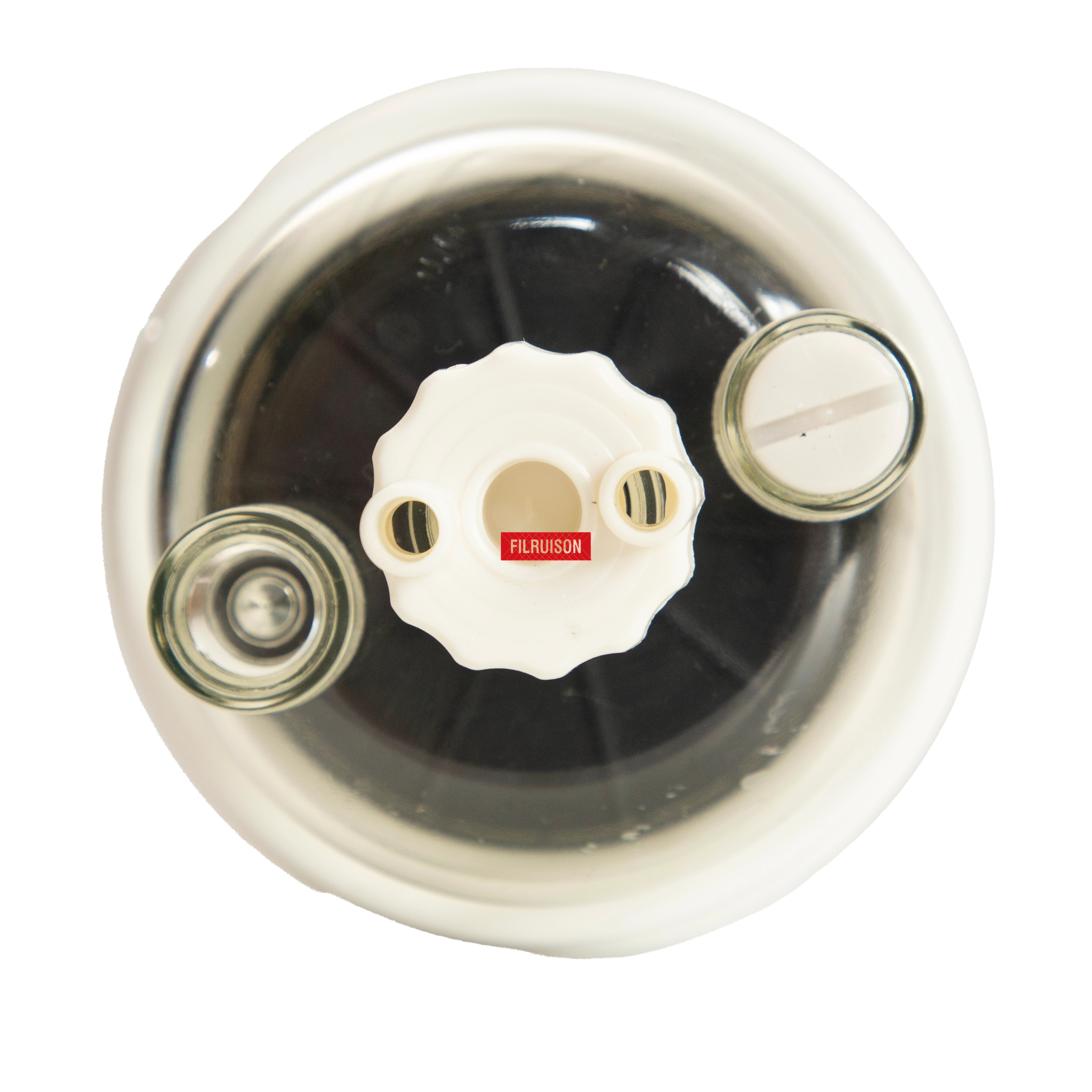
Gravity separation takes over once the drops reach a sufficient size. Water is notably denser than diesel fuel. The enlarged water drops naturally fall out of the fuel flow. They sink to the bottom of the spin-on canister. Most water separator filters feature an elongated collection bowl specifically designed to capture this accumulated water safely.
Operators must remove this trapped water regularly. Draining mechanisms vary across different models. Many feature bottom-mounted drain valves, commonly called petcocks. Technicians open the petcock manually to release the water. Advanced heavy-duty applications utilize Water-in-Fuel (WIF) sensors. These electronic sensors screw into the bottom bowl. They monitor the water level actively. When the bowl fills, the sensor triggers a dashboard light. This alerts the operator to drain the bowl immediately before water bypasses the media.
Modern diesel equipment relies on staged filtration to achieve maximum reliability. A single filter rarely handles bulk contamination and micro-particle removal efficiently. Engineers design fuel systems using primary and secondary stages. This prevents premature clogging and ensures continuous flow.
The primary filter acts as the crucial first line of defense. Mechanics typically call this the pre-filter. They usually mount it on the frame rail, keeping it closer to the fuel tank. When evaluating primary filters, focus on nominal micron ratings. They usually range between 10 and 30 microns. The primary filter removes large particulate matter. More importantly, it manages bulk water separation. This is where you will typically find the integrated water collection bowl and drain valve.
The secondary filter serves as the final filter before the injection pump. Manufacturers mount this unit directly on or very near the engine block. Evaluation criteria here shift entirely to absolute micron ratings. These filters operate in the 2 to 5-micron range. They are strictly designed for extremely fine particulate removal. They act as the ultimate safeguard for HPCR injectors. Secondary filters rarely include water drains, as the primary stage should have already stripped the moisture.
Primary vs. Secondary Filter Characteristics
| Feature | Primary Filter (Pre-Filter) | Secondary Filter (Final Filter) |
|---|---|---|
| Mounting Location | Frame rail, close to the fuel tank | On or adjacent to the engine block |
| Micron Rating | 10 to 30 microns (Nominal) | 2 to 5 microns (Absolute) |
| Core Function | Bulk debris removal and water stripping | Microscopic particulate trapping |
| Water Drain Valve | Standard feature (Usually equipped) | Rarely included |
This decision matrix dictates system health. Bypassing a two-stage system in favor of a single "catch-all" filter creates significant problems. A fine 2-micron filter forced to handle large debris and bulk water will plug almost immediately. This leads to premature clogging, fuel starvation, and vastly increased long-term operational costs.
Fleet managers constantly evaluate filtration styles. The debate often centers on spin-on units versus cartridge-style housings. Each design offers distinct operational advantages depending on the application and maintenance environment.
Installation speed strongly favors the spin-on design. Spin-on units are completely self-contained. The technician unscrews the old metal canister and discards it. They then thread the new unit onto the base. This minimizes labor time significantly. It also drastically reduces downtime for active commercial vehicles.
Contamination risk management is another major factor. Cartridge filters require the mechanic to open a permanent plastic or metal housing. They remove the dirty paper element and insert a new one. This process exposes the internal clean side of the fuel system to environmental dust. Wind blowing across a dusty job site can easily deposit dirt directly into the open housing. A spin on diesel fuel filter keeps the internal media completely sealed from the factory. The clean side remains protected during the entire changeover process.
Cost and environmental compliance metrics present a different picture. Spin-on filters feature a higher per-unit replacement cost. You are replacing the heavy steel housing, internal baseplate, and media every time. This creates significantly more metal waste. Cartridge setups are more environmentally friendly. You only replace the combustible media element, which reduces landfill impact and lowers consumable part costs.
We recommend a pragmatic procurement strategy. Choose spin-on filters for mobile equipment operating in dusty, field-maintenance environments. The sealed nature prevents accidental dirt intrusion during field repairs. Conversely, consider cartridge systems for controlled-environment fleet bays. In a clean shop, mechanics can change cartridges safely, helping the fleet reduce consumable expenses and minimize solid waste.
Even the highest-quality filters fail if installed incorrectly. Proper implementation requires strict adherence to standard operating procedures. Bad habits pass down through generations of mechanics. Addressing these habits is critical to system longevity.
The pre-filling myth remains the most destructive practice in diesel maintenance. Many mechanics pour raw diesel straight from a jerry can into the new filter before installation. They believe this helps the engine start faster. This practice introduces raw, unfiltered fuel directly into the center threaded port. The center port connects directly to the clean side of the system. Pre-filling bypasses the filtration media entirely. It sends microscopic dirt and tank sludge straight into sensitive HPCR injectors, causing immediate damage.
Seal and thread integrity demand close attention. Always inspect the filter head after removing the old unit. Ensure the old rubber O-ring came off with the old filter. Sometimes, the old gasket sticks to the metal housing. If a technician installs a new filter over the old gasket, it creates a "double-gasket" scenario. This is a primary cause of severe air leaks. It leads to an immediate loss of system prime and engine stalling.
After installation, you must bleed the air from the system. Modern equipment offers various priming methods. Evaluate your specific system. Many feature manual primer bulbs or hand plungers on the filter housing. Pump the plunger until you feel strong resistance. Advanced engines use electronic lift pumps. You simply cycle the ignition key several times to trigger the pump. This safely pushes fuel through the new media, purging the air without risking dry-starts or injector damage.
Selecting the right filtration components directly impacts the lifespan of heavy-duty engines. You must match the specific micron rating to the correct engine stage. Use nominal ratings for primary pre-filters and strict absolute ratings for secondary final filters. Furthermore, ensuring robust water separation capabilities at the primary stage protects sensitive injectors from catastrophic corrosion.
When evaluating suppliers, prioritize OEMs or premium aftermarket brands. Look for manufacturers that publish transparent, ISO-tested Beta ratios. These standardized tests prove absolute efficiency. Generic marketing claims about "superior dirt trapping" hold little value compared to verified laboratory data.
Take immediate action to protect your equipment. Audit your current fleet filtration setups this week. Verify that your primary and secondary staging meets the manufacturer's operational requirements. Finally, review your standard operating procedures for filter replacement. Train your technicians to eliminate destructive habits, especially the practice of center-port pre-filling.
A: No. The internal media traps microscopic particulates permanently deep within its fibers. Attempting to back-flush, blow out, or clean a spin-on filter heavily compromises the delicate media structure. This structural damage leads to internal bypass, allowing dirt to flow directly into the engine. Always replace them with new units.
A: It should be checked daily during pre-trip inspections. You must drain it immediately if the Water-in-Fuel (WIF) dashboard light illuminates. Additionally, if your unit features a clear bottom bowl, drain it via the petcock as soon as you visually detect water accumulating at the bottom.
A: Extended service intervals combined with high fuel vacuum cause internal collapse. When severe particulate plugging occurs, or when cold, gelling diesel struggles to flow, the pump pulls harder. This immense suction can exceed the structural limit of the center tube, crushing the element inward.
A: Not in the primary position. Using a fine 2-micron filter as a primary stage causes it to clog rapidly with large bulk debris and asphaltines. This quickly leads to fuel starvation. Ratings must be staged appropriately, using 10-30 microns primarily and 2 microns secondarily.
