
Views: 0 Author: Site Editor Publish Time: 2026-10-16 Origin: Site


Imagine operating a 40-ton excavator in a limestone quarry or driving a heavy agricultural tractor through a parched, unharvested field. Thick dust clouds limit visibility to mere feet. In these extremely abrasive and particulate-heavy environments, standard engine protection methods routinely fail. When microscopic silica bypasses inadequate filtration media, it acts like liquid sandpaper inside the cylinder walls. This leads to rapid component degradation, scored bearings, and catastrophic internal wear.
Engine protection in such unforgiving scenarios goes beyond basic maintenance. It is a critical requirement for equipment survival. This brings us to one of the most robust and field-tested methods for engine air purification. By equipping heavy machinery with a premium Oil Bath Air Filter, operators can safeguard their expensive capital assets against the harshest elements on earth.
This comprehensive engineering guide explores the fluid dynamics behind this unique liquid-based system. We will break down its mechanical benefits, maintenance protocols, and operational advantages. Whether you manage a heavy-duty mining fleet or restore vintage off-road vehicles, understanding the physics behind this filtration method will help you eliminate costly downtime and maximize engine longevity.
To fully grasp the mechanics, we must first define the equipment and its place in modern industry. It is a heavy-duty, liquid-based filtration system engineered to scrub particulate matter from ambient air before combustion. Instead of relying on pleated paper to physically block dirt, this traditional setup uses a reservoir of standard engine fluid combined with a dense metallic mesh to purify the airstream.
Historically, this technology was the absolute industry standard for mid-20th-century vehicles and military transport. However, recent industrial equipment maintenance data reveals a fascinating shift in the current market. While the standard automotive sector relies entirely on disposable dry filters for packaging convenience, heavy-duty sectors face entirely different operational challenges.
Industry analysis shows that agricultural and mining operations are increasingly frustrated by the supply chain bottlenecks associated with disposable filters. In remote, off-grid locations, a paper filter might clog in hours, halting a million-dollar production line. Consequently, robust and reusable systems are experiencing sustained demand in bottom-of-funnel procurement. Engineers and fleet managers are prioritizing self-cleaning technologies that keep machinery running without constant reliance on spare parts or complex logistics.
To thoroughly understand how this system protects an internal combustion engine, we must break down the physics involved. The process relies heavily on fluid dynamics, inertia, and surface tension rather than simple physical restriction. Below is a detailed breakdown of the airflow journey from the outside environment to the combustion chamber.
Step 1: The Air Intake Process
The filtration cycle initiates the exact moment the engine cranks. The downward stroke of the engine pistons creates a powerful vacuum. This negative pressure draws dirty, unfiltered ambient air into the heavy-duty housing through the primary Air Intake tube. In industrial work zones, this incoming draft is heavily laden with abrasive silica, agricultural chaff, coal dust, or loose topsoil.
Step 2: The Velocity Drop and Direction Change
As the contaminated air travels down the central down-draft cylinder, its velocity increases significantly. At the very bottom of this tube—just millimeters above the liquid reservoir—the geometry of the housing forces the airstream to make an abrupt, 180-degree U-turn. Physics takes over immediately. Heavy dust and sand particles possess significant mass and kinetic inertia. They physically cannot navigate this sudden, high-speed directional change along with the lighter oxygen molecules.
Step 3: Plunging into the Trap
Driven by their own inertia, the heavier dirt particles shoot straight down, breaking the surface tension of the liquid pool. Once they plunge into the fluid, they are permanently trapped. Over hours of heavy operation, these particulates settle peacefully at the bottom of the reservoir bowl. They form a thick, dense sludge safely isolated from the engine's breathable air.
Step 4: Creating the Liquid Barrier
While the heavy debris sinks, the high-speed air successfully making the U-turn whips up a fine mist of fluid from the surface of the reservoir. This atomized mist is carried upward into a densely packed wire mesh element located just above the pool. The mist thoroughly coats the intricate wire strands, creating a highly sticky, continuous barrier. As the air navigates the tortuous path through this metallic mesh, any remaining microscopic dust particles collide with the wet wires and are instantly absorbed.
Step 5: Delivering Clean Air to the Engine
Finally, the now-purified air exits the upper section of the housing and safely enters the engine manifold. Simultaneously, as the mist accumulates on the wire mesh, it gathers into heavy droplets. These dirty droplets eventually drip back down into the lower reservoir, carrying the trapped microscopic dust with them. This creates a brilliant, continuous self-washing cycle that keeps the system fully operational.
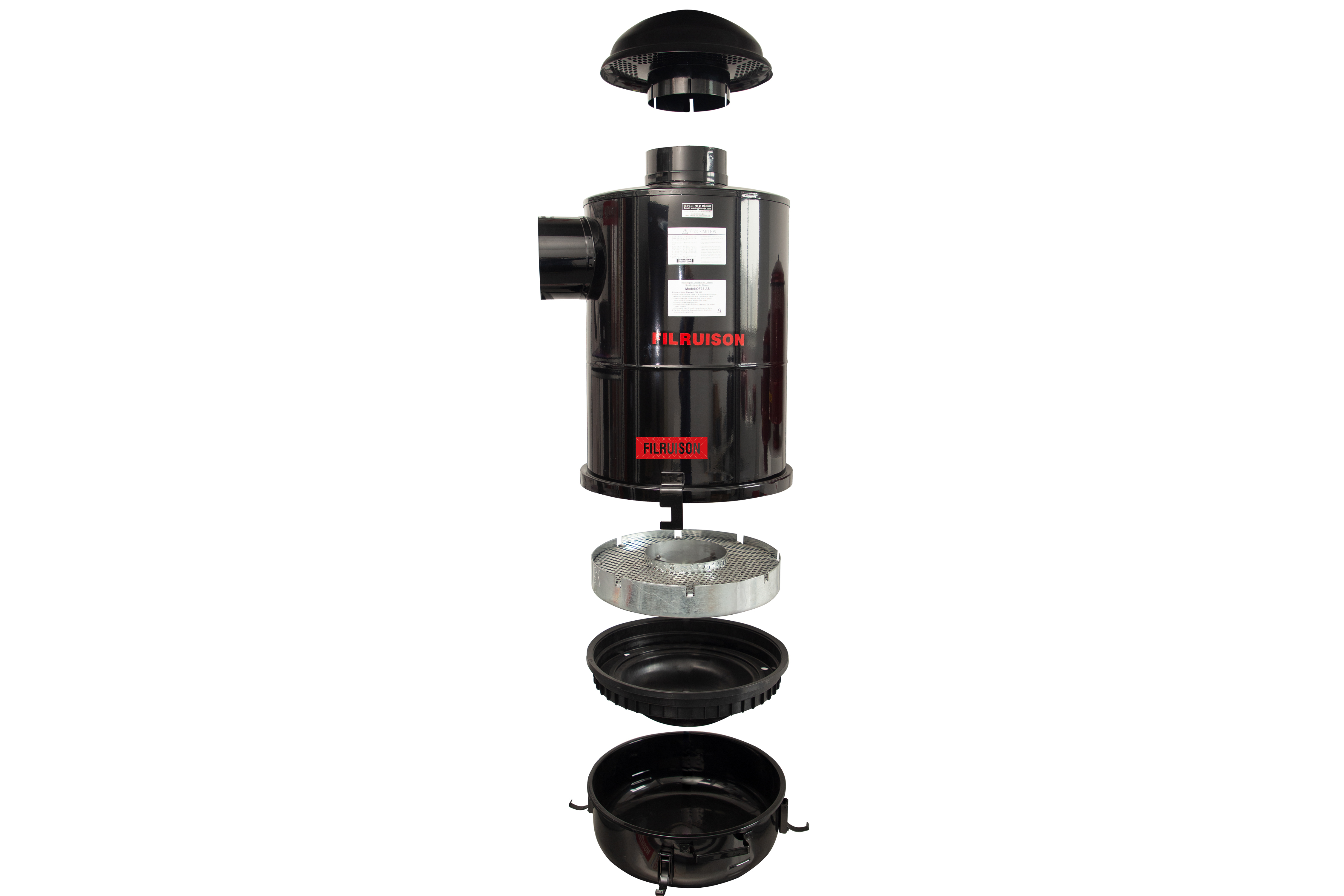
Understanding the anatomy of the unit is essential for equipment managers evaluating replacement parts or troubleshooting field machinery. A standard system consists of several heavy-duty components designed to withstand extreme vibration and harsh temperature fluctuations. The seamless interaction of these rugged parts is what makes the Working Principle so incredibly effective in the field.
For fleet managers looking to optimize equipment performance, choosing between a traditional liquid system and a modern dry paper filter is a critical operational decision. While both serve the same ultimate purpose, their performance profiles differ wildly based on the surrounding environment.
Dry paper filters use microscopic pores to block dirt. They offer excellent absolute micron ratings and are highly efficient for standard highway driving. However, in environments with heavy, coarse dust, paper media quickly becomes overwhelmed and collapses. In contrast, liquid-based systems excel in these extreme zones. Their Dust Capture ability relies on a continuously renewing surface, allowing them to absorb massive amounts of abrasive dirt without failing.
| Performance Metric | Liquid-Based System | Dry Paper Element |
|---|---|---|
| Bulk Dirt Capacity | Exceptionally high; stores pounds of sludge. | Low; pores clog rapidly in heavy dust. |
| Airflow Consistency | Remains highly consistent until the bowl is full. | Steadily drops as the filter media clogs. |
| Maintenance Cost | Extremely low; requires only standard motor fluid. | High recurring costs for replacement parts. |
| Ideal Environment | Mining, agriculture, off-grid construction. | Paved highways, clean-air urban zones. |
Selecting the correct unit is not a guessing game. It requires matching the engine's cubic displacement and maximum RPM to the filter's airflow capacity. An undersized unit will choke the engine, while an oversized unit will fail to create the necessary air velocity to pull the fluid mist into the wire mesh.
For instance, when outfitting a heavy-duty mining excavator, engineers typically look for high-capacity units. A system rated for a 40 m³/min flow rate is ideal for large displacement diesel engines operating in high-dust quarry environments. When sourcing these components, always verify the maximum airflow rating. Ensure the housing is constructed from thick stamped steel with seamless welds to prevent vacuum leaks under heavy load.
One of the greatest engineering advantages of this setup is its complete field serviceability. Proper maintenance ensures the fluid dynamics function flawlessly for decades. Here is an actionable, practical guide to servicing the unit directly on the job site.
Step 1: Safe Disassembly
Begin by ensuring the machinery is powered down and the engine is cool. Unfasten the heavy-duty retaining clips holding the housing together. Carefully lower and remove the bottom bowl. Keep it perfectly level to avoid spilling contaminated sludge onto your engine block.
Step 2: Disposing of the Sludge
Pour the used fluid into an approved recycling container. Next, use a plastic scraper to thoroughly gouge out the thick, abrasive dirt sludge accumulated at the bottom of the pan. Wipe the basin completely clean with a heavy shop rag.
Step 3: Flushing the Mesh Core
Remove the wire mesh element from the upper housing. Wash it thoroughly in a parts washer using a safe, approved industrial solvent. This crucial step dissolves the old, contaminated Oil Film and flushes out microscopic debris trapped deep within the wire strands. Allow the metallic mesh to air dry completely.
Step 4: Precision Refilling
Wipe the clean reservoir bowl dry. Refill it with fresh fluid—typically the exact same standard motor oil utilized in the engine crankcase. It is critically important to fill the bowl exactly to the stamped level line. Overfilling causes the engine to ingest raw fluid, while underfilling prevents the misting action, destroying filtration efficiency.
Step 5: Reassembly and Inspection
Reinstall the clean, dry wire mesh into the upper housing. Inspect the rubber sealing gaskets for any hairline cracks, replacing them immediately to prevent unfiltered air leaks. Carefully reattach the fluid-filled bowl, seat it correctly, and clamp it down securely. The machinery is now prepped for another brutal cycle of heavy-duty labor.
When operating quarter-million-dollar industrial machinery, the intake system is absolutely not the place to cut procurement corners. The effectiveness of the fluid dynamics relies entirely on precise manufacturing tolerances, seamless aerodynamic pathways, and rugged construction.
Premium units feature superior build quality that resists vibration cracking in the field. Cheaply manufactured alternatives often suffer from inconsistent mesh density. This directly compromises the system's ability to create a proper mist, allowing microscopic silica to slip past and destroy engine bearings.
Investing in reliable, top-tier industrial filtration equipment guarantees engine longevity and drastically reduces costly downtime. For procurement professionals looking to upgrade aging setups, prioritizing build quality ensures heavy machinery remains protected in the most unforgiving, dust-choked environments on the planet.
Understanding the physics behind this traditional engineering marvel reveals exactly why it has stood the test of time. By leveraging kinetic inertia and fluid dynamics, this system forces heavy debris into an inescapable liquid pool while utilizing a continuously washed metallic mesh to capture microscopic dust.
While disposable paper elements dominate standard clean-air highways, they simply cannot compete with the bulk dirt-handling capacity and low long-term maintenance costs of a liquid-based system in severe environments. For agricultural, mining, and heavy industrial applications, this robust filtration method remains economically sound and mechanically superior.
If your valuable equipment operates in extreme dust, do not leave its survival to chance. Inspect your current setup today. If you are experiencing rapid filter clogging or premature engine wear, consider upgrading to a premium industrial solution. Visit Syking Tech to explore high-capacity filtration systems designed specifically for mining excavators and heavy-duty machinery, ensuring your engines breathe clean and run longer.
You should use the exact same viscosity and grade of motor oil that your machinery uses in its main crankcase. For most heavy agricultural equipment and vintage trucks, this means pouring in a standard SAE 30 or a 15W-40 heavy-duty diesel oil. Using the correct viscosity ensures the ambient air can properly atomize the fluid and coat the internal mesh, regardless of outside temperatures.
Many aftermarket companies sell conversion kits that allow you to replace the liquid basin with a modern dry paper element. While this is convenient for classic cars driven on clean, paved roads, it is highly discouraged for extreme dust environments. In agricultural or mining settings, the traditional liquid setup is far superior in dirt-holding capacity and much more cost-effective over time.
The cleaning interval depends entirely on your operating environment. In relatively clean conditions, check and service the unit during every standard engine oil change. However, in heavy dust conditions—such as plowing a dry farm field or operating in an active rock quarry—the reservoir may become saturated with sludge very quickly. In extreme cases, it must be checked and cleaned weekly, or even daily.
Internal combustion engines are highly susceptible to abrasive wear. When microscopic dirt bypasses a clogged filter, it enters the combustion chamber. This abrasive mixture quickly scores cylinder walls, wears down piston rings, and destroys engine bearings. By utilizing fluid dynamics to permanently trap these particles in a thick sludge, the filter prevents them from reaching sensitive internal components, drastically extending operational lifespan.
Overfilling the reservoir bowl is a dangerous mistake. If the fluid level is too high, the engine intake vacuum will suck raw liquid directly up through the mesh and into the manifold. In gasoline engines, this leads to excessive blue exhaust smoke and fouled spark plugs. In diesel engines, the consequences can be catastrophic, potentially causing an "engine runaway" scenario where the motor uncontrollably burns the ingested fluid as fuel. Always fill strictly to the indicated line.
When properly sized and maintained, they are not overly restrictive. While they do have a slightly higher initial airflow resistance compared to a brand-new high-flow paper filter, their resistance remains constant. A paper filter becomes increasingly restrictive as it traps dirt, choking the engine over time. The liquid system maintains consistent airflow even as it collects pounds of dirt, ensuring steady engine performance throughout the workday.
Absolutely. In fact, they are exceptionally well-suited for large displacement diesel engines found in earthmovers, tractors, and industrial generators. Diesel engines consume massive volumes of air and often operate in the dustiest environments imaginable. The high dirt-holding capacity of a liquid system makes it the perfect match for the rugged demands of heavy-duty diesel applications.
