
Views: 0 Author: Site Editor Publish Time: 2026-08-19 Origin: Site


Forestry and logging sites present extreme challenges for engine air filtration. Sawdust, pine needles, ash, and heavy dust constantly fill the air. This debris mixes with high moisture and rain, creating a sludge that rapidly overwhelms standard engine air filtration systems. Inadequate pre-filtration causes premature engine wear and leads to excessive downtime for filter maintenance. Replacing primary and secondary air filters saturated with wood fibers and water becomes a constant operational burden. Standard intake screens simply cannot block this volume of contamination, leaving the engine vulnerable to catastrophic failure.
Solving this problem requires more than generic aftermarket parts. Selecting the correct air pre-cleaner for forestry machinery demands a precise technical evaluation. You must match the unit to specific engine airflow requirements. Physical intake dimensions, debris types, and moisture separation capabilities all play critical roles. A properly specified system protects the engine, stabilizes operating temperatures, and keeps machinery running in the harshest logging environments.
Logging environments generate unique airborne contaminants that destroy unprotected engines. Large organic debris, fine silica dust, moisture, and sticky sap-coated particles constantly bombard machinery. Standard intake screens catch large branches but fail entirely against fine dust and wet sawdust. These smaller particles bypass factory screens easily. They pack into the primary filter housing and restrict airflow rapidly. Harvesters and feller bunchers operating in dry summer conditions kick up massive clouds of silica dust. During winter or wet seasons, skidders and forwarders churn up mud and wet organic matter. This dynamic environment requires a filtration strategy that adapts to both dry particulate and heavy moisture.
When operating a wood chipper or grinder, the air fills with micro-fibers. These fibers are incredibly light and float in the air intake zone for extended periods. Factory air filters trap these fibers, but the sheer volume clogs the paper media within hours. Operators find themselves stopping machines mid-shift just to blow out air filters. This practice damages the filter media, creating microscopic tears that allow dirt directly into the engine cylinders. A robust pre-cleaning stage eliminates this mid-shift maintenance requirement.
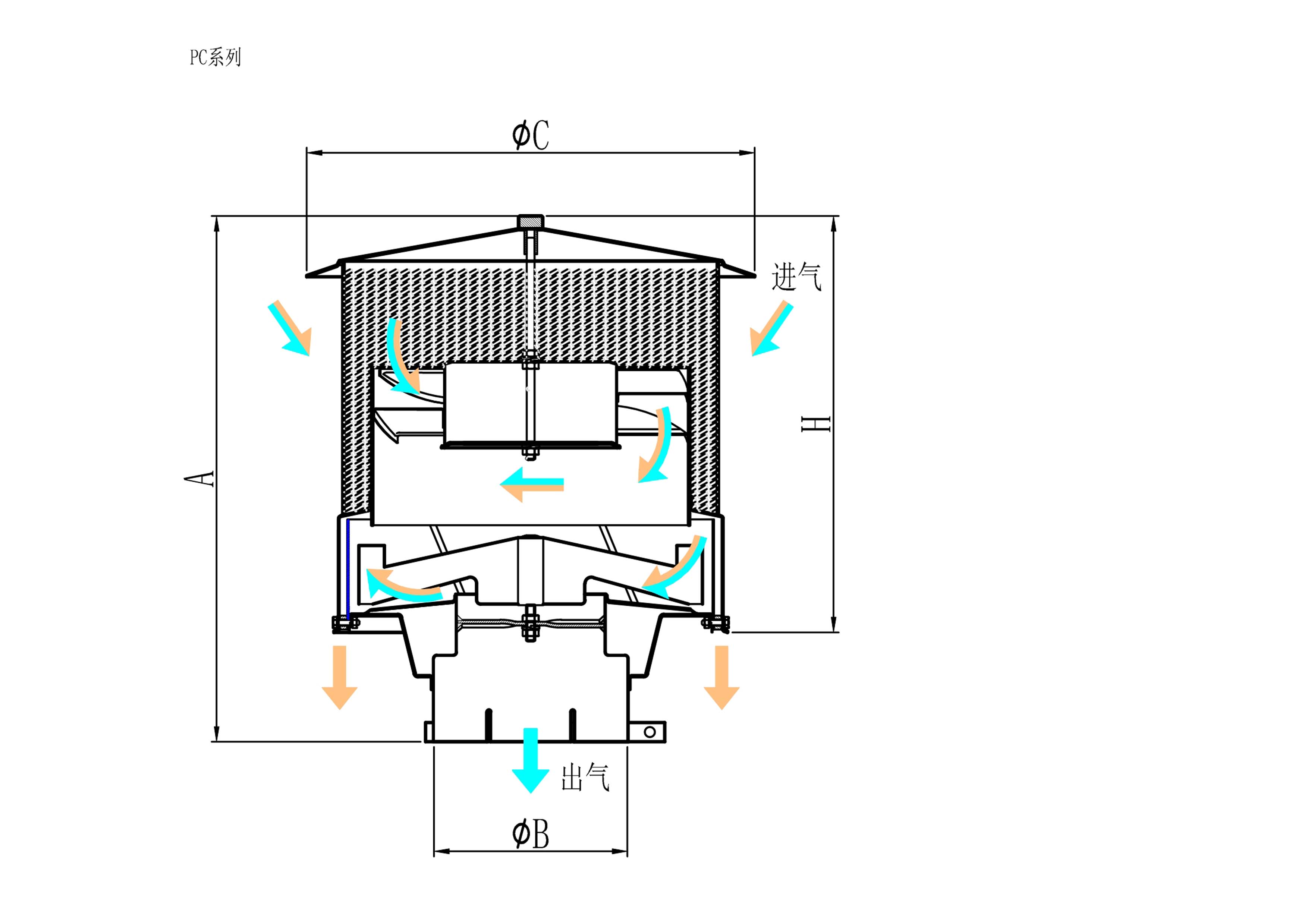
Pre-cleaners separate heavier-than-air particles before they reach the primary filter element. They use centrifugal force or inertial separation to achieve this. Incoming air spins rapidly inside the housing. The heavier the contaminant, the more efficiently it is removed. Dirt, wood chips, and water droplets carry more mass than air. Centrifugal force pushes these heavy particles to the outer walls. They are then ejected from the system entirely.
Understanding particle mass is critical for field mechanics. A pine needle has significant mass compared to a dust particle. When the intake air enters the pre-cleaner, angled vanes force the air into a vortex. The pine needle cannot make the tight turn required to travel down the center intake tube. Its momentum carries it to the outer perimeter of the housing. The same principle applies to water droplets. The vortex separates the liquid from the air stream, discharging it safely away from the dry paper filter.
Moisture creates severe problems for standard paper filters. Damp sawdust, rain, and snow enter the intake. They mix with dry dust already trapped on the primary filter. This mixture forms an impermeable mud barrier. The mud blocks airflow almost instantly. Immediate restriction spikes occur. In severe cases, the vacuum pressure causes structural filter collapse. The engine then ingests unfiltered dirt directly, leading to dusted cylinders and complete engine failure.
Consider a skidder operating in a heavy downpour. The tires throw wet mud into the air, and the cooling fan blows rain across the engine bay. Without a pre-cleaner designed for moisture separation, the paper air filter absorbs the water. Wet paper loses its structural integrity. As the turbocharger spools up, it demands massive amounts of air. The wet, restricted filter cannot supply the air, and the resulting vacuum literally tears the paper element from its urethane end caps.
A successful pre-cleaner implementation delivers specific operational improvements. Service intervals for primary filters extend significantly. Engine operating temperatures stabilize due to consistent airflow. Silica ingestion drops, protecting internal engine components from abrasion. The system prevents filter element tearing by eliminating extreme vacuum spikes caused by mud packing.
Field managers should track filter replacement intervals before and after installation. If a feller buncher previously required a new primary filter every 100 hours, a properly specified pre-cleaner should push that interval to 300 or 400 hours. Furthermore, oil analysis reports should show a marked decrease in silicon levels, proving that less dirt is bypassing the intake system and entering the engine oil.
| Contaminant Type | Impact on Standard Filters | Pre-Cleaner Separation Method | Field Consequence if Unfiltered |
|---|---|---|---|
| Silica Dust | Rapid micro-clogging | High-speed centrifugal vortex | Piston ring wear, dusted engine |
| Wet Sawdust | Forms impermeable mud | Inertial separation and ejection | Filter collapse, extreme restriction |
| Pine Needles | Physical blockage of pleats | Outer wall deflection | Air starvation, high exhaust temps |
| Rain/Snow | Saturates paper media | Centrifugal water ejection | Torn filter media, water ingestion |
These units use internal spinning impellers or static curved vanes. They force incoming air to spin rapidly. This spinning action ejects particulates and water droplets outward via centrifugal force. Debris exits through designated discharge ports. They offer high efficiency for mixed debris and moisture. Most self-ejecting models operate maintenance-free. Installation is generally straightforward on standard intake pipes.
Active spinner models feature a bearing-mounted rotor driven by the incoming air stream. As the engine draws air, the rotor spins, creating a powerful centrifugal force. This design is highly effective at expelling heavy debris like wood chips and large dirt particles. However, moving parts in active spinner models can wear out prematurely in highly abrasive silica or ash environments. The bearings can fail if exposed to extreme dust without proper sealing.
Static vane models eliminate moving parts entirely. They rely on fixed, angled louvers to create the air vortex. Because there are no bearings to fail, static vane models offer superior durability in harsh logging environments. They handle vibration and branch strikes better than active spinner models. The trade-off is that static models require a specific minimum airflow velocity to generate an effective vortex. If the engine idles for long periods, the separation efficiency drops.
This technology utilizes exhaust gas velocity and a venturi nozzle. The venturi creates a vacuum that pulls dust from the pre-cleaner body. It expels the debris directly through the exhaust stack. These systems deliver extremely high efficiency for ultra-fine dust. They have no moving parts in the intake stream. Debris ejection is entirely automatic.
Exhaust-aspirated systems excel in environments with massive amounts of fine, dry dust, such as land clearing operations in arid climates. The continuous vacuum ensures the pre-cleaner never clogs, regardless of the dust volume. However, the downside is complex installation. It requires significant exhaust system modification. You must weld a venturi tube into the exhaust stack and route a vacuum hose from the intake to the exhaust.
Potential backpressure issues can arise. Compliance with modern Tier 4 Final/Stage V emissions systems requires careful engineering. Modifying the exhaust on a machine equipped with a Diesel Particulate Filter (DPF) or Selective Catalytic Reduction (SCR) system can alter exhaust temperatures and pressures. This alteration often triggers engine fault codes and can force the machine into a derated "limp mode."
Static pre-cleaners direct dust into a transparent collection bowl using static vanes. They retain the debris rather than ejecting it into the atmosphere. They provide a low upfront solution and are highly durable. Operators get visual confirmation of dust collection levels. You can see exactly how much dirt the unit is keeping out of the engine.
However, they require frequent manual cleaning. They are prone to rapid clogging in high-moisture environments. Heavy-chaff applications like mulching fill the bowls quickly. If neglected, collected dust overfills the bowl and re-enters the intake. In a busy logging operation, relying on an operator to empty a dust bowl multiple times a day is a significant risk. If the operator forgets, the pre-cleaner becomes a liability rather than an asset.
Matching a forestry equipment dust separator to the engine requires calculating Cubic Feet per Minute (CFM). The standard formula is: Displacement (in cubic inches) multiplied by RPM, divided by 3456, multiplied by Volumetric Efficiency. Use a Volumetric Efficiency factor of 0.85 to 0.90 for naturally aspirated engines. Turbocharged engines require a factor of 1.50 to 3.00 or higher depending on the boost pressure.
Let us look at a practical field calculation. Assume you have a log loader with a 9.0-liter turbocharged diesel engine operating at a maximum of 2200 RPM. First, convert liters to cubic inches (9.0 liters equals approximately 549 cubic inches). The calculation is (549 x 2200) / 3456 = 349.5. Now multiply by a conservative turbocharger volumetric efficiency factor of 2.0. The required CFM is approximately 699 CFM. You must select a pre-cleaner designed to operate efficiently at 700 CFM.
Matching the pre-cleaner strictly to the physical diameter of the intake pipe is a critical failure point. Under-sizing causes high restriction, reduced fuel efficiency, and power loss. The engine struggles to pull enough air, causing exhaust temperatures to skyrocket. Over-sizing lowers intake velocity. The system fails to generate the centrifugal force needed to eject debris. An oversized pre-cleaner is essentially useless because the heavy particles simply fall through the center tube into the filter housing.
Physical matching requires appropriate sizing adapters or reducers. You must fit the pre-cleaner to the physical inlet pipe securely. Avoid creating sudden bottlenecks or restriction points. Smooth transitions maintain air velocity and reduce turbulence inside the intake tract. If your calculated CFM requires a pre-cleaner with a 6-inch outlet, but your machine has a 5-inch intake pipe, you must use a smooth, tapered silicone reducer.
Never use sharp 90-degree elbows immediately after the pre-cleaner. Sharp bends disrupt the airflow and create massive restriction. If piping modifications are necessary, use sweeping mandrel-bent aluminum or steel tubing. Ensure all connections are sealed with high-quality T-bolt clamps. Standard worm-gear clamps will loosen under the severe vibration of forestry operations, allowing unfiltered air to bypass the pre-cleaner entirely.
Forestry machinery operates in heavy rainfall and melting snow. Wet wood fibers constantly enter the intake. Look for models with dedicated moisture drain valves or weep holes. These features ensure liquid water does not pool in the intake system. Effective water handling mechanics prevent paper filters from turning to mush.
When evaluating a pre-cleaner for wet environments, inspect the discharge ports. Small, narrow ports clog easily with wet sawdust and pine sap. Choose a design with wide, continuous discharge slots that allow wet, sticky material to exit freely. Some advanced models feature a secondary scavenge system specifically designed to route water away from the central air tube. This is critical for equipment operating in the Pacific Northwest or other high-precipitation logging zones.
Aggressive separation mechanisms can increase intake restriction. This restriction is measured in inches of water. Excessive restriction reduces fuel efficiency. It increases exhaust gas temperatures. Modern electronic logging machinery will trigger engine fault codes if restriction exceeds factory limits. You must balance separation efficiency with acceptable airflow resistance.
Every pre-cleaner manufacturer provides a restriction curve chart. This chart plots airflow (CFM) against restriction (inches of water). Before purchasing, consult your engine's Operation and Maintenance Manual to find the maximum allowable intake restriction. Typically, this is between 15 and 25 inches of water for a clean filter. Ensure the pre-cleaner you select adds no more than 3 to 5 inches of water restriction at your engine's maximum operating CFM. Leaving enough margin ensures the primary filter can still do its job without starving the engine.
Construction materials matter in dense canopy environments. Glass-filled polymers resist corrosion and handle impacts well. Heavy-duty sheet steel and aluminum housings offer extreme durability. Consider low-temperature brittleness and UV exposure. Branch strikes are common. Assess the requirement for heavy-duty mounting brackets. Reinforced intake piping prevents fatigue failures on high-vibration equipment like feller bunchers and skidders.
Plastic housings save weight, which reduces stress on the intake piping. However, standard plastics become brittle in sub-zero winter logging operations. If you log in freezing conditions, insist on UV-stabilized, glass-reinforced polymers. Steel housings are indestructible against branch strikes but add significant weight. If you choose a steel unit, you must fabricate custom support brackets. Do not rely on the factory rubber intake hose to support a 15-pound steel pre-cleaner; the hose will tear under the vibration.
Implementing a logging equipment engine precleaner reduces primary filter purchases. It decreases internal engine wear. Field mechanics spend fewer hours replacing clogged filters. The initial capital outlay is offset by these continuous operational savings. Instead of replacing a $150 primary filter every week, a logging crew might replace it once a month. Across a fleet of ten machines, the reduction in parts and labor is substantial.
Labor reduction is often the most significant benefit. Changing an air filter on a large forwarder requires climbing onto the machine, opening heavy access panels, and wrestling with large filter housings. This process takes a mechanic away from more critical preventative maintenance tasks. By extending the filter life, mechanics can focus on greasing pins, checking hydraulic hoses, and inspecting undercarriages.
Pre-cleaner selection must align with the machine's Operation and Maintenance Manual (OMM). This alignment protects warranty coverage. Maintenance routines must follow factory guidelines. Never exceed the maximum allowable intake restriction specified by the engine manufacturer. Document the installation date and the restriction gauge readings immediately after installing the pre-cleaner.
Keep a logbook in the cab for the operator. Instruct the operator to check the mechanical restriction indicator daily. If the indicator shows high restriction, the operator must know whether to inspect the pre-cleaner for blockages or replace the primary paper filter. Clear communication between the maintenance department and the operators ensures the system functions as designed.
Manufacturers often claim self-ejecting models are "install and forget." High-debris forestry applications dictate otherwise. Daily visual inspections remain necessary. Regular clean-out protocols prevent sap and wet fibers from blocking discharge ports. Collect-to-bowl models require strict daily emptying schedules to function properly.
During spring and summer, tree sap coats the inside of the pre-cleaner housing. Dust sticks to the sap, slowly building a thick layer that alters the internal aerodynamics. Mechanics must remove the pre-cleaner periodically and wash it with a heavy-duty degreaser. Ignoring this buildup reduces the centrifugal force and allows dirt to bypass the unit. Establish a routine to clean the pre-cleaner housing every time you perform a major engine service.
Oversizing causes low air velocity, which fails to eject dust. Undersizing chokes the engine and causes severe turbo lag. Mitigate this by strictly adhering to OEM CFM operating ranges. Utilize restriction gauges on the dashboard or install mechanical service indicators on the filter housing. If an operator complains about a lack of power or slow hydraulic response, the first step is to check the intake restriction.
Turbo lag occurs when the turbocharger cannot pull enough air to spool up quickly. This delay affects the machine's hydraulic performance, making the boom and grapple feel sluggish. If you install a pre-cleaner and immediately notice turbo lag, the unit is likely undersized. You must replace it with a model rated for a higher CFM range. Do not ignore turbo lag, as the excessive vacuum can damage the turbocharger seals over time.
The added weight of a pre-cleaner can cause micro-fractures. It may loosen clamps or split intake piping over time. Mitigate this by installing flexible rubber bellows. Use heavy-duty stainless steel T-bolt clamps. Always install independent structural support brackets to carry the weight of the pre-cleaner. Never rely on the factory plastic intake tube to support aftermarket accessories.
A leak between the pre-cleaner and the primary filter defeats the entire purpose of the system. The engine will pull dirty air through the path of least resistance, which is the leak. Inspect the intake piping with a flashlight daily. Look for dust trails around clamps and joints. A dust trail indicates a vacuum leak. Tighten the clamps immediately and inspect the primary filter for contamination.
Modifying intake or exhaust systems on machinery under active warranty carries risk. Mitigate this by consulting the equipment’s OMM. Select OEM-approved aftermarket brands. Match pre-cleaner restriction parameters exactly to factory-allowed limits to ensure full compliance. Keep all documentation, including the pre-cleaner's restriction curve chart, in the machine's service file.
If an engine failure occurs, the dealer will inspect the intake system. If they find an unapproved modification that caused excessive restriction or allowed dirt ingestion, they will deny the warranty claim. Protect your investment by working with reputable suppliers who provide engineering data to back up their products. When in doubt, ask the equipment dealer to perform the installation and document it on a work order.
Selecting an air pre-cleaner for forestry machinery is an engineering decision. It relies on CFM, physical intake geometry, and environmental demands. It is never a generic accessory purchase. Proper selection protects the engine, reduces maintenance labor, and keeps logging equipment operating efficiently in the most demanding conditions.
Locate your engine displacement and max RPM specs in your equipment's OMM today. Inspect your current air filter housing restriction indicators to establish a baseline. Request technical restriction data sheets from pre-cleaner manufacturers to ensure a perfect match for your machinery.
A: Use the standard formula: Engine Displacement (in cubic inches) multiplied by RPM, divided by 3456, multiplied by Volumetric Efficiency. Naturally aspirated engines use a 0.85 multiplier. Turbocharged and aftercooled diesel engines require a multiplier between 1.50 and 3.00 depending on boost pressure.
A: No. Intake pipes do not dictate airflow. A 4-inch pipe on a low-RPM utility tractor has vastly different airflow requirements than a 4-inch pipe on a high-RPM turbocharged forestry engine. Sizing by pipe diameter alone leads to engine starvation or zero filtration.
A: It generally does not void the warranty. The installation must comply with the machine's Operation and Maintenance Manual. You must ensure the pre-cleaner does not exceed the manufacturer's maximum allowable intake restriction limits.
A: Industry standards expect primary air filters to last 3 to 5 times longer. Actual results depend heavily on the pre-cleaner's separation efficiency, the specific debris type, and the ambient moisture levels in your logging environment.
A: They use mechanical separation. Water droplets are heavier than air. The internal vanes spin the incoming air, forcing the heavy water droplets against the outer walls. The water is then discharged through drain ports before reaching the paper filter element.
A: Self-ejecting models continuously expel dust and moisture through discharge ports, offering nearly maintenance-free operation. Dust bowl models trap debris in a clear plastic housing. Operators must manually empty this bowl daily to prevent dust from overflowing into the engine.
A: Yes, but it requires extreme caution. Integrating aspirated systems with modern DPF and SCR exhaust systems is complex. It requires precise engineering to avoid altering exhaust backpressure, which can trigger emissions fault codes and derate the engine.
