
Views: 0 Author: Site Editor Publish Time: 2026-10-20 Origin: Site


Heavy machinery operates in brutal environments. A combine harvester in a dry autumn field or an excavator in a sun-baked quarry faces a relentless enemy. Dust. It quietly destroys internal components. Operating in these particulate-heavy conditions is a constant battle against mechanical wear. Microscopic dirt causes daily degradation. This inevitably leads to unexpected breakdowns and highly costly downtime.
The most effective first line of defense against this environmental threat is specialized preliminary filtration. Rather than relying solely on standard paper barriers, modern fleets utilize advanced separation technology. This captures heavy debris before it enters the main engine housing. In this comprehensive engineering guide, we will explore whether investing in this technology is truly necessary. We will also examine how it impacts airflow architecture and the measurable return on investment it provides for heavy-duty machinery.
Recent shifts in industrial equipment management show a massive pivot toward predictive maintenance and proactive asset protection. With the rollout of strict Tier 4 Final and Stage V emission standards, modern powerplants operate under incredibly tight mechanical tolerances. High-pressure common-rail fuel systems and advanced turbochargers leave absolutely no room for particulate contamination.
Consequently, fleet operators are no longer treating preliminary separation as an afterthought. Industry analysis reveals that top-tier construction and mining firms now specify multi-stage filtration as a standardized baseline. The focus has moved from reacting to clogged filters to actively preventing dirt from entering the system altogether. This trend underscores a broader industry realization. Protecting ultra-expensive, high-efficiency powerplants against premature degradation is far more cost-effective than absorbing the downtime associated with frequent rebuilds.
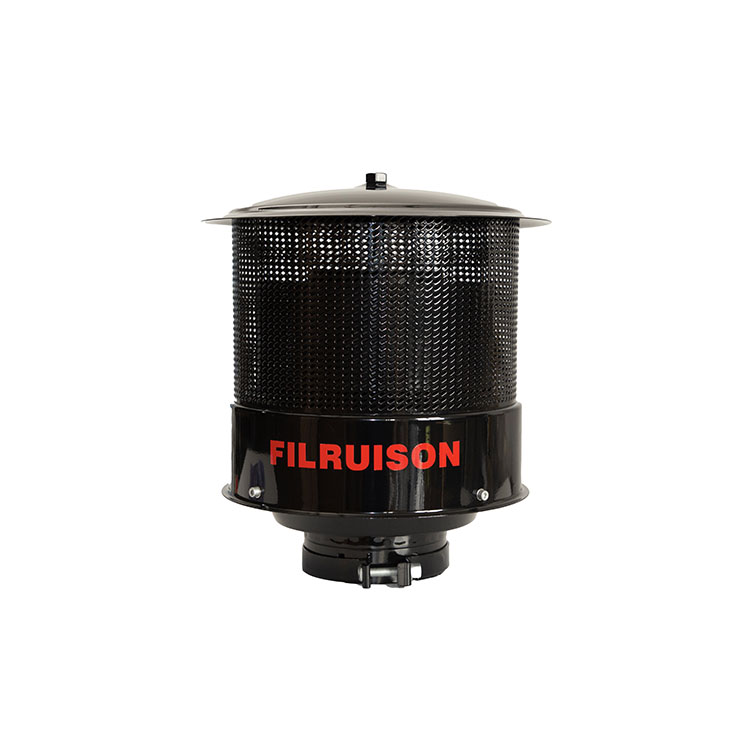
To accurately determine if this component is necessary for your fleet, you must first understand its mechanical function and structural placement. Simply put, it is a specialized mechanical separation device installed at the very beginning of a heavy-duty vehicle's Intake System. Unlike traditional barrier methods that use porous media to trap dirt, this component acts as the initial stage of a multi-stage process. It is specifically engineered to intercept and handle bulk debris before the oxygen flow reaches the more sensitive fine-tuning cellulose elements.
The primary mechanism behind this device relies on basic physics rather than physical barriers. It utilizes centrifugal force. When a heavy-duty motor operates, it acts as a massive air pump drawing in ambient oxygen at high velocities.
As ambient air enters the housing, it is forced through a series of static vanes or angled louvers. These precision-engineered vanes cause the incoming airflow to spin rapidly. This creates a powerful miniature cyclone inside the chamber. Because particles like silica, dirt, sand, snow, and rain possess a higher mass than the oxygen molecules carrying them, the centrifugal force aggressively pushes these heavier contaminants outward against the interior walls of the housing.
Once pushed to the outer edges, the separated debris is either collected in a transparent dust bowl or expelled back into the atmosphere through a specialized discharge port. Ultimately, the remaining clean air is drawn from the calm center of the cyclone. Now stripped of up to 90% of its particulate mass, this pre-filtered air is routed directly into the standard paper element for final microscopic purification.
Operating heavy machinery without proper preliminary separation exposes internal components to severe environmental hazards. Airborne contaminants are not just a minor nuisance. They are a direct and aggressive threat to the mechanical integrity of the powerplant. The most prominent and destructive of these hazards is Dust Ingestion.
These powerplants are fundamentally different from their gasoline counterparts in how they process oxygen. A heavy-duty motor operates unthrottled. It consumes a massive and constant volume of air regardless of the current load. For instance, a standard 15-liter industrial motor running at 1,800 Revolutions Per Minute can easily consume upwards of 400 to 500 Cubic Feet per Minute.
When this massive consumption occurs in active construction sites or deep mining pits, the environmental threat multiplies exponentially. The ambient atmosphere in these environments is often heavily laden with silica. Silica possesses a hardness of 7 on the Mohs scale, making it physically harder than the steel and cast iron used to forge cylinder liners. When unfiltered silica enters the combustion chamber, it acts exactly like liquid sandpaper.
The mechanical consequences of this contamination are progressive, stealthy, and highly destructive. Abrasive particles bypass an overwhelmed primary barrier and enter the motor, mixing with the lubricating oil on the cylinder walls. This toxic mixture creates an abrasive paste that relentlessly grinds away at the piston rings and cylinder liners.
The immediate result is a phenomenon known as blow-by, where pressurized combustion gases leak past the worn piston rings into the crankcase. This leads to a severe loss of compression and noticeably reduced horsepower. Over time, the contaminated oil circulates throughout the entire block. It causes premature wear on the crankshaft bearings, camshafts, and valve guides. Chronic exposure to these abrasive elements will force a complete rebuild thousands of hours before the machine's engineered lifespan.
For procurement managers and equipment owners, the decision to invest in upgraded filtration comes down to empirical benefits and asset protection. Installing a high-efficiency separation device provides critical advantages that directly and positively impact the bottom line.
The mathematical advantage of pre-filtration is remarkably straightforward. If a machine operates in a dusty quarry, the primary paper element acts as a sponge. Once that sponge is full of dirt, it restricts flow and must be replaced. However, if a centrifugal device is installed and successfully removes 80% to 90% of the airborne dirt mass upfront, the primary barrier is only required to process the remaining fine microscopic dust.
By dramatically reducing the heavy workload on the primary barrier, the Filter Life is extended exponentially. Industry data suggests that equipment operating with a high-efficiency centrifugal separator can extend replacement intervals by 5 to 10 times. This translates directly to fewer purchased consumables and significantly lower labor costs for servicing.
Modern heavy-duty motors rely heavily on forced induction to force compressed oxygen into the cylinders. These components are highly sensitive precision instruments. The compressor wheel inside a modern unit can spin at extreme speeds, often exceeding 100,000 Revolutions Per Minute.
At these blistering velocities, even a tiny grain of sand carries significant kinetic energy. If debris bypasses a clogged primary barrier, it strikes the leading edges of the fast-spinning blades like microscopic bullets. This causes pitting, erosion, and eventual severe imbalance of the compressor wheel. Implementing a high-quality separator provides essential Turbo Protection by ensuring that bulk debris never has the opportunity to compromise the airflow.
Furthermore, machine performance is inextricably linked to the air-to-fuel ratio. As a standard barrier becomes clogged with heavy dirt, it severely restricts the volume of oxygen flowing into the combustion chamber. By separating the bulk of the dust before it reaches the media, a preliminary cleaner ensures that the primary barrier remains unrestrictive for a much longer duration. This consistency maintains optimal airflow and ensures that fuel economy remains stable.
A common point of confusion for equipment buyers is whether a preliminary separator replaces the standard factory filter. The objective answer is no. They serve entirely different but highly complementary functions within the overall filtration architecture.
| Feature | Standard Air Filter | Air Pre Cleaner |
|---|---|---|
| Primary Function | Fine-tuning and microscopic purification. | Bulk debris separation and heavy lifting. |
| Working Principle | Physical porous barrier capturing particles. | Centrifugal force ejecting heavy mass outward. |
| Particle Size Target | Microscopic dust down to 2 to 5 microns. | Large abrasive debris like sand, chaff, and silica. |
| Maintenance Need | Requires frequent replacement when clogged. | Self-cleaning or simple manual bowl emptying. |
These two components are not competitors. They work in a synergistic partnership. The separator handles the heavy lifting by removing the vast majority of the dirt mass, seamlessly allowing the standard barrier to perform its fine-filtration job efficiently without being prematurely overwhelmed.
While a standard highway haul truck operating on paved roads may not require aggressive pre-filtration, certain heavy industries operate in environments where this technology is a strict operational necessity.
Selecting the correct unit requires precisely matching the physical and operational characteristics of the device to the specific demands of the machinery. Looking at industry-standard solutions from SYKINGTECH, such as the PC Series and PC11 models, provides a clear benchmark for engineering requirements.
The single most critical factor in choosing an Air Pre Cleaner for Diesel Engines is matching its Cubic Feet per Minute rating to the motor's specific airflow requirements. These devices rely on precise air velocities to generate the centrifugal force needed for effective separation. If the unit is rated for a lower airflow than the motor requires, it will act as a severe restriction. Conversely, if the unit is rated for a much higher capacity than the motor pulls, the air velocity inside the chamber will be too sluggish. The centrifugal cyclone will simply not form properly.
The daily operating environment dictates the required construction material. For heavy construction where the equipment might be subjected to violent physical impacts, a heavy-duty steel or cast-aluminum housing is strongly recommended. Specifically, advanced models like the SYKINGTECH PC Series utilize high-strength, UV-resistant reinforced polymer composites. These materials are often preferred due to their lighter overall weight and immunity to rust, corrosion, and vibration fatigue.
Buyers must also choose between maintenance-free and manual-maintenance models. Traditional models feature a clear plastic collection bowl requiring operators to visually inspect and manually empty the trapped debris. Advanced self-ejecting models utilize continuous bottom-discharge ports to automatically expel dust back into the air, requiring zero mechanic intervention.
For fleet procurement managers, any aftermarket addition to a machine must be strictly justified by its Return on Investment. The financial case for preliminary separation is robust and rapid, especially in high-dust industries.
The initial capital expenditure of purchasing and installing a unit is remarkably low compared to the overall capital cost of the machinery. First, consider consumable savings. If a machine operating in a quarry previously required a costly primary element replacement every single month, and a separator extends that interval to every six months, the direct consumable savings are substantial annually per machine.
In addition, every filter change requires mechanic labor and pulls the machine out of revenue-generating operation. Reducing these changes saves valuable maintenance labor hours. Finally, the most significant financial metric is catastrophic risk mitigation. Avoiding a single compressor replacement or a premature motor overhaul immediately pays for the upfront separator multiple times over. Empirical data proves that the device typically pays for itself entirely within the first few months of operation.
Ultimately, preliminary filtration is far more than an optional aftermarket accessory. It is a vital, non-negotiable necessity for any heavy-duty equipment operating in particulate-heavy environments. By utilizing simple centrifugal physics to eject up to 90% of airborne debris before it enters the combustion tract, this technology provides unparalleled protection for sensitive internal components.
It actively prevents catastrophic internal scoring, guarantees long-term compressor safety, and dramatically extends the lifespan of your consumable paper elements. For fleet managers looking to slash operating costs and maximize machinery uptime, the data is undeniably clear. We highly encourage operators to evaluate their current airflow architecture. Consider upgrading to a high-efficiency preliminary system from SYKINGTECH to protect your valuable heavy-duty investments today.
No, as long as the device is properly sized for your specific airflow requirements, it will not restrict critical airflow. In fact, by keeping the primary barrier clean and free of bulk debris, it actually helps maintain optimal unrestricted airflow for a much longer operational period compared to an unprotected system.
Many modern centrifugal models are fully self-cleaning. They use continuous rotational force to eject dust automatically, requiring zero routine maintenance. Specific designs with a clear plastic dust bowl simply need to be manually emptied by an operator when the trapped debris reaches the visible fill line.
Generally, no. Most major heavy-duty manufacturers actively encourage improved filtration practices, especially in harsh dusty environments. However, it is always highly recommended to ensure the installation is performed correctly by a qualified technician without altering or bypassing the original factory intake sensors.
Yes, indirectly. When a standard filter clogs with dirt, it restricts oxygen flow. This forces the electronic control module to adjust the air-to-fuel ratio, often causing the engine to burn more fuel to maintain power. By keeping the main filter clean longer, a pre-cleaner helps maintain the optimal air-to-fuel ratio, preserving factory fuel efficiency.
Traditional cyclonic models typically collect the separated debris in a clear bowl that requires daily physical inspection and manual emptying. Modern self-ejecting models utilize specialized discharge ports or exhaust aspiration to continuously blow the separated dust back into the atmosphere, completely eliminating the need for daily manual maintenance.
