
Views: 0 Author: Site Editor Publish Time: 2026-10-14 Origin: Site


A single microscopic tear in an air intake barrier serves as a direct pathway to catastrophic engine failure. Modern powerplants operate under incredibly tight tolerances. Introducing even the smallest amount of abrasive silica causes irreversible internal wear. This is precisely where a high-quality Radial Seal Air Filter proves its worth. Designed specifically for heavy-duty, mining, and agricultural applications, this specialized component relies on unique structural geometry. It maintains a perfect, airtight barrier in extreme, dust-choked environments.
While the pleated media efficiently captures contaminants, the pliable sealing ring remains exceptionally vulnerable. Mechanical and environmental degradation can easily destroy it. If this critical barrier is compromised, unfiltered oxygen bypasses the system entirely. This comprehensive guide details exactly what destroys these delicate components. We will cover how to spot early warning signs and the precise steps required to prevent costly engine rebuilds.
Improper Handling is the Leading Culprit: Twisting, forcing, or misaligning the unit inside the intake box rips the flexible ring. It can also compress the material unevenly or shift it out of position.
Structural Deformities Ruin Barriers: A warped, dented, or heavily soiled plastic casing prevents the element from seating properly. This creates invisible gaps for dirty air to bypass.
Chemical and Fluid Degradation: Hot oil blowback from the crankcase and harsh cleaning solvents rapidly degrade polyurethane. The material will swell, harden, or crumble into pieces.
Particulate Bypass is Fatal: Even a microscopic gap in the seating surface causes engine dusting. This leads to severe scoring on cylinder walls, piston rings, and delicate turbocharger blades.
Prevention Requires Precision: Meticulous wiping of the seating tube and careful, straight-line handling significantly extend operational life.
To truly grasp how a failure occurs, we must first look at the mechanical engineering behind the design. Traditional axial systems rely on vertical compression. They press flat against the bottom or top of a casing, requiring a mechanical clamp to maintain constant downward pressure. A radial design operates on a completely different geometric principle.
Rather than pressing flat against a surface, this specialized system slides tightly over a cylindrical tube located on either the inner or outer diameter of the intake box. As it slides into place, the pliable material compresses horizontally against the side walls. This friction-based interference fit creates a tight, uniform, and self-supporting barrier. It remains secure even when subjected to intense, low-frequency engine vibrations.
The sealing ring is arguably the most critical component of the entire air intake tract. It acts as the solitary physical barrier standing between clean oxygen and engine-destroying dirt. Typically manufactured from specialized polyurethane elastomers, high-density felt, or advanced rubber compounds, this ring must remain flexible across a massive spectrum of temperature fluctuations.
Industry Trend Insight: The heavy machinery sector is currently experiencing a massive shift in filtration engineering. As modern diesel engines meet stricter emission standards, under-hood temperatures have skyrocketed. Traditional rubber blends simply degrade under this intense thermal cycling. Consequently, top-tier manufacturers are rapidly adopting advanced, hyper-resilient polyurethane compounds. These new materials maintain elasticity and structural integrity even when subjected to the extreme heat and mechanical stress of contemporary mining and construction equipment.
Empirical data from heavy-duty mechanics reveals a frustrating truth. The vast majority of intake damage does not happen on a rugged trail. It occurs right in the maintenance bay before the ignition is even turned. Installation Error remains the leading culprit for premature failure. Rushed servicing or a fundamental misunderstanding of how the friction fit engages often leads to disaster.
These systems require horizontal compression to function. Naturally, they offer significant resistance when pushed into the plastic housing. Picture a technician rushing through a routine fleet check. Instead of applying even, methodical pressure, they interpret this natural resistance as a blockage. They attempt to forcefully rock or shove the unit into place. This aggressive twisting creates immense localized friction against the dry plastic. It effortlessly catches the edge of the polyurethane and tears the delicate material. Once that surface is ripped, structural integrity is permanently compromised.
Not all human-induced damage results in obvious tears. Clumsy handling frequently causes the flexible ring to shift entirely out of alignment. If inserted at a slight angle, the material rolls over on itself. While the outer casing might look perfectly flush to the naked eye, the internal seating is severely compromised. This leaves a hidden, crescent-shaped gap allowing particulate matter to flow freely into the intake manifold.
Dropping a pristine replacement into a filthy intake box is a guaranteed recipe for failure. Over months of operation, grit, fine sand, and old greasy residue accumulate on the internal seating tube. If a mechanic fails to meticulously wipe away this abrasive debris with a damp cloth prior to insertion, the trapped dirt acts exactly like high-grit sandpaper. As the engine runs, operational harmonics cause micro-vibrations. This slowly grinds the trapped sand against the soft polyurethane until it wears a hole completely through the barrier.
Even flawless installation cannot save a cartridge if the surrounding environment is broken. Mechanical Housing Damage shifts the focus from human error directly to physical impact and material fatigue.
Intake boxes in construction equipment or off-road vehicles face brutal conditions. Physical impacts from flying rocks or thick branches easily dent a metal outer casing. This pushes the internal seating tube out of its perfectly round shape. Extreme under-hood thermal cycling also causes molded plastic casings to warp over time.
If the cylindrical tube is no longer a perfect circle, uniform compression becomes mathematically impossible. A deformed tube inevitably crushes one side of the elastomer while leaving a dangerous void on the opposite side. Over-zealous mechanics over-tightening retaining clamps can also distort the geometry of the entire assembly.
Heavy-duty diesel applications inherently generate intense, low-frequency vibrations that shake the entire chassis. If the air box is missing mounting bolts or features a cracked bracket, these natural vibrations amplify drastically. This lack of stability causes the internal cartridge to chatter violently against the plastic walls. Over hundreds of hours of operation, this severe hammering breaks down the cellular structure of the elastomer. The material flattens out, loses its crucial elasticity, and ultimately fails.
What happens deep inside the engine crankcase is just as critical as external dust. Chemical exposure acts as a silent, rapid killer of pliable elastomers. It often destroys a Seal Gasket long before the filter media reaches its capacity.
Oil blowback is a severe mechanical condition. It is typically triggered by excessive crankcase pressure, a clogged positive crankcase ventilation valve, or worn piston rings. When this occurs, hot, vaporized engine oil is forcefully pushed backward through the intake tract. It eventually saturates the pleated media and pools at the base.
Standard polyurethane and rubber compounds are not engineered to withstand prolonged bathing in hot engine oil. When soaked in these hydrocarbons, the chemical composition of the elastomer rapidly degrades. The material swells to twice its size, becomes dangerously soft, and eventually crumbles into a sticky paste. Once it reaches this stage, the crumbling pieces can be sucked directly into the turbocharger compressor wheel.
During routine servicing, maintenance personnel frequently utilize aggressive brake cleaners or industrial degreasers to quickly wipe out a dirty air box. If these harsh solvents are not given ample time to completely evaporate before the new unit is seated, the residual chemical vapor aggressively attacks the fresh elastomer. Solvents strip essential plasticizers out of the rubber. The once-pliable ring dries out, shrinks, and develops deep spiderweb cracks that easily let dirt slip by.
Understanding the mechanical nuances of a failed barrier is important. Grasping the severe financial consequences makes meticulous maintenance absolutely non-negotiable.
When a barrier fails, it triggers a devastating chain reaction known throughout the heavy machinery industry as engine dusting. Dust Leakage happens when unfiltered oxygen laden with microscopic silica particles bypasses the media and flows directly into the combustion chamber.
Silica is exceptionally hard. It acts as a highly aggressive grinding paste when mixed with cylinder lubrication. As it gets trapped between the rapidly moving piston rings and the cylinder walls, it immediately scores the cast iron. This results in a sudden loss of engine compression, massive oil consumption, and a severe drop in horsepower. In forced-induction setups, this grit acts like a sandblaster against delicate turbocharger blades. It often destroys the turbo long before the main block seizes.
Abstract concepts only go so far. When outfitting an industrial fleet, you need hard specifications. Selecting the right unit requires matching the airflow capacity and seal material to your specific operational environment.
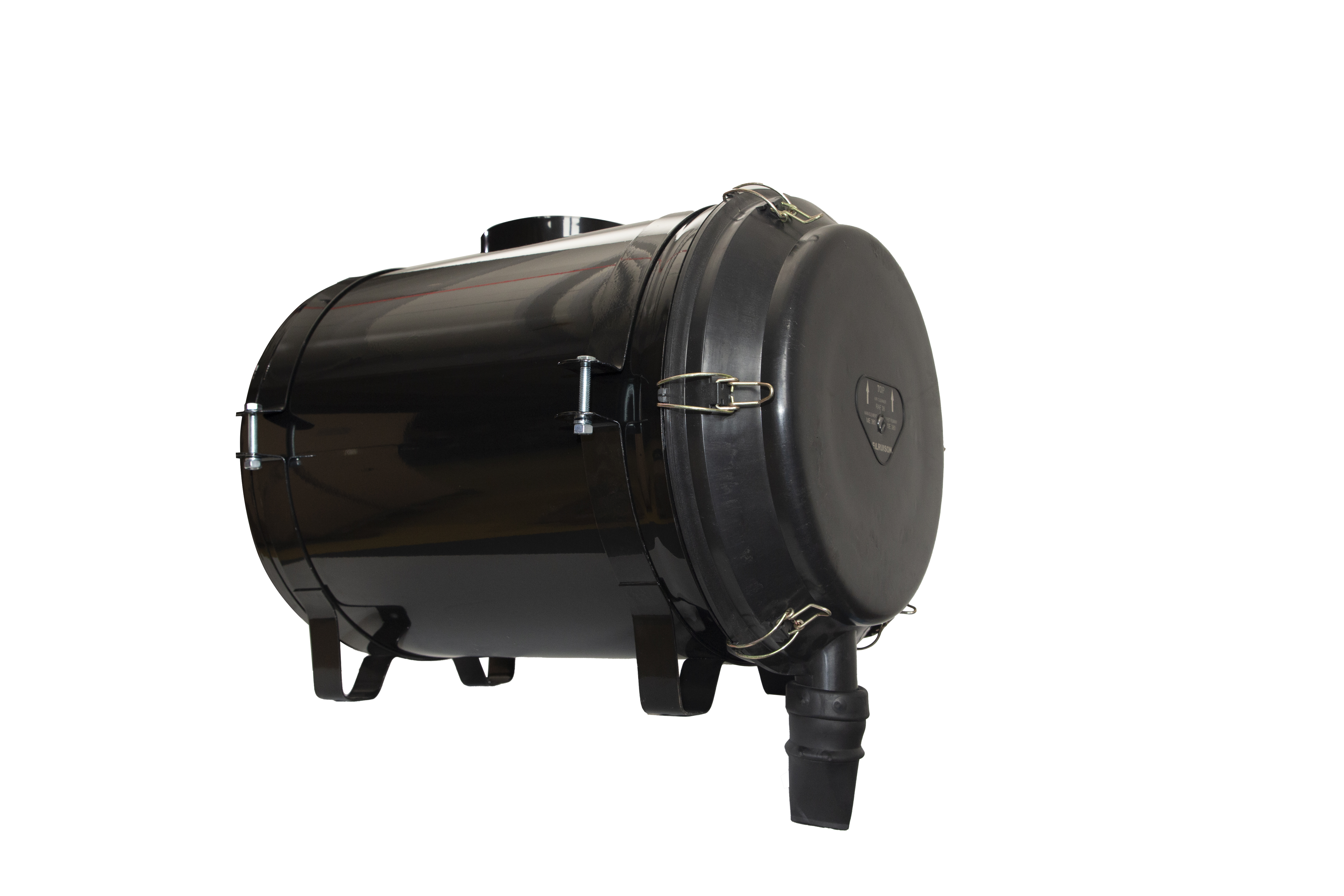
Equipment operating in underground mining or heavy quarry work demands massive airflow and extreme dust holding capacity. A unit like the Sykingtech 18-22m3/min Air Filter designed for mining applications utilizes a high-density, vibration-resistant radial seal. This ensures the gasket does not compress unevenly under constant chassis shaking. Similarly, precision models like the PL3595570 feature optimized polyurethane blends that resist chemical swelling and thermal warping.
Here is a quick reference guide for selecting the right sealing technology based on operational severity.
Application Environment | Required Airflow Capacity | Recommended Seal Material | Key Threat to Mitigate |
|---|---|---|---|
Standard Highway Transit | Low to Medium | Standard Polyurethane Blends | Normal dust accumulation, minor vibrations |
Agricultural and Farming | Medium to High | Reinforced Elastomer | Chaff, heavy organic debris, thermal cycling |
Heavy Mining and Quarry | 18-22m3/min and above | Hyper-Resilient Polyurethane | Extreme silica dust, severe chassis vibration |
High-Performance Industrial | Model Specific like PL3595570 | Chemical-Resistant Compounds | Oil blowback, high-pressure intake suction |
You do not need to wait for your powerplant to start burning oil to determine if your intake system is compromised. Implementing routine visual and physical inspections easily saves tens of thousands of dollars in rebuild costs.
Every time you pull the cartridge for a routine check, bring it under a bright shop light. Meticulously examine the sealing surface. You are specifically hunting for microscopic tears located on the leading edge where it first makes contact with the plastic tube. Check for compression set. If the polyurethane looks permanently squished flat and fails to spring back when firmly pressed with a thumbnail, it has entirely lost its vital elasticity. Look for dry rot, tiny spiderweb cracks, or a sticky texture indicating chemical degradation.
This remains the most definitive test for identifying a bypassed system. Remove the cartridge entirely and look deep into the clean intake tube that leads directly to the engine manifold. Take a perfectly clean, bright white microfiber cloth and firmly swipe it around the inside walls of that tube.
If the cloth comes out completely spotless, your system is functioning perfectly. If the cloth returns with a fine coating of brown grit or grey silt, the barrier has officially failed. Abrasive material is actively entering the engine. Immediate replacement is required before further internal scoring occurs.
Preventing premature wear is infinitely more cost-effective than financing an engine rebuild. Adhering to strict maintenance protocols ensures your filtration setup performs flawlessly across its intended lifespan.
There is a persistent debate regarding whether one should apply a layer of grease to the sealing rim. The correct answer depends entirely on the specific technology you are utilizing. For oiled foam setups commonly found on dirt bikes, applying a thick bead of waterproof rim grease is a mandatory step to trap fine silt at the flat base.
For a dry, paper-media cartridge utilizing a polyurethane friction fit, you should never apply grease to the surface. Polyurethane is specifically engineered to grip the dry plastic tightly. Introducing a lubricant reduces that vital friction. This potentially causes the entire unit to vibrate loose and slide off the tube during heavy operation. Always install these units completely dry unless the manufacturer explicitly dictates otherwise.
To eliminate the risk of human error, adopt a standardized procedure every single time you open the intake box. Use a clean, damp rag to wipe the internal tube completely free of dust, sand, and old oil. Allow it to air dry. Thoroughly inspect the fresh replacement for any manufacturing defects or shipping damage. When inserting, align it perfectly straight against the tube. Never approach at a skewed angle. Apply firm, even pressure to the center or outer edges and push it straight in without any twisting or aggressive rocking. Fasten all housing clips evenly to guarantee uniform pressure across the entire assembly.
Careless human handling, structural casing deformities, and harsh chemical exposures remain the primary enemies of a reliable intake barrier. Ignoring these subtle warning signs directly invites severe particulate bypass. This inevitably culminates in irreversible internal engine destruction.
Proactively inspect your current setup for any signs of tearing, flattening, or misalignment. If you discover even the slightest anomaly, do not hesitate to upgrade your system. For fleet managers and operators demanding uncompromising reliability, selecting precision-engineered components is the only way forward. Visit Sykingtech today to explore high-performance solutions like the PL3595570 or heavy-duty mining filters designed to protect your most valuable equipment from catastrophic failure.
Replacement intervals depend heavily on your specific operating environment. In clean, paved highway conditions, you can safely adhere to standard mileage recommendations. In heavily dusted off-road or agricultural environments, traditional mileage metrics become irrelevant. Rely on a mechanical restriction indicator gauge to determine when the media is clogged. Regardless of the gauge reading, replace the unit immediately if you spot physical damage, tearing, or flattening during a routine visual inspection.
Absolutely not. You must never attempt to glue, tape, silicone, or patch a torn barrier. The intake vacuum pressure generated by a running diesel engine is immense. This intense suction easily pulls dirt and silica straight through the repaired weak point. The relatively minor cost of a brand-new replacement is negligible when compared to the astronomical cost of a full engine rebuild.
A snug, tight fit is completely normal and required for this specific design. It relies on horizontal compression to create a perfect airtight barrier. If it requires excessive, aggressive force to seat properly, stop immediately. You may have purchased the incorrect part number, or there may be hidden debris preventing a smooth installation. Never force, jam, or twist the unit.
No, fluid blowback is not indicative of a defective filtration unit. It is a glaring symptom of a deeper mechanical engine issue. Conditions such as excessive crankcase pressure or worn piston rings force oil backward into the intake. The hot hydrocarbons will chemically ruin the polyurethane. Diagnose and repair the internal engine issue first, then replace the ruined cartridge simultaneously.
Yes, it absolutely can. If the gasket is severely compromised, it alters the precise volume and velocity of air passing over the Mass Air Flow sensor. This unmetered air throws off the engine's air-to-fuel ratio calculations. The vehicle's computer will detect this lean condition and immediately trigger a check engine light to warn the operator of a system imbalance.
Extreme cold drastically reduces the elasticity of standard rubber compounds. When temperatures plummet below freezing, inferior materials become brittle and shrink. This compromises the friction fit against the intake tube. Premium polyurethane blends are chemically formulated to remain pliable and maintain their structural sealing integrity even in sub-zero mining or arctic environments.
