
Views: 0 Author: Site Editor Publish Time: 2026-08-02 Origin: Site


In severe-duty applications like mining, forestry, and agriculture, catastrophic engine failure due to particulate ingestion is a direct threat to original equipment manufacturer brand reputation and warranty reserves. When machines operate in environments saturated with dust, chaff, and debris, the primary filtration system quickly becomes overwhelmed. Sourcing a pre-cleaner is not a standard commodity purchase. Equipment manufacturers must identify a partner capable of matching complex airflow dynamics, spatial constraints, and rigorous production schedules, rather than just supplying aftermarket parts. Moving from initial design concepts to full-scale manufacturing requires auditing an industrial air pre-cleaner supplier across technical validation, supply chain resilience, and engineering support capabilities. A successful integration protects the engine, extends maintenance intervals, and ensures the machinery performs reliably under extreme conditions. Engineers and procurement teams must align on specific performance metrics to select a supplier that meets these demanding operational standards.
Pre-cleaners act as the first line of defense for heavy-duty engines. They intercept large particulates before these contaminants reach the primary filter media. This interception drastically reduces the volume of abrasive dust entering the intake system. Cleaner air directly reduces wear on internal components like cylinders, piston rings, and bearings. By preventing premature engine degradation, manufacturers significantly lower their warranty liabilities. A robust pre-cleaning stage ensures the engine reaches its intended operational lifespan without catastrophic failure. When silica dust bypasses a compromised filter, it mixes with engine oil to create a highly abrasive lapping compound. This compound rapidly degrades bearing surfaces and scores cylinder walls. Stopping the dust before it enters the intake tract is the only reliable method to prevent this specific failure mode.
Engineers must evaluate the specific micron size of the dust the machine will encounter. Different environments present different challenges. Coal dust behaves differently than agricultural chaff or silica sand. The pre-cleaner must be specified to handle the exact type of debris expected in the machine's primary operating environment. Failure to match the pre-cleaner to the environment results in filter blinding, where the primary filter becomes completely clogged, starving the engine of air and causing immediate shutdown.
Equipment operators measure success by machine uptime. Unscheduled maintenance events in high-debris environments like quarries, mines, and agricultural fields destroy profitability. Connecting the supplier's product performance directly to the operator’s bottom line is essential. A highly efficient pre-cleaner minimizes the frequency of filter replacements and intake system cleanings. This keeps the machinery running longer between service intervals. Maximizing fleet productivity relies heavily on the continuous, uninterrupted operation of the engine intake system.
Consider a wheel loader operating in a dusty quarry. Without a pre-cleaner, the operator might need to blow out or replace the primary air filter every 50 hours. This requires stopping the machine, opening the hood, removing the filter, and either cleaning it or installing a new one. This process takes time and introduces the risk of knocking dust into the clean side of the intake. With a properly integrated pre-cleaner, that service interval can easily extend to 250 or 500 hours. The reduction in downtime directly translates to more material moved and higher revenue for the operator.
Designing a pre-cleaner into the initial equipment blueprint presents unique challenges compared to bolting on a post-market solution. Factory integration requires careful consideration of hood clearance, vibration mounting points, and overall machine styling. Engineers must route intake ducting efficiently to minimize airflow restriction. Aftermarket retrofits often compromise on these elements, leading to bulky installations and potential structural fatigue. A dedicated supplier works within the original design parameters to deliver a seamless, integrated component that complements the machine's architecture.
| Integration Type | Vibration Resistance | Airflow Restriction | Aesthetic Impact | Engineering Effort |
|---|---|---|---|---|
| Factory OEM Integration | High (Engineered mounts) | Optimized (Direct routing) | Seamless (Under-hood or styled) | High (Requires CAD collaboration) |
| Aftermarket Retrofit | Variable (Universal brackets) | Higher (Extra elbows/piping) | Bulky (External mounting) | Low (Bolt-on application) |
Heavy machinery rarely operates in a single, controlled environment. The baseline requirement for any pre-cleaner is reliable performance across varied extremes. The system must successfully separate complex mixtures of dry dust, sticky agricultural chaff, wet sawdust, heavy rain, and snow. Clogging is a primary failure mode in severe conditions. The supplier must demonstrate their product's ability to handle mixed media without restricting airflow. Versatility ensures the equipment remains operational regardless of seasonal or geographical challenges.
In forestry applications, machines encounter a mix of fine dust, large wood chips, and sticky pine needles. A pre-cleaner designed solely for fine dust will quickly pack full of pine needles and fail. The internal geometry of the pre-cleaner must allow large, irregular debris to pass through the ejection port without bridging or jamming. Suppliers must provide test data showing how their units perform when subjected to these specific, difficult materials.
Matching an industrial engine precleaner to intake demands requires precise mathematical calculation. The pre-cleaner must handle the engine's maximum cubic feet per minute (CFM) without causing parasitic power loss. Every component added to the intake tract increases airflow restriction. If the pre-cleaner exceeds the engine manufacturer's restriction tolerances, it starves the engine of oxygen. This leads to poor combustion, increased exhaust temperatures, and reduced power output. Suppliers must provide accurate restriction curves across the entire operating RPM range.
Engineers calculate the required CFM by looking at engine displacement, maximum RPM, and volumetric efficiency. Turbocharged engines require significantly more air than naturally aspirated engines of the same displacement. The pre-cleaner must be sized to handle the peak airflow demand, which usually occurs at maximum governed RPM under full load. Sizing the unit too small creates a bottleneck. Sizing it too large reduces the velocity of the air entering the pre-cleaner, which negatively impacts the centrifugal separation efficiency.
Separation efficiency dictates how much debris is removed before reaching the primary filter. Suppliers utilize different centrifugal technologies to achieve this. Dynamic turbine designs use incoming air to spin a rotor, actively ejecting particulates. Static vane designs force air into a cyclonic pattern, relying on centrifugal force to push debris to the outer walls. Evaluating these technologies requires analyzing proven efficiency rates for specific micron-level particulates. High efficiency in separating fine dust is necessary for protecting the main filter media.
Handling wet debris requires specialized design features. Suppliers design passive and active ejection systems to manage heavy rain, snow, and wet sawdust. Exhaust ejector scavenged systems use the engine's exhaust gas velocity to create a vacuum. This vacuum continuously pulls moisture and debris out of the pre-cleaner housing. Automatic sweep discharge ports offer a passive alternative, relying on gravity and airflow to clear the collection bowl. Evaluating these systems ensures the pre-cleaner will not pack with wet material and choke the engine.
Snow ingestion is a specific hazard for winter equipment. Fine, powdery snow can bypass standard rain caps and pack into the primary filter, where it melts and then refreezes, completely blocking airflow. A properly designed pre-cleaner separates the snow crystals using centrifugal force and ejects them before they reach the filter housing. The supplier must provide documentation proving their unit's effectiveness in sub-zero, high-moisture conditions.
The materials used in pre-cleaner construction dictate its survival in harsh environments. Glass-filled nylon offers excellent impact tolerance and weight reduction. Powder-coated steel provides rigid structural integrity for high-vibration mounting. Aluminum components deliver thermal stability near exhaust systems. Material selection must account for UV resistance and extreme temperature fluctuations. Assess whether the unit requires routine maintenance, like emptying a collection bowl, or if it functions as a self-cleaning, maintenance-free unit. Maintenance-free designs are heavily preferred for OEM integration.
Vibration is a constant threat to mounted components on heavy machinery. A pre-cleaner mounted on a long intake pipe acts like a pendulum, amplifying engine vibrations. The housing material and the mounting bracketry must be engineered to withstand these continuous cyclic loads without suffering fatigue cracking. Suppliers should provide vibration test data, typically shaker table results, to prove the structural integrity of their designs.
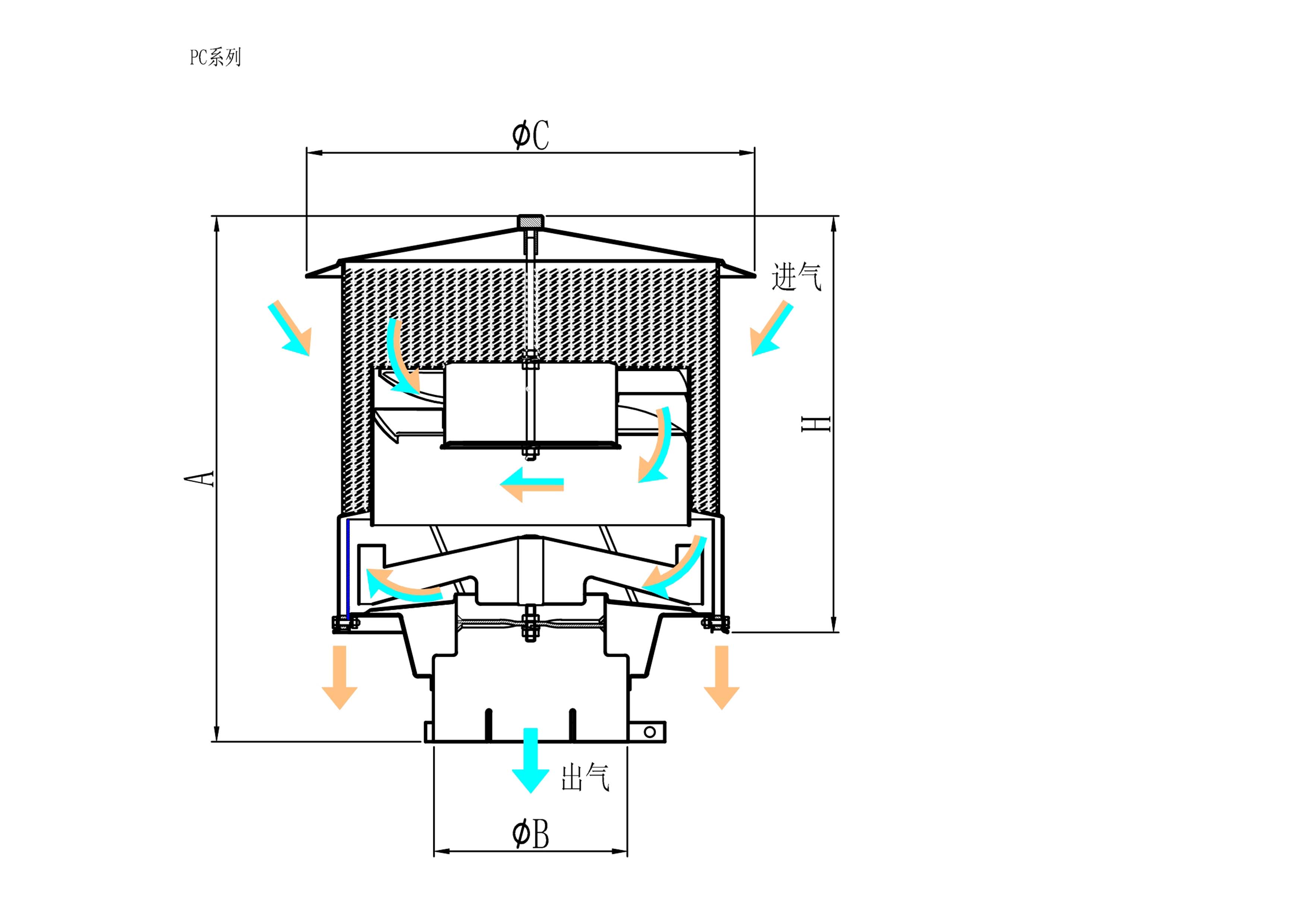
Modern engine compartments are incredibly dense. Fitting additional components requires precise spatial planning. The supplier must provide accurate 3D CAD models for seamless digital integration. Engineering collaboration is necessary to solve clearance issues with hoods, cooling packages, and exhaust routing. The supplier's engineering team should actively participate in packaging studies. This collaborative approach prevents late-stage design changes and ensures the pre-cleaner fits perfectly within the allocated envelope.
When routing intake plumbing, engineers must minimize the number of bends and elbows. Every 90-degree bend adds restriction to the system. The supplier should offer various inlet and outlet configurations (e.g., straight, 45-degree, 90-degree) to allow for the most direct routing possible. If the standard configurations do not fit, the supplier must have the capability to design and manufacture custom housings or adapter flanges to meet the specific spatial constraints of the machine.
Standard catalog dimensions rarely fit perfectly into specialized heavy equipment. Weighing a supplier's ability to modify existing designs is a major factor in the selection process. Custom mounting flanges, integrated rain caps, and specific intake routing angles are often required. Forcing engineers to adapt the machine to an off-the-shelf pre-cleaner compromises the overall design. A capable supplier offers flexible tooling and rapid prototyping to deliver customized solutions that meet exact spatial and performance requirements.
Rapid prototyping using 3D printing allows engineers to test physical fitment before committing to expensive injection molding tooling. The supplier should be able to provide functional 3D printed prototypes within a matter of days. These prototypes can be installed on the physical mockup of the machine to verify clearances, check mounting hole alignments, and ensure there is no interference with moving parts like hood hinges or cooling fans.
Laboratory testing provides baseline data, but field validation proves reliability. The supplier must participate in field-testing prototypes on the actual equipment. This validates lab results under real-world vibration, moisture, and variable engine load conditions. Field testing exposes structural weaknesses and airflow anomalies that static testing misses. Documented performance in actual operating environments is the ultimate proof of a pre-cleaner's viability for production integration.
A standard field test involves installing the prototype pre-cleaner on a machine and sending it to work in a known high-debris environment, such as a landfill or a dusty agricultural field. Engineers monitor the intake restriction using data loggers over several hundred hours of operation. They also inspect the primary filter at regular intervals to measure the amount of dust that bypassed the pre-cleaner. This real-world data is compared against the laboratory ISO 5011 results to confirm the unit performs as expected in the field.
A successful prototype is useless if the supplier cannot scale production. Auditing a supplier’s facility for capacity limits is a mandatory step. Evaluate their tooling ownership, machine availability, and workforce stability. The supplier must demonstrate the ability to scale production alongside volume forecasts. Lead time guarantees protect the assembly line from costly delays. A reliable partner maintains sufficient buffer stock and agile manufacturing processes to absorb demand fluctuations.
Procurement teams must verify the supplier's manufacturing footprint. Do they have enough injection molding machines to handle the projected volume? Do they run multiple shifts? What is their contingency plan if a critical machine breaks down? These questions must be answered during the facility audit. The supplier should also provide a clear breakdown of their lead times, separating the time required for raw material procurement, manufacturing, assembly, and shipping.
Batch-to-batch consistency is non-negotiable in mass production. An industrial air pre-cleaner supplier must hold recognized quality certifications. ISO 9001 certification demonstrates a baseline commitment to quality management systems. For automotive and heavy-duty applications, IATF 16949 certification provides a higher level of assurance regarding defect prevention and variation reduction. These standards ensure every unit delivered meets the exact specifications of the approved prototype.
| Certification | Focus Area | Relevance to OEM Integration |
|---|---|---|
| ISO 9001 | General Quality Management | Ensures baseline documentation and process control. |
| IATF 16949 | Automotive Quality Systems | Focuses on defect prevention and continuous improvement. |
| ISO 14001 | Environmental Management | Demonstrates responsible manufacturing practices. |
Global supply chain disruptions pose a significant risk to production schedules. Examining the supplier's reliance on sub-tier vendors is essential. Transparency regarding raw material sourcing, bearing procurement, and hardware acquisition reveals potential vulnerabilities. A robust supplier mitigates these risks through diversified sourcing, localized inventory, and long-term vendor contracts. Understanding their supply chain architecture ensures continuous part availability despite external market shocks.
If a pre-cleaner relies on a specific type of sealed bearing manufactured by a single company overseas, that represents a single point of failure in the supply chain. The supplier must identify these critical components and establish secondary sources or maintain significant safety stock. Procurement teams should request a complete Bill of Materials (BOM) and map the origin of every component to assess the overall supply chain risk.
Evaluating the true value of a pre-cleaner goes beyond the initial purchase price. A higher-tier heavy equipment air pre-cleaner justifies its cost by exponentially extending the primary air filter lifespan. A target filter life multiplier of 2x to 12x significantly reduces end-user maintenance expenses. Calculating this long-term maintenance reduction provides a clear financial justification for selecting a premium component. The reduction in labor hours and replacement filter costs far outweighs the initial unit investment.
When presenting the machine to the end-user, the extended service intervals become a major selling point. A machine that requires filter service every 500 hours is far more attractive than one that requires service every 100 hours. The upfront cost of integrating a premium scavenged pre-cleaner is easily offset by the increased marketability of the machine and the reduction in warranty claims related to dust ingestion.
Custom integration often requires proprietary tooling. Analyzing the financial trade-off between custom injection molds and standardized components is a critical engineering decision. Custom tooling guarantees a proprietary fit, optimized airflow, and specific branding elements. It increases upfront costs and extends time-to-market. Utilizing a supplier's existing tooling offers a faster, more economical path to production. The decision depends on the specific spatial constraints and volume projections of the machine platform.
For low-volume specialized equipment, paying for custom injection molds rarely makes financial sense. Engineers must work with the supplier to find an existing, standardized pre-cleaner that fits the application. For high-volume production machines, the cost of custom tooling is amortized over thousands of units, making it a viable option to achieve the perfect fit and aesthetic integration.
The lifespan of the pre-cleaner should ideally match the lifetime of the engine. Evaluate if the housing and internal components are designed for long-term durability. Some designs require periodic, costly replacement cycles for bearings or rotors. A truly maintenance-free design utilizes robust materials and sealed components to eliminate ongoing service requirements. Matching component lifespan to machine lifespan reduces total operational costs and improves the end-user experience.
If a dynamic pre-cleaner uses unsealed bearings, dust will eventually penetrate the bearing race, causing it to seize. The rotor stops spinning, and the pre-cleaner loses its effectiveness. The supplier must use high-quality, double-sealed bearings designed for severe dust environments. The housing material must resist UV degradation so it does not become brittle and crack after years of exposure to sunlight.
Incorrect CFM matching introduces severe performance risks. Under-sizing the pre-cleaner causes immediate engine starvation. The increased restriction limits oxygen intake, causing the engine to run hot and lose power. Over-sizing reduces centrifugal separation efficiency. If the airflow velocity is too low, the cyclonic action fails to separate fine particulates. Precise matching to the engine's specific intake curve is mandatory to prevent these critical failures.
Engineers must account for the entire operating range of the engine, not just the peak RPM. A pre-cleaner sized perfectly for high idle might be completely ineffective at low idle because the airflow velocity drops below the threshold required for centrifugal separation. The supplier must provide efficiency data across the entire CFM range to ensure adequate protection at all engine speeds.
Physical integration presents structural risks. Vibration-induced mounting failures are common if the bracketry is inadequate for the machine's operating environment. Structural fatigue in the pre-cleaner housing can lead to cracking and unfiltered air leaks. Water ingress is a severe risk if the design is not properly vetted for the specific machine orientation and exposure angles. Thorough validation of the physical installation is required to prevent these mechanical failures.
Mounting a heavy pre-cleaner directly to a plastic intake manifold is a recipe for disaster. The vibration and leverage will eventually crack the manifold. The pre-cleaner must be supported by heavy-duty steel brackets bolted directly to the engine block or the machine frame. Flexible rubber bellows should be used to connect the pre-cleaner to the intake piping to isolate vibrations and accommodate engine roll.
Mitigating these risks requires a structured validation process. Recommend phased rollouts to catch integration issues early in the production cycle. Implement rigorous First Article Inspection (FAI) protocols to verify dimensional accuracy and material specifications. Mandatory supplier quality audits prior to full production release ensure the manufacturing facility can maintain consistency. These tactics protect the assembly line and prevent defective units from reaching the field.
A: Lead times depend heavily on tooling requirements. Modifying existing designs typically takes 8 to 12 weeks. Developing entirely new custom injection molds and proprietary tooling can extend lead times to 16 weeks or more, including prototype validation phases.
A: Reputable suppliers use ISO 5011 testing standards. This laboratory testing utilizes specific grades of test dust to measure exact separation efficiency percentages and airflow restriction levels under controlled conditions.
A: Yes, but it requires careful spatial planning. Suppliers provide 3D CAD models to help engineers navigate tight clearances. Custom ducting and compact scavenged systems are often utilized to fit pre-cleaners under existing hoods without altering external styling.
A: A reliable supplier must hold ISO 9001 certification for baseline quality management. For heavy equipment and automotive applications, IATF 16949 certification is highly recommended to ensure defect prevention.
A: A properly sized pre-cleaner extends filter life by reducing the particulate load. This does not void warranties, provided the total intake restriction remains within the engine manufacturer's specified limits. It actively protects the primary filter from premature blinding.
