
Views: 0 Author: Site Editor Publish Time: 2026-08-04 Origin: Site


Modern High-Pressure Common Rail (HPCR) diesel engines demand absolute fuel purity. These systems operate at extreme pressures exceeding 30,000 PSI. Microscopic contaminants easily cause catastrophic injector failure today. You cannot afford this costly unplanned downtime. Fleet operators often argue passionately about brand loyalty on internet forums. We must move past these subjective debates. Instead, you need objective performance metrics to protect your heavy equipment. This guide provides a strictly technical and commercial framework. You will learn to evaluate heavy-duty diesel fuel filtration systems effectively. We focus heavily on equipment protection and operational efficiency. You will discover how to match filters to specific challenging environments. We will explain essential metrics beyond simple micron ratings. You will understand how to build a robust defense for your engines. This ensures maximum uptime and profitability.
Substandard filtration directly leads to severe financial losses. A failed fuel pump easily strands expensive assets on remote job sites. Injector replacements cost thousands of dollars per engine. Poor filtration multiplies these expenses rapidly. We see standard job site realities destroying standard-grade filters daily.
Consider the following common contamination sources:
Standard filters quickly overload in these harsh environments. They eventually bypass dirty fuel directly into your engine. HPCR injectors have tolerances smaller than a human hair. Even microscopic dirt scores these precision internal parts. This scoring ruins the spray pattern and decreases fuel efficiency.
What does a successful filtration upgrade look like? You will see extended service intervals first. Your fleet achieves zero fuel-related downtime. The engines maintain stable performance under heavy operational loads. You protect your capital investments effectively. A well-designed filtration strategy acts as a mechanical insurance policy. It prevents minor fuel issues from escalating into major mechanical failures.
Fleet managers frequently worry about voiding expensive warranties. The Magnuson-Moss Warranty Act protects you in the United States. Similar competition laws exist globally. Engine manufacturers cannot void warranties simply because you use aftermarket parts. However, the aftermarket part must meet or exceed original baseline specifications.
Original Equipment Manufacturer (OEM) filters offer distinct advantages. They guarantee exact fitment every single time. You get strict adherence to engineering baseline specifications. They cause zero warranty friction during dealer claims. Dealers simply accept them without questions. However, they usually carry a much higher price point. You are limited strictly to standard specifications. These standard builds might fail in extreme off-road environments.
Premium aftermarket brands provide excellent alternatives. They offer application-specific upgrades for unique field challenges. You can find enhanced cold-weather flow options easily. Some specialized brands offer significantly higher dirt capacity. They provide competitive pricing overall. They also allow consolidated fleet sourcing across different engine makes. But quality varies wildly across the unregulated market. You must vet manufacturer specifications rigorously.
Table 1: OEM vs. Premium Aftermarket Sourcing
| Sourcing Option | Primary Advantage | Primary Drawback | Best Use Case |
|---|---|---|---|
| OEM Filters | Zero warranty friction | Higher unit cost | New equipment under strict dealer watch |
| Premium Aftermarket | Customizable performance | Requires careful vetting | Mixed fleets needing higher dirt capacity |
| Bargain Aftermarket | Lowest initial price | Risks engine destruction | Never recommended for HPCR engines |
Always demand official ISO standard testing results. ISO 19438 is a critical standard to verify. Do not rely on vague marketing claims. Only choose a best diesel fuel filter when it proves its performance through hard data.
User forums often spread deep confusion about micron ratings. We must demystify this critical topic today. An "absolute" rating matters much more than a "nominal" rating. A nominal rating of 2 microns means the filter catches about 50% of 2-micron particles. That allows half the microscopic dirt to pass through! An absolute rating at 4 microns means it catches 98.6% or more of 4-micron particles. You always want absolute ratings for modern high-pressure engines.
Efficiency is expressed formally through the Beta Ratio. A Beta Ratio compares upstream particles directly to downstream particles. It tells a much clearer story than generic percentages. Beta 200 equals 99.5% efficiency. Beta 1000 equals 99.9% efficiency.
Chart 1: Beta Ratio and Filtration Efficiency Conversion
| Beta Ratio (β) | Particles Upstream | Particles Downstream | Capture Efficiency (%) |
|---|---|---|---|
| Beta 2 | 100,000 | 50,000 | 50.0% (Nominal) |
| Beta 75 | 100,000 | 1,333 | 98.6% (Absolute) |
| Beta 200 | 100,000 | 500 | 99.5% (High Efficiency) |
| Beta 1000 | 100,000 | 100 | 99.9% (Premium) |
Dirt Holding Capacity (DHC) dictates your actual maintenance intervals. High DHC means the filter holds more physical debris before plugging. It measures actual grams of captured contaminant in a laboratory setting. Two filters might share the exact same micron rating. However, the one possessing higher DHC lasts twice as long in the field.
Media type heavily influences both flow and capture performance.
Water acts as the absolute leading cause of fuel system corrosion. It drastically decreases fuel lubricity in heavy machinery. Modern injectors rely entirely on diesel fuel for internal lubrication. Water strips this protective barrier away instantly. It causes rapid metal-on-metal wear. This friction generates metallic flakes. These flakes travel through the system and cause catastrophic damage.
You must understand the distinct difference between free water and emulsified water. Free water separates naturally over time. It sits quietly at the bottom of the fuel tank. Emulsified water mixes completely into the fuel. It looks milky or cloudy. High-speed transfer pumps often create this emulsion. Standard filters fail to stop emulsified water entirely. The droplets are too small. They slip right through traditional cellulose paper.
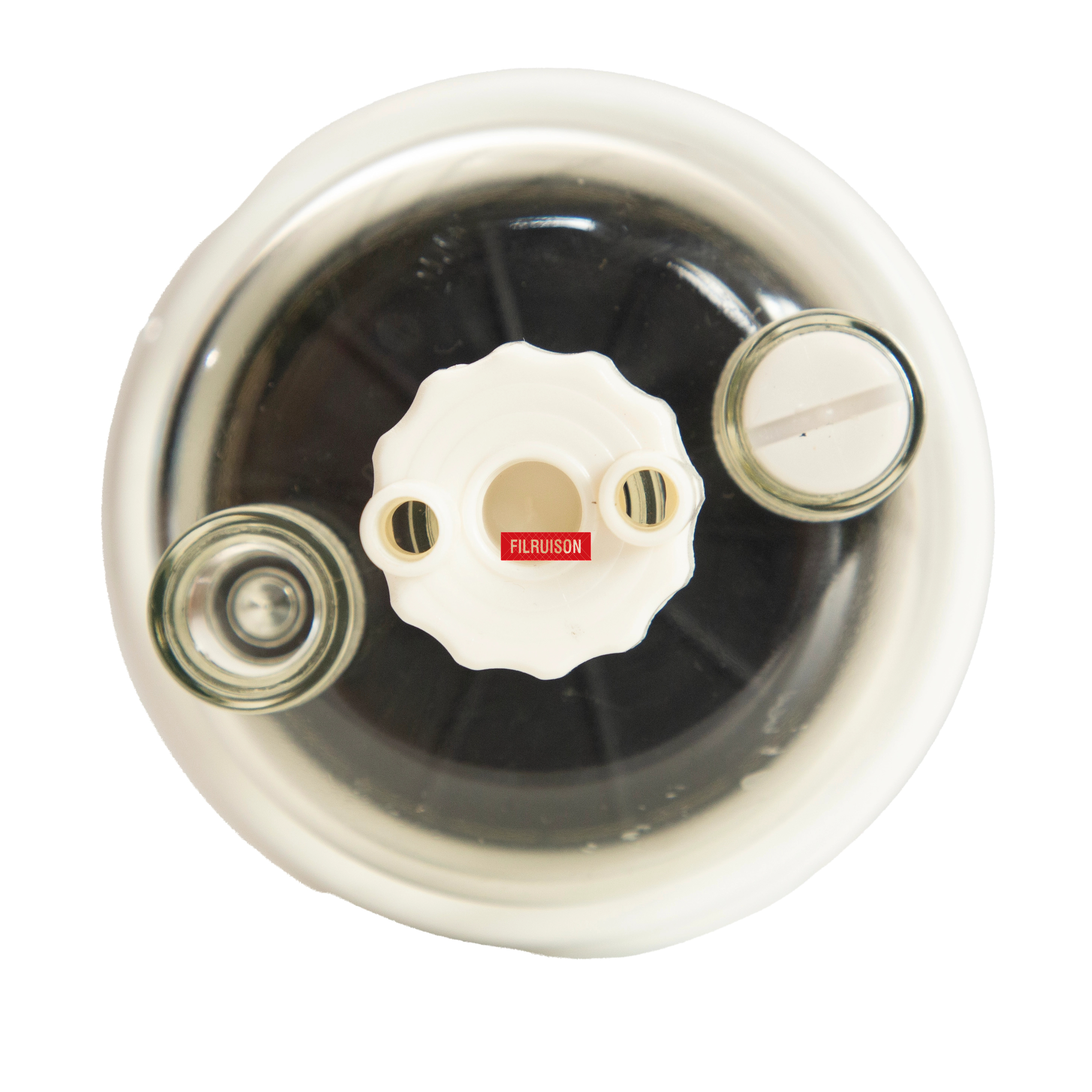
You need a dedicated, premium Diesel Fuel Filter Water Separator to combat this specific threat. It acts as the primary defense mechanism against moisture.
We evaluate separators based on their core engineering technology.
Both methods work well. However, multi-stage coalescing remains the gold standard for fine modern emulsifications.
Drain mechanisms matter significantly for heavy equipment operability. Manual drain valves require daily operator checks. Operators often forget this crucial step during busy shifts. Automated sensor-driven drains remove human error completely. They purge collected water automatically when internal sensors detect a specific water level.
Even excellent components fail due to basic human error. Installation practices often ruin expensive upgrades immediately. Many mechanics pre-fill filters using raw bulk fuel. This common practice is incredibly risky. It bypasses the clean side of the media entirely. You introduce raw, unfiltered dirt directly to sensitive injectors. Always install the unit dry. Use the equipment's manual or electric primer pump to fill the system safely.
Cold weather introduces massive operational complications. Diesel fuel naturally contains paraffin wax. This wax crystallizes rapidly in low temperatures. It gels and plugs standard fine media almost instantly. You must mitigate these severe fuel gelling risks during winter months. We strongly recommend integrated electrical fuel heaters. Specialized winter flow media also prevents unexpected engine stalling.
Do not guess when a filter is plugged. Visual inspections reveal nothing about internal media condition. Standard hours-based intervals often waste perfectly good components. They also miss premature plugging events completely. We advocate utilizing specialized vacuum gauges. Restriction indicators tell you exactly when internal flow drops to dangerous levels.
We recommend following these actionable next steps for your fleet operation:
The ultimate heavy equipment filter perfectly balances multiple performance factors. You need high absolute micron efficiency to stop microscopic dirt. You require massive dirt holding capacity for long service intervals. You also need robust water separation to prevent internal corrosion. Balancing these three pillars protects your expensive HPCR engines effectively.
We strongly advise prioritizing synthetic-media filters. Ensure manufacturers publish their ISO testing standards clearly. Stop relying on basic nominal ratings found on cheap packaging.
Take immediate action to protect your fleet today. Consult your engine manual for baseline micron requirements. Inspect your current water separator bowls for rust or sludge. Request a quote or consultation for a commercial fleet filter audit. Upgrading your filtration systems prevents massive repair costs down the road.
A: Modern High-Pressure Common Rail (HPCR) engines require pristine fuel. Typically, you need 2 to 4 microns absolute for secondary filters on HPCR engines. This absolute rating ensures almost all damaging microscopic particles are captured before they reach the sensitive injectors.
A: You should base changes on OEM hours or mileage initially. However, ideally, you should rely on flow restriction gauge readings. This factors in your actual fuel quality and operating environment. Changing purely on hours wastes money or risks premature plugging.
A: No, it acts as a primary stage for water and large particulates. It works in tandem with a secondary high-efficiency filter. The separator handles bulk contamination and moisture. The secondary filter provides the final polish for microscopic debris.
A: Yes, if the filter size and media type aren't properly matched to the engine's flow rate requirements. An overly restrictive filter starves the engine. Utilizing synthetic micro-glass media helps achieve low micron ratings without sacrificing necessary fuel flow.
