
Views: 0 Author: Site Editor Publish Time: 2026-08-04 Origin: Site


Standard, off-the-shelf air pre-cleaners frequently fail in extreme environments—such as mining, heavy agriculture, and off-road applications—leading to premature engine wear, frequent filter replacements, and unacceptable equipment downtime. Specifying a custom solution requires a precise balance of airflow dynamics, environmental hazard mitigation, and spatial constraints without introducing excessive restriction that chokes engine performance. To achieve maximum engine protection and preserved fuel economy, buyers must know exactly what technical specifications, performance metrics, and validation processes to demand when partnering with a custom engine air pre-cleaner manufacturer. A well-engineered pre-cleaner extends service intervals, protects expensive primary filters, and ensures mobile equipment operates reliably under the harshest conditions.
Heavy machinery operates in diverse, unforgiving environments. Heavy dirt, high-moisture environments, and chaff or debris in agriculture quickly overwhelm standard filtration systems. Complex remote setups for twin-turbo off-road engines often require specific airflow routing that standard pre-cleaners cannot accommodate. When standard units fail to separate massive volumes of airborne contaminants, primary filters clog rapidly. This starves the engine of vital oxygen. You will notice immediate performance drops when a loader or excavator works in a silica-heavy quarry with an undersized intake system. The dust simply bypasses the weak centrifugal forces of a generic unit.
Consider the specific operational profiles of different industries. Forestry equipment deals with large, fibrous debris that easily clogs narrow intake vanes. Mining haul trucks operate in continuous clouds of fine, highly abrasive rock dust. Agricultural tractors face a mix of organic chaff, pollen, and soil dust. A generic pre-cleaner attempts a one-size-fits-all approach, which usually means it fails at all of them. Custom engineering addresses the exact micron size and mass of the target debris.
Relying on inadequate standard pre-cleaners carries a heavy financial burden. Accelerated primary filter loading means you buy and replace filters far more frequently. Degraded fuel economy occurs as engine vacuum increases to pull air through clogged media. The risk of engine dusting—where fine silica bypasses the filter and scores cylinder walls—can lead to catastrophic engine failure. The hourly cost of unplanned maintenance downtime often exceeds the price of the filtration components themselves.
A successful custom implementation extends service intervals significantly. It ensures zero reduction in engine power by maintaining optimal airflow restriction levels. A custom unit must feature seamless physical integration with the existing equipment chassis, avoiding interference with hoods, exhaust routing, or operator visibility. You know the design works when operators stop reporting sluggish throttle response and mechanics stop finding dust trails in the clean air ducting.
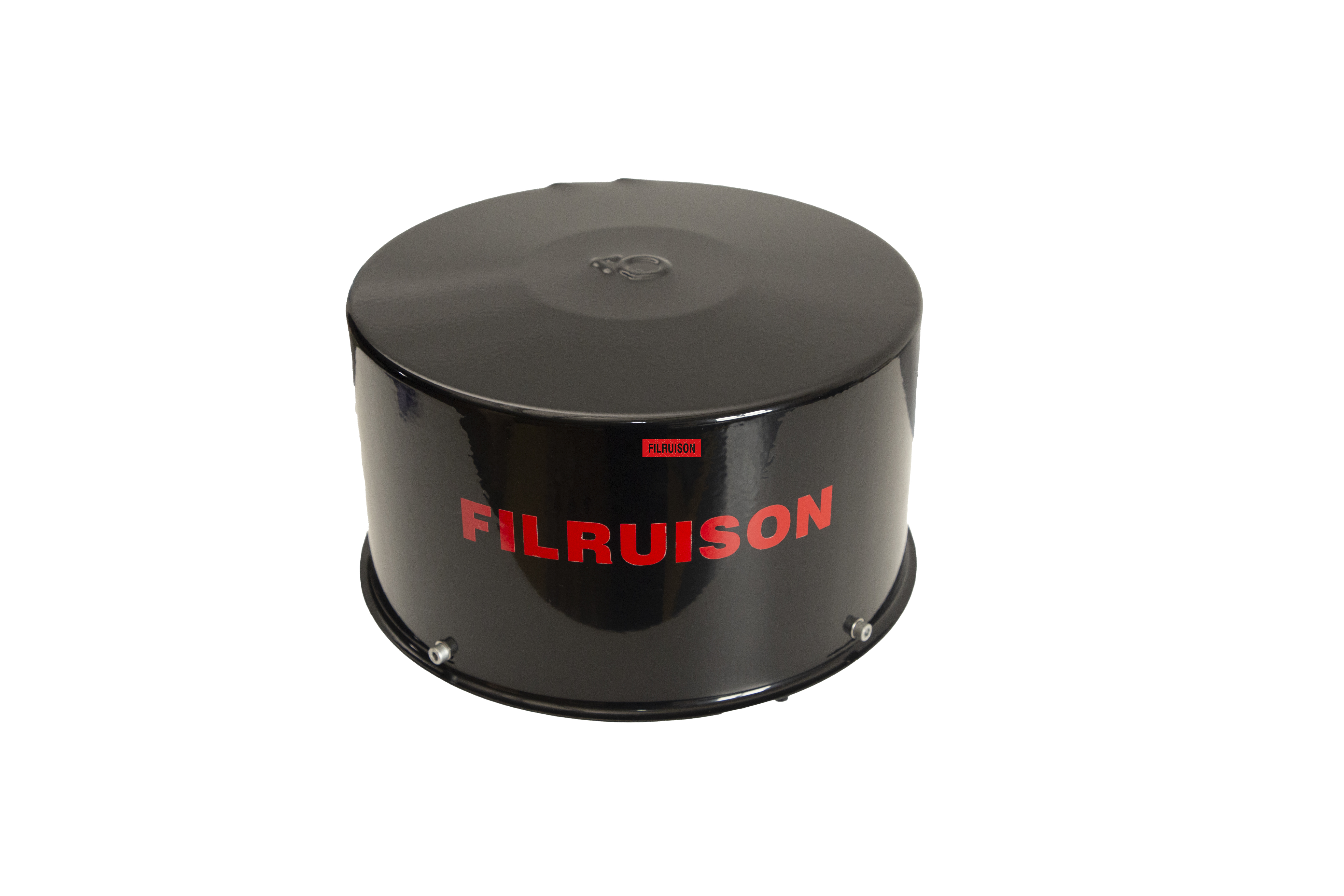
Non-powered systems utilize intake suction and internal geometry, such as vanes and rotors, to separate dust particles via centrifugal force. The physics of Venturi-driven continuous ejection play a major role here. Scavenging lines use exhaust gas velocity to create a vacuum. This automatically evacuates separated dust from the pre-cleaner housing. This method is highly effective for high-speed engines operating in continuous dust clouds. The faster the engine runs, the stronger the exhaust flow, which in turn creates a stronger scavenge vacuum.
Passive systems require careful tuning of the internal louver angles. If the angle is too steep, it creates excessive restriction. If it is too shallow, the air does not spin fast enough to separate fine dust. Engineers must calculate the exact velocity of the air entering the chamber based on the engine's displacement and RPM range.
Powered systems utilize motorized fans or active scavenge systems to eject particulates before they reach the filter housing. These are necessary in low-speed, high-dust applications where intake velocity is insufficient for passive separation. When an engine idles or operates at low RPMs in heavy dust, a powered custom intake precleaner ensures continuous particle ejection. This prevents the primary filter from packing with debris. Landfill compactors and slow-moving agricultural harvesters benefit massively from powered units because their engine RPM fluctuates, but the dust cloud remains constant.
Deciding between compact single-stage units and heavy-duty multi-stage systems depends heavily on the particulate load and micron size. Single-stage units are suitable for moderate dust environments where space is limited. Multi-stage systems combine inertial separation with cyclonic tubes. They are required for extreme environments like mining, where massive volumes of fine dust must be removed before reaching the primary filter.
| Configuration Type | Best Application Environment | Separation Efficiency | Space Requirement |
|---|---|---|---|
| Single-Stage Passive | Highway trucks, light construction | Moderate (70-80%) | Low |
| Multi-Stage Cyclonic | Mining, heavy earthmoving | High (90-95%+) | High |
| Powered Scavenge | Landfill, slow agriculture | Very High (regardless of RPM) | Medium (requires electrical/hydraulic routing) |
Calculating maximum engine airflow (CFM/CMM) is the first step in specifying a pre-cleaner. You must define strict allowable pressure drop limits to prevent air starvation, power loss, and fuel inefficiency. If the pre-cleaner restricts airflow too much, the engine will run rich, waste fuel, and generate excessive exhaust heat. You calculate CFM by taking the engine displacement, multiplying it by maximum RPM, and dividing by a constant, then factoring in volumetric efficiency and turbocharger boost ratios.
Buyers must categorize their primary contaminants. Fine silica dust requires different separation dynamics than large organic debris, snow, or water ingress. By detailing the exact environmental profile, the manufacturer can tailor the separation mechanism. They adjust vane angles, rotor speeds, or scavenge vacuum levels to target the specific debris type. For example, wet, sticky clay requires wider ejection ports to prevent clogging, whereas dry sand requires high-velocity cyclonic action.
High-performance off-road machinery often utilizes dual-intake, twin-turbo, or remote-mounted configurations. Engineering a custom solution requires balancing static pressure and airflow across these complex inductions. The pre-cleaner must deliver equal, unrestricted air to both turbochargers to prevent compressor surge or uneven engine performance. Custom Y-pipes and balanced plenums ensure that one turbo does not pull a vacuum on the other.
Ensure the custom intake precleaner design is optimized to extend the life of high-efficiency primary elements, such as MERV 11 to 16 or HEPA filters. These high-efficiency filters inherently create more restriction. The pre-cleaner must remove the bulk of the particulate mass without compounding overall system restriction. This allows the primary filter to handle only the finest micron particles. If the pre-cleaner adds 15 inches of water restriction and the HEPA filter adds another 15, the engine will likely trigger a restriction alarm immediately.
Engineering requirements must account for remote setups, under-hood space limitations, and hood-clearance restrictions. Heavy equipment subjects components to severe shocks. The necessity of vibration-isolated mounting brackets cannot be overstated. Rigid mounts will crack under the shear forces generated by a diesel engine operating on rough terrain. You must specify rubber isolators and reinforced backing plates for any external mounting locations.
Material selection drives durability and weight. Heavy-duty aluminum offers a lightweight, corrosion-resistant option. Stainless steel provides maximum durability for mining and highly abrasive environments. Specialized, low-cost formulated polymers and composites offer cost-effective, UV-resistant, and weight-saving alternatives for agricultural uses where impact resistance is needed without the weight penalty of metal.
Buyers must demand CFD analysis during the design phase. CFD allows engineers to visualize airflow, predict restriction, model Venturi evacuation, and optimize particle separation efficiency before physical manufacturing begins. This computational modeling ensures the design will perform as expected, saving time and money on physical revisions. You should ask to see the pressure gradient maps and particle trajectory simulations. If a manufacturer relies solely on trial and error, look elsewhere.
Require ISO 5011 testing standards for fractional efficiency and dust-holding capacity. Alongside lab testing, rapid prototyping capabilities are essential for physical fit-checks on the actual equipment. Field testing validates that the industrial precleaner OEM has engineered a solution that withstands real-world vibration, temperature extremes, and debris loads. A 3D-printed prototype allows your mechanics to verify hood clearances and hose routing before committing to expensive metal tooling.
Evaluate an OEM's ability to transition from a successful prototype to full-scale production. Consider lead times, quality control processes, and material sourcing reliability. A great prototype is useless if the manufacturer cannot deliver production units on schedule to meet your assembly or retrofit timelines. Check their ISO 9001 certification and ask about their raw material inventory levels. You need a partner who can scale up production if you decide to retrofit your entire fleet.
A precision-engineered custom pre-cleaner preserves engine fuel efficiency by maintaining a low, stable pressure drop. Restrictive, poorly matched off-the-shelf units force the engine to work harder to draw air, resulting in parasitic power loss and increased fuel consumption. Custom designs mitigate this by optimizing internal flow paths. Every sharp 90-degree bend in the intake plumbing adds restriction. Custom engineering smooths these transitions, utilizing sweeping curves and bell-mouth inlets to keep air velocity high and turbulence low.
Mobile equipment design involves conceptual trade-offs. Over-engineering a pre-cleaner with heavy stainless steel might negatively impact vehicle weight distribution or cause mounting bracket fatigue. This must be contrasted with the weight savings of custom-formulated polymers. Polymers offer excellent durability for many applications without the structural strain of heavy metals. However, in a hard-rock mining environment where falling debris is common, the weight penalty of steel is justified by its impact resistance.
Highly aggressive particulate separation often increases intake restriction. This fundamental physics trade-off requires precise engineering to find the optimal middle ground. The goal is to separate the maximum amount of dust possible while keeping the pressure drop well below the engine manufacturer's maximum allowable limit. You cannot trap 99.9% of dust in the pre-cleaner without choking the engine. The pre-cleaner should target the heavy, coarse particles, leaving the fine filtration to the primary paper element.
If a pre-cleaner is too restrictive, the engine will starve for air, leading to power loss and high exhaust temperatures. To mitigate this, mandate strict baseline restriction testing and real-world data logging under full-load conditions during the prototyping phase. Ensure the design accommodates the engine's maximum CFM demand. Install a restriction gauge on the prototype and run the machine at wide-open throttle under load to verify the vacuum stays within spec.
Heavy machinery generates severe vibrations that can crack welds or shear mounting bolts. Require Finite Element Analysis (FEA) on all mounting points during the design phase. Specify heavy-duty vibration isolators in the custom design to decouple the pre-cleaner mass from the rigid engine or chassis mounts. Use nyloc nuts and safety wire on critical fasteners to prevent them from backing out during operation.
In cold climates, ingested water or snow can freeze inside the pre-cleaner, blocking airflow entirely. Specify self-draining geometries that prevent moisture pooling. Evaluate heated components or specialized active scavenge designs for extreme cold-weather operations to ensure continuous, ice-free airflow. Ensure the scavenge exhaust line is routed away from areas where freezing condensation could create an ice dam.
Custom engine air pre-cleaners are not an optional luxury for extreme environments; they are a necessary engineering investment to protect high-value capital equipment, maintain optimal fuel economy, and ensure operational reliability. Buyers should prioritize manufacturers that demonstrate transparent CFD capabilities, adhere to ISO 5011 testing standards, offer a range of robust materials, and possess a proven track record in specific operational environments.
A: Manufacturers need the engine's maximum airflow (CFM/CMM), maximum allowable restriction, operating environment details, primary contaminant types, and spatial constraints or CAD models of the installation area.
A: Reputable manufacturers use ISO 5011 testing standards in a laboratory setting to measure fractional efficiency, restriction, and dust-holding capacity using standardized test dust.
A: Yes. By maintaining a low, stable pressure drop compared to clogged primary filters or restrictive off-the-shelf units, a custom pre-cleaner reduces engine pumping losses, thereby preserving fuel efficiency.
A: Lead times vary by complexity but generally range from 4 to 12 weeks for initial engineering, CFD modeling, and delivering a physical prototype for field fitment and testing.
A: Absolutely. Custom designs can incorporate specialized Y-pipes, balanced plenums, and dual-outlet geometries to ensure equal airflow and static pressure are delivered to both turbochargers.
A: They remove the bulk of heavy particulates and moisture before the air reaches the primary filter, preventing rapid loading and extending the life of sensitive high-MERV or HEPA elements.
