
Views: 0 Author: Site Editor Publish Time: 2026-08-13 Origin: Site


Diesel fuel contamination creates a costly reality for heavy equipment operators and marine vessel owners alike. On one hand, you face catastrophic premature injector failure caused by abrasive particulates. On the other hand, you routinely deal with the operational headache of constantly clogged filters stalling your engine at the worst possible moments. This scenario creates a difficult mechanical tension. You must carefully balance adequate flow rate to prevent engine starvation against ultra-fine filtration for maximum engine protection. Pick the wrong micron rating, and you either choke your fuel transfer pump or destroy your expensive injectors.
Our goal is to provide a clear, technical framework to solve this ongoing problem. You will learn exactly when and where a 30-micron filter belongs in a broader fuel system architecture. We will cover proper positioning, critical trade-offs, and system design best practices to ensure your engine runs reliably in any environment.
To understand fuel filtration, we first need to define the baseline measurements. A "micron" (micrometer) is one-millionth of a meter. For practical context, a single human hair measures roughly 70 microns in diameter. The naked human eye can only see objects down to about 40 microns. Therefore, a 30-micron particle remains completely invisible to you. However, inside a highly engineered diesel fuel system, a 30-micron particle acts like a destructive boulder. It easily scores metal surfaces and degrades pump efficiency over time.
When selecting a 30 micron diesel fuel filter, buyers must understand the critical difference between nominal and absolute ratings. Manufacturers often market filters using nominal ratings. A nominal rating means the media catches some 30-micron particles, usually around 50 percent. This leaves your engine highly vulnerable. Conversely, an absolute rating guarantees the media captures nearly all particles of that size. According to recognized ISO testing standards, an absolute filter typically boasts a capture efficiency of 98.7 percent or higher. You must verify this metric on the manufacturer specification sheet before purchasing.
In standard system architecture, mechanics position the 30-micron filter between the fuel tank and the transfer pump. This area represents the vacuum (or suction) side of the system. Placed here, the filter performs its primary job beautifully. It captures large rust flakes, paint chips, and organic sludge before they reach the lift pump. By intercepting these large contaminants early, it actively extends the life of finer, more expensive secondary filters located closer to the engine.
A fierce debate often dominates marine forums and performance garage discussions. Should you use a 10-micron or a 30-micron element as your primary pre-filter? Sailboat owners operating in rough seas demand reliability, while performance mechanics prioritize absolute component protection. Both sides present valid arguments, but the correct choice depends entirely on your specific operating conditions.
Applying a 10-micron element as a primary filter carries significant risks in environments suffering from poor fuel quality. When diesel sits in storage tanks for extended periods, it develops algae, microbial growth, and heavy sludge. If you force this heavily contaminated fuel through a tight 10-micron pre-filter, the media will clog rapidly. A plugged filter creates immense vacuum restriction. Your fuel pump will struggle, eventually cavitating and starving the engine of fuel. This results in frequent, frustrating maintenance stops.
The 30-micron advantage becomes clear in these challenging environments. A coarser 30-micron element perfectly balances adequate flow rates against sufficient large-particle capture. It allows the lift pump to breathe easily while still trapping the bulk sludge and debris. This drastically reduces maintenance frequency. Heavy-duty construction equipment and marine vessels navigating harsh waters benefit immensely from this uninterrupted reliability.
To simplify the decision, use this basic conditional logic framework:
Specific industries and applications practically mandate the use of a 30-micron primary element. High-contamination environments represent the most common use case. Consider marine vessels, agricultural tractors, or off-grid diesel generators. These machines often utilize large fuel tanks where diesel sits stagnant for months. Temperature fluctuations cause condensation inside the tank. This water fuels microbial growth, leading to thick algae mats and asphaltene drop-out. A coarse pre-filter handles this bulk contamination without instantly plugging, keeping the machine operational during critical tasks.
High-volume flow requirements also dictate coarser primary filtration. Large displacement engines and heavily modified performance builds demand massive amounts of fuel. Fuel pumps must push enough volume to feed the engine while also circulating excess fuel back to the tank for cooling. Dense filter media creates high restriction on the suction side. A 30-micron media presents significantly less flow restriction. It allows high-performance lift pumps to operate efficiently without cavitating under heavy throttle loads.
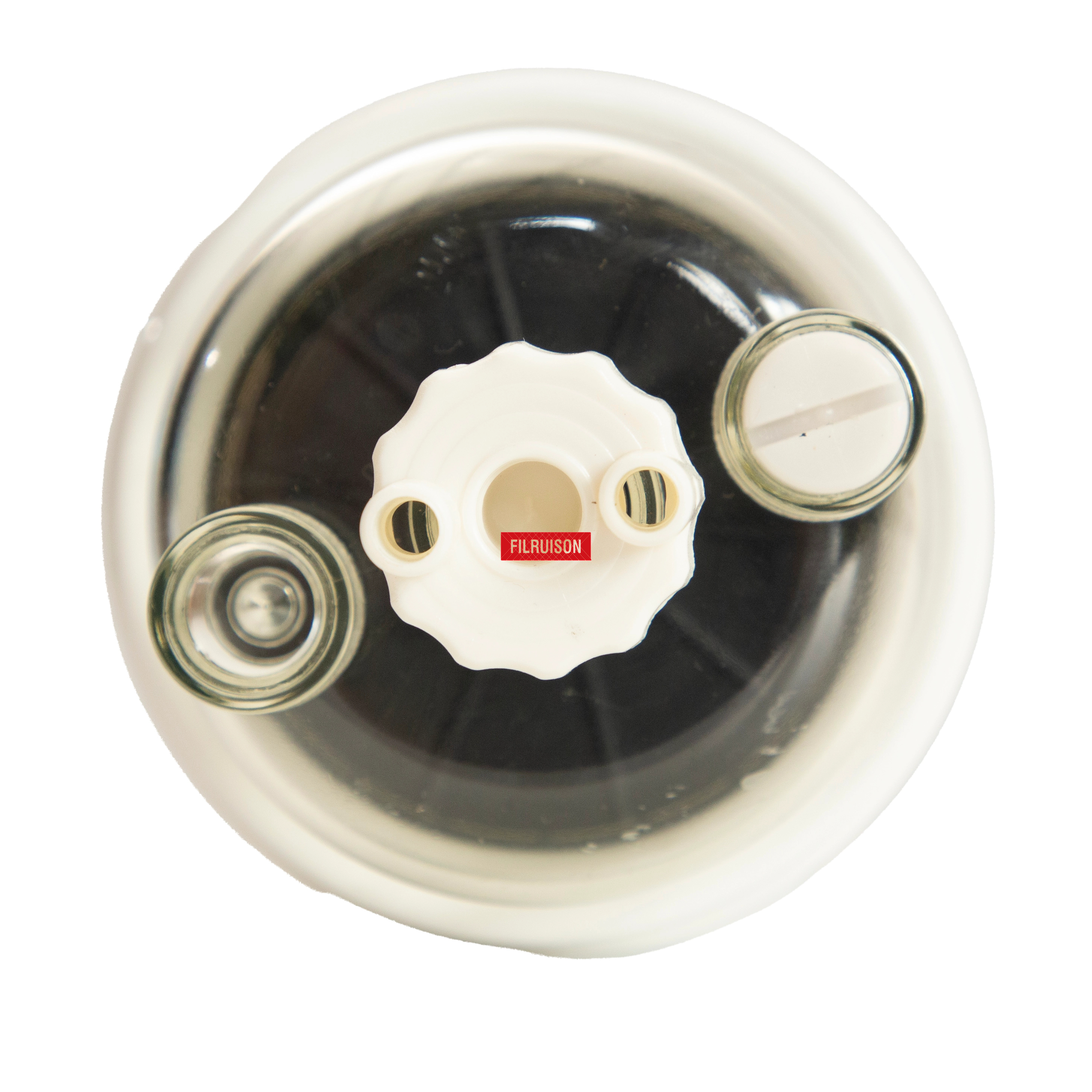
Furthermore, coarse media shines when engineers integrate it directly into a water separation system. Integration as a Diesel Fuel Filter Water Separator represents the industry gold standard for primary defense. These assemblies use a specialized housing bowl. As fuel enters the housing, it spins centrifugally. Since water is heavier than diesel, the centrifugal force drives bulk (free) water to the outer walls, where it drops into the collection bowl. The 30-micron media then acts as a coalescing surface. Tiny water droplets gather on the coarse media fibers, merge into larger drops, and fall safely out of the fuel stream. This mechanical process prevents destructive water from ever reaching your high-pressure pump.
While coarse filtration excels at bulk separation, it fails completely as a standalone protection strategy for modern engines. High-Pressure Common Rail (HPCR) systems revolutionized diesel performance and emissions. However, this technology introduced extreme vulnerability. HPCR pumps pressurize fuel to upwards of 30,000 PSI. The internal tolerances of modern piezoelectric injectors measure between 1 and 3 microns. At these microscopic clearances and massive pressures, a 30-micron particle acts like a plasma cutter. It will instantly score the injector valve seat.
We must rely on an evidence-based approach to system design. Industry data proves definitively: 30 microns will not protect modern injectors. Relying on a single, coarse filter provides a false economy. You might save a few dollars on filter housings initially, but you will inevitably spend thousands replacing ruined injectors and high-pressure pumps.
To protect HPCR components, engineers employ a strict multi-stage filtration strategy. System design best practice dictates the following architecture:
By splitting the workload, you mitigate risk entirely. The primary stage protects the secondary stage from premature clogging. The secondary stage protects the engine from catastrophic failure.
Not all filter assemblies deliver equal performance. When auditing your equipment or purchasing an upgrade, you must evaluate several rigid criteria. Avoid generic, unverified housings. Instead, scrutinize the engineering data provided by the manufacturer.
Flow rate compatibility remains your first hurdle. The housing and filter media must effortlessly handle the engine's maximum fuel demand. Remember, diesel systems circulate more fuel than the engine actually burns. You must calculate the maximum burn rate plus the return flow rate. Choose an assembly rated in Gallons Per Hour (GPH) or Liters Per Hour (LPH) that exceeds your total system flow requirement by at least 20 percent.
Next, evaluate water separation efficiency. Do not accept vague marketing claims. Look for documented testing data detailing both free water and emulsified water removal rates. High-quality coalescing media should remove over 95 percent of entrained water. Durability and compliance also play a major role, particularly in specialized environments. Marine applications require strict adherence to safety regulations. For example, USCG and ABYC regulations prohibit clear plastic collection bowls in inboard engine compartments due to fire risks. You must select heat-resistant metal bowls to remain compliant and safe.
Finally, assess brand authoritativeness. Look for manufacturers complying with OEM specifications. Trust brands utilizing recognized ISO standards for their micron rating methodologies. Transparent testing data proves engineering competence.
Filter Evaluation Parameters
| Evaluation Parameter | Baseline Standard | Ideal Specification |
|---|---|---|
| Micron Rating Accuracy | Nominal Rating (50% capture) | Absolute Rating (98.7% capture or ISO 16889 compliant) |
| Flow Rate (Capacity) | Matches peak engine burn rate | Exceeds peak burn rate + return flow by 20%+ |
| Water Separation | Removes bulk/free water only | Coalescing media removes emulsified water (>95%) |
| Marine Compliance | Standard plastic bowl (Outboard) | Heat-resistant metal bowl (USCG/ABYC Inboard compliant) |
A 30-micron diesel fuel filter acts as a foundational structural component for overall system longevity. It ensures reliable bulk contaminant removal and excellent water separation. However, it never serves as a comprehensive protection plan for modern, high-tolerance engine internals.
To maximize your equipment uptime and protect your investment, take the following actionable steps today:
A: Yes, but only as a primary pre-filter. A 2-micron secondary filter remains strictly mandatory to protect HPCR injectors. Relying solely on a 30-micron element will allow microscopic abrasives to pass through, rapidly destroying the high-pressure pump and injector valve seats.
A: The micron rating itself only refers to solid particulate size. However, manufacturers frequently build 30-micron filters directly into water separator housings. These specific assemblies utilize centrifugal force and specialized coalescing media fibers to effectively strip both free and emulsified water from the fuel stream.
A: Replacement intervals depend entirely on your local fuel quality and total flow volume. As a standard operational baseline, replace the element every 10,000 to 15,000 miles, or according to specific engine-hour intervals. We highly advise performing regular visual checks if your system utilizes a clear collection bowl.
