
Views: 0 Author: Site Editor Publish Time: 2026-10-16 Origin: Site


Operating vintage agricultural machinery or heavy-duty off-road equipment exposes engines to brutal conditions. As a frontline equipment engineer, I see modern disposable paper filters choke within hours in these severe environments. Robust systems rely on a liquid medium to scrub abrasive contaminants from the intake air. Yet, a persistent question arises for seasoned operators and weekend mechanics alike: exactly where does this classic mechanism actually trap the dust?
Grasping the precise internal mechanics of your air filtration system goes beyond mere curiosity. It is a fundamental requirement for executing proper maintenance and extending engine longevity. In this comprehensive guide, we dissect the anatomy of these traditional units. We will map out the specific zones where particulate capture occurs and illustrate how various components harmonize inside the casing. Whether you are elbow-deep restoring a classic tractor or optimizing heavy machinery for a grueling harvest season, this breakdown delivers the practical insights you need.
To accurately pinpoint the dirt-trapping zones, you must first visualize the core components constructing the assembly. Unlike modern dry elements relying purely on microscopic pores, this architecture leverages raw physics and fluid dynamics.
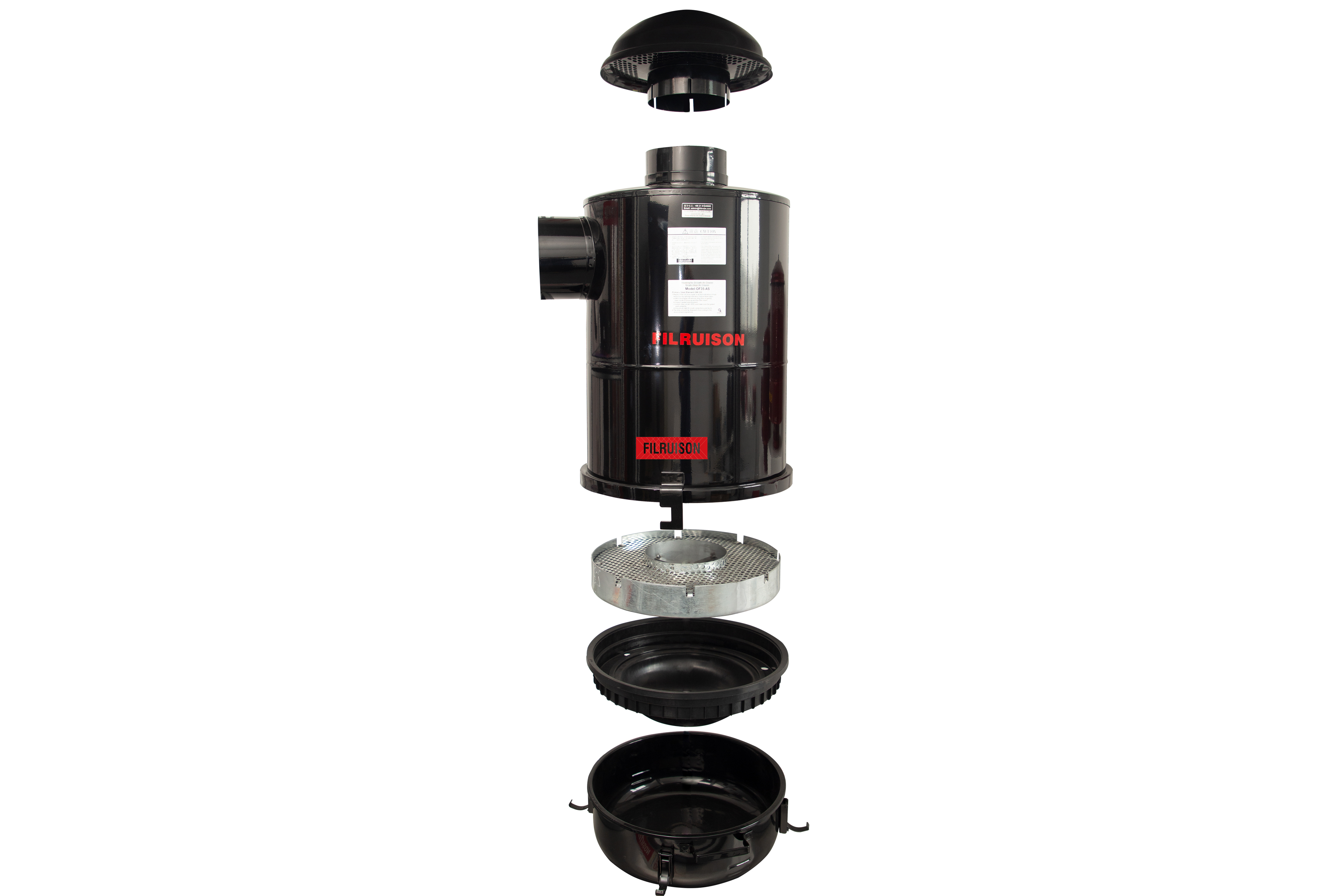
The true ingenuity of this vintage technology lies in its masterful manipulation of fluid dynamics. Let us look at the exact mechanical sequence detailing how and where airborne debris is intercepted.
As dirty atmospheric air gets sucked down the center tube by the engine intake stroke, its velocity surges dramatically. Upon reaching the bottom of the tube, this high-speed airflow is forced into a violent directional shift just millimeters above the surface of the liquid. Silica, sand, and heavy field dirt carry significantly more mass than the air molecules transporting them. Consequently, their momentum prevents them from making this abrupt turn. They crash directly into the viscous pool. This inertial impaction represents the primary zone where the system captures heavy debris.
Furthermore, turbulent air rushing over the fluid surface whips the oil into a fine suspended mist. This atomized spray carries any lingering lightweight micro-particles that survived the initial impact. The airflow sweeps upward into the filter mesh. The densely packed, oil-soaked wire matrix functions as an inescapable labyrinth. As the air aggressively twists through the metallic tangle, microscopic dust collides with and permanently adheres to the sticky surfaces. This forms the critical secondary line of defense.
In a brilliant display of mechanical self-regulation, the continuous upward draft eventually saturates the upper mesh. The accumulated fluid grows too heavy to defy gravity. It forms large droplets that rain back down into the lower reservoir. As this oil descends, it actively washes the trapped grit out of the wire matrix. This drags the abrasive sludge to the bottom and resets the filtration cycle.
Looking closely at recent industrial analyses and field data regarding heavy-duty air scrubbers, a fascinating shift is currently unfolding. The mainstream automotive sector has fully embraced disposable dry media for its sub-micron initial efficiency. However, heavy-duty agricultural, mining, and off-grid industrial sectors are actively re-evaluating the merits of liquid-based filtration. Why is this happening?
Industry experts note a growing trend among equipment operators in hyper-dusty environments, such as open-pit mining operations or arid-climate farming. In these scenarios, modern pleated paper elements fail catastrophically within hours. The surface-loading paper blinds over rapidly, starving the engine of vital oxygen. This drastic reduction in airflow causes exhaust gas temperatures to spike to dangerous levels.
In stark contrast, fluid systems provide unparalleled dust retention. They absorb massive volumes of solid matter into the liquid reservoir long before airflow restriction becomes a measurable threat. This depth-loading capability guarantees relentless performance when conditions are at their absolute worst. Consequently, operators can finish their grueling shifts without pausing for emergency filter swaps. The inherent sustainability of simply washing and reusing the core components also strongly appeals to eco-conscious operations determined to minimize consumable waste and supply chain dependencies.
When juxtaposing these two distinct filtration philosophies, several operational trade-offs become immediately apparent. As engineers, we rely on hard data to make equipment decisions. Here is how they stack up.
| Feature | Traditional Oil Bath System | Modern Dry Paper Filter |
|---|---|---|
| Dirt Holding Capacity | Vastly superior. Stores heavy sludge in the sump without restricting airflow. | Limited. Fixed surface area clogs linearly and rapidly in heavy dust. |
| Filtration Efficiency | Highly effective at operating RPMs once the oil mist is generated. | Higher initial efficiency at startup and low idle speeds. |
| Cost of Ownership | Extremely low. Requires only standard motor oil and solvent for cleaning. | High recurring costs. Expensive consumable elements require frequent replacement. |
Translating theory into practical application requires matching the filtration unit to your specific engine displacement and operating environment. Choosing an undersized Oil Bath Air Cleaner leads to fluid carry-over, where the engine ingests raw oil. Conversely, an oversized unit will not generate enough air velocity to atomize the fluid, rendering the upper mesh useless.
When evaluating industrial options, prioritize volumetric airflow capacity. For instance, heavy-duty excavators and large-scale mining equipment often require robust units capable of handling up to 21 cubic meters per minute. Systems designed for these extreme parameters ensure the air velocity remains optimal across the entire RPM range. Always verify the intake flange diameter and the total housing height to ensure proper engine bay fitment. Selecting a unit with a heavy-gauge steel housing guarantees it will withstand the intense vibrations inherent to off-road diesel engines.
Despite their legendary capacity for swallowing dirt, these units are not invincible. Neglect will eventually halt the vital self-cleaning cycle. This puts internal engine components at severe risk. Operators should vigilantly monitor for the following symptoms.
Executing a meticulous maintenance routine ensures the system intercepts grit exactly where it was engineered to. This preserves the lifespan of your piston rings and cylinder liners.
Step 1: Unfasten the heavy-duty retaining clamps and carefully lower the oil cup from the main air cleaner housing. Keep the bowl perfectly level to avoid spilling the dark contaminated slurry over your engine block.
Step 2: Safely and legally dispose of the exhausted fluid. Grab a sturdy putty knife and a heavy-duty parts-washer solvent. Aggressively scrape out the compacted hardened sediment caked at the absolute bottom of the sump.
Step 3: If your specific model features a removable upper wire element, plunge it into a solvent bath. Agitate it vigorously until the metallic strands shine free of varnish, old oil, and abrasive grit. Allow the element to air dry completely before reinstallation.
Step 4: Refill the freshly cleaned lower bowl precisely to the embossed fill line using the manufacturer-recommended lubricant. Standard practice dictates utilizing the exact same SAE 30 or 15W-40 viscosity currently running in your engine crankcase. Overfilling will cause the engine to ingest raw oil, while underfilling starves the upper matrix.
Step 5: Realign the rubber sealing gaskets and secure the unit tightly. Double-check all clamps to eliminate any risk of unfiltered ambient air bypassing the fluid trap.
Ultimately, comprehending exactly where the airborne grit is trapped removes the guesswork from servicing your heavy-duty iron. By leveraging the violent initial impact in the fluid reservoir and the secondary scrubbing action of the upper matrix, these ingenious devices deliver incredible dirt-holding performance in the most unforgiving environments. Routinely purging the accumulated sludge and refreshing the lubricant guarantees this self-washing cycle will continue to defend your engine vitals.
Are you dealing with frequent filter blinding in high-dust industrial applications? It might be time to upgrade your filtration strategy. Explore professional-grade solutions and robust industrial assemblies at SYKING to keep your machinery running flawlessly under extreme conditions.
Yes, especially in highly dusty agricultural or industrial settings. Adding a centrifugal pre-cleaner to the top of the air intake stack can exponentially extend the service life of the primary filter. The pre-cleaner utilizes centrifugal force to eject large chaff, insects, and heavy dirt clods before the air ever reaches the main housing. This keeps your lower reservoir cleaner for significantly longer periods, drastically reducing your maintenance frequency.
In the vast majority of practical scenarios, you should utilize the exact same type and weight of liquid motor oil currently running in your engine crankcase. Straight SAE 30 or 15W-40 are excellent choices. You must strictly avoid using heavy gear oil or specialty greases. Viscous fluids fail to properly atomize, mist, and travel up into the wire matrix to trap fine micro-particles.
This service interval depends entirely on your immediate operating environment. In light-duty or paved conditions, you may only need to inspect and clean the bowl once a season. However, in severe dust environments like plowing dry dirt or operating deep within a rock quarry, you may need to empty the fluid and scrape the sediment out daily. Always check the fluid level and sludge depth regularly as part of your standard pre-operation walk-around.
The metallic wire element is structurally designed to last the lifetime of the equipment if properly and routinely maintained. However, if the metallic strands rust, physically degrade, or become permanently clogged with calcified debris that chemical solvents cannot dissolve, the element must be replaced. A compromised matrix severely restricts proper combustion airflow and entirely eliminates the secondary dust retention capabilities.
Yes, conversion is entirely possible and frequently performed on heavy machinery operating in extreme dust. The critical factor is matching the airflow CFM requirements of your engine to the capacity of the new liquid assembly. You will need to fabricate appropriate mounting brackets and ensure the intake plumbing is completely sealed. Consulting with a specialized filtration manufacturer ensures you select an assembly with the correct down-draft velocity.
If your engine emits thick blue smoke immediately after maintenance, you have likely overfilled the lower fluid reservoir. When the fluid level exceeds the engineered fill line, the intense engine vacuum pulls raw liquid oil directly through the intake manifold and into the combustion chamber. Shut down the engine immediately, drain the excess fluid down to the proper level, and clean any residual oil from the intake piping to resolve the issue.
