
Views: 0 Author: Site Editor Publish Time: 2026-10-23 Origin: Site


The efficiency of heavy-duty engines relies entirely on a continuous supply of clean air. Yet, even the most advanced filtration media becomes useless without the correct structural enclosure to secure it. In the field, I have seen countless equipment operators face premature engine wear, diminished horsepower, and poor filtration performance. The root cause is almost always the same. They mismatch their air induction elements with incompatible enclosures, inevitably leading to critical bypass leaks.
The solution lies in a deep understanding of your specific system mechanics. An Axial Seal Air Filter provides a highly reliable heavy-duty filtration solution, provided it is paired correctly with the right structural components. This comprehensive guide details exactly which enclosure suits this specific filtration geometry and what mechanical components matter most. By thoroughly evaluating your operating environment and equipment specifications, you can ensure optimal engine protection and minimize catastrophic downtime.
To make an informed decision about filtration hardware, you must first understand the structural mechanics of the filter itself. In industrial filtration terminology, the word axial refers to the specific direction of the sealing force. This force is applied parallel to the central axis of the filter element. This design directly contrasts with radial configurations. Radial systems rely on horizontal pressure against an inner or outer tube to create an airtight barrier.
The axial sealing mechanism relies on downward longitudinal pressure. This force compresses a pliable gasket, typically formulated from polyurethane, plastisol, or synthetic rubber, against the flat base of the enclosure. When the housing cover is secured, it exerts a continuous parallel force along the axis of the element. Consequently, this compression forces the gasket material to expand slightly outward and downward. This expansion fills any microscopic imperfections on the mating surface. The integrity of this seal is entirely dependent on the mechanical pressure applied by the housing. If the pressure is uneven, the gasket will not compress uniformly. This creates microscopic gaps where unmetered air and silica dust can bypass the filtration media and enter the engine intake.
Historically, axial sealing technology has been the gold standard for heavy-duty industrial applications. Picture a massive mining excavator running continuously in a dense dust cloud, or a stationary diesel generator vibrating violently under maximum load. Equipment operating in these severe environments benefits immensely from the robust nature of this design. The broad surface area of the end-cap gasket provides a highly stable seating position. This inherently resists shifting under extreme engine vibration. Furthermore, the metal end-caps often utilized in heavy-duty axial elements offer superior structural integrity. They prevent the filter media from collapsing under sudden high-airflow restriction.
A common yet costly misconception in equipment maintenance is treating the Filter Housing as a mere protective shell. In reality, it is an active and highly engineered component of the air induction system. Without a structurally sound enclosure, even premium synthetic media will fail to perform according to its specifications.
The primary external function of the enclosure is to shield the delicate cellulose or synthetic media from harsh environmental hazards. In outdoor industrial settings, engines are relentlessly exposed to heavy rain, snow, radiant heat, and large airborne debris. A properly specified enclosure prevents direct moisture ingress. Moisture saturation could otherwise lead to hydrostatic lock or immediate structural failure of the paper media. In addition, the outer shell acts as a physical barrier against flying rocks and debris that could puncture the delicate pleats.
Internally, the enclosure's most critical job is to provide the structural rigidity necessary to compress the axial gasket. If the base material is too thin or structurally compromised, it will warp when the cover is tightened. A warped base means the axial compression is instantly lost, leading to immediate seal failure.
Looking at current industrial developments, there is a significant shift in how these air induction systems are engineered. The industry is rapidly moving away from treating enclosures as passive metal buckets. Today, the trend heavily favors viewing the housing as an active aerodynamic and diagnostic component. With the rise of predictive maintenance across fleet operations, modern enclosures are increasingly designed to integrate seamlessly with IoT airflow sensors. This technological leap allows operators to monitor structural integrity, pressure drops, and dust loading in real-time. Consequently, fleet managers are transitioning from reactive engine rebuilds to proactive, data-driven maintenance strategies.
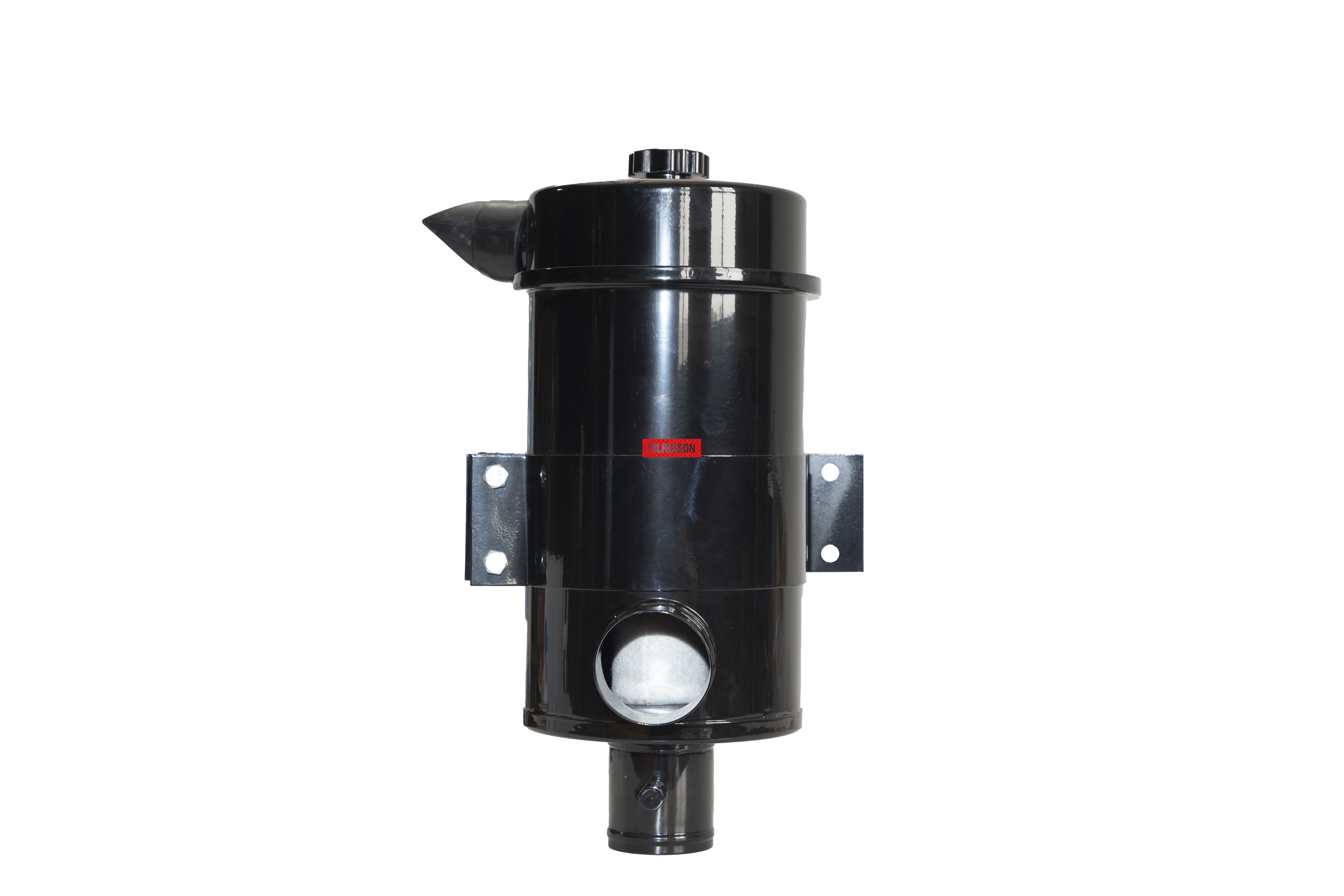
When evaluating an enclosure for an axial filtration system, specific internal and external components must be heavily scrutinized. These parts must align perfectly with the filter dimensions and compression requirements to guarantee long-term reliability.
The Seal Face is the flat machined or molded surface at the base of the enclosure where the gasket rests. For the system to function securely, this surface must be perfectly planar, smooth, and entirely free of casting defects, rust pitting, or deep scratches. Imagine a microscopic canyon on the metal base. Even a deviation of a fraction of a millimeter can compromise the polyurethane gasket ability to form a complete barrier. When micro-dust particles bypass the media through these surface irregularities, they act as a highly abrasive lapping compound inside the engine cylinders. This rapidly accelerates piston ring and cylinder wall wear.
To achieve the necessary axial compression, enclosures rely heavily on securing hardware. Wing nuts, over-center latches, or heavy-duty bands must apply even and continuous pressure across the entire circumference of the cover. A high-quality clamping mechanism ensures the load is distributed symmetrically. If a fastener is tightened unevenly, or if a Clamp Band stretches due to metal fatigue over time, the element will sit at an angle. This uneven seating over-compresses one side of the gasket while leaving the opposite side loose. The result is a direct and unhindered path for unfiltered air.
Beyond sealing mechanics, the enclosure must seamlessly accommodate the volumetric airflow requirements of the specific engine. The inlet and outlet ports must be sized correctly to minimize pressure drop. If the inlet is too narrow, it creates a bottleneck. This forces the engine to expend excess energy to draw in air, directly reducing fuel efficiency and increasing exhaust gas temperatures. Specifically, the orientation of these ports, such as straight tubes or 90-degree elbows, must also match the physical plumbing of the machine engine bay without requiring sharp restrictive bends in the intake piping.
Selecting the appropriate enclosure is a systematic process. You must match engine specifications with environmental variables. Applying a structured decision framework ensures optimal engine protection and system longevity.
The most critical technical specification when selecting an enclosure is its airflow capacity. The enclosure must comfortably support the maximum airflow demand of the engine at wide-open throttle. For example, a heavy-duty mining application often requires an enclosure specifically rated for 1.5 to 4.5 cubic meters per minute. Selecting an enclosure with a capacity lower than the engine demand results in immediate air starvation, noticeably reduced horsepower, and excessive black smoke in diesel applications.
The material composition of the enclosure must be dictated by the severity of the operating environment. Selecting the wrong material will inevitably lead to premature structural failure.
| Housing Material | Ideal Operating Environment | Key Characteristics |
|---|---|---|
| Composite High-Impact Plastic | Light to Medium Duty, standard generators, on-highway trucks | Lightweight, highly resistant to chemical corrosion, immune to rust, cost-effective. |
| Carbon Steel Powder Coated | Heavy Duty, construction equipment, agriculture machinery | High structural rigidity, resistant to moderate physical impacts, requires coating to prevent rust. |
| Stainless Steel | Extreme Duty, marine applications, chemical plants, highly corrosive areas | Maximum durability, complete resistance to oxidation, maintains structural integrity under extreme thermal stress. |
For environments with standard dust concentrations, a single-stage enclosure is usually sufficient. However, in hyper-dusty environments like mining operations or dry agricultural fields, a two-stage housing is absolutely mandatory. Two-stage systems incorporate a cyclonic pre-cleaner at the inlet. The geometry forces incoming air into a rapid spiral. This utilizes centrifugal force to separate up to 85 percent of heavy dust particles and water droplets before the air even reaches the primary media. This dramatically extends service life and reduces maintenance frequency.
Even the most precisely engineered enclosure cannot compensate for sloppy maintenance practices. Understanding when and how to service the filtration system is vital for maintaining the integrity of the axial seal.
Relying solely on visual inspection to determine the lifespan of an element is an outdated and highly risky practice. Dust embedded deep within the cellulose media is often completely invisible to the naked eye. Instead, operators must rely on an air restriction gauge. When the restriction gauge reaches the equipment manufacturer specified limit, it is time to install a Replacement Filter. Changing the element too early wastes operational budget. Conversely, changing it too late stresses the engine and drastically increases the risk of the vacuum pulling dust straight through the media.
Proper installation requires a methodical approach to ensure the axial compression is achieved without damaging the components. In practice, mechanics should follow these exact steps.
First, focus on surface preparation. Before inserting the new element, thoroughly wipe down the internal mating surface with a clean damp cloth. Never use compressed air to blow out the interior. This careless action can force dust directly into the clean air intake tube. Second, perform a gasket inspection. Carefully inspect the gasket on the new element for any manufacturing defects, tears, or hardening. Finally, execute controlled tightening. Seat the element squarely. When securing the cover, tighten the clamping mechanisms evenly. The goal is to achieve firm axial pressure without over-tightening. Over-torquing wing nuts or fasteners can crush the end-cap, warp the base, or split the polyurethane gasket entirely.
Field data clearly indicates that a significant percentage of premature engine failures can be traced back to localized enclosure defects rather than actual media failure. Identifying these mechanical issues early is crucial for any maintenance program.
A warped mating surface is one of the most severe structural failures you will encounter. This typically occurs due to prolonged exposure to extreme engine heat cycling or chronic over-tightening of the securing hardware. To diagnose this, remove the element and place a precision straight-edge across the base. If light is visible beneath the straight-edge, the surface is no longer planar. The entire assembly must be replaced immediately.
Securing hardware is subjected to constant high-frequency vibration. Over time, metal fatigue can cause latching pins to shear or bands to stretch. A loose band fails to maintain the necessary longitudinal pressure, allowing the element to vibrate violently against the base. This vibration slowly grinds the polyurethane gasket down, eventually breaking the seal completely. Routine maintenance must include a physical inspection of all latches, threads, and bands.
The most empirical evidence of a failed axial seal is the presence of a dust trail. When inspecting the clean-air side of the system, the area behind the element leading directly to the engine, the surface should be immaculately clean. If a faint talcum-powder-like trail of dust is visible radiating from a specific point along the gasket seating area, it confirms that a bypass leak has occurred. This requires immediate investigation to determine whether the structural integrity is distorted or the element was installed incorrectly.
When procuring filtration hardware, it is highly advisable to partner with manufacturers that adhere to strict testing standards for structural integrity and airflow dynamics. Top-tier enclosures are engineered with precision-machined mating surfaces and utilize high-tensile securing hardware. This guarantees consistent compression over thousands of operating hours.
Procurement managers should look for systems that offer seamless compatibility between the enclosure and the element. High-quality suppliers focus on the synergy between the element and the enclosure, ensuring that the axial force translates into an impenetrable barrier against airborne contaminants. Investing in robust and empirically tested filtration infrastructure is a proven methodology for extending engine lifecycle and reducing the total cost of ownership.
Choosing the right enclosure for your filtration system is vital for operational success. It ultimately comes down to ensuring a pristine mating surface, utilizing a sturdy securing mechanism, and selecting the exact right material suited for your specific environment. A proper structural setup prevents particulate bypass and saves thousands of dollars on expensive engine repairs down the line. Inspect your current filtration system today and identify any signs of wear. To guarantee seamless compatibility and robust engine protection, browse the high-quality replacement solutions at https://www.sykingtech.com to boost your equipment long-term performance and reliability.
No. The sealing mechanisms are fundamentally different. Radial seals require a specific inner or outer tube to press against laterally to form a barrier. In contrast, axial seals require a flat base and a top-down compression system, such as a wing nut or cover plate, to function properly. Attempting to mix these systems will result in immediate bypass leaks and severe engine damage.
It should be hand-tightened to compress the gasket firmly, creating a secure seal. However, it must not be so tight that it warps the cover plate or crushes the element itself. Always follow the manufacturer specific torque specifications if they are provided to ensure the mechanical pressure is optimally distributed.
Inspect the flat surface where the gasket sits. By running your finger along the base or using a flashlight, look for deep scratches, rust pitting, or structural warping. If the surface is compromised, or if you notice a trail of fine dust bypassing the element into the clean air side, the enclosure likely needs immediate replacement to prevent abrasive engine wear.
Replacement intervals depend heavily on the severity of the operating environment and the equipment airflow usage. Always rely on an air restriction gauge rather than visual inspection alone. Tapping or washing axial paper media to extend its life can destroy the micro-fibers, so outright replacement is always the safest and most cost-effective protocol.
Not necessarily. While metal is highly durable and excellent for high-vibration heavy machinery facing physical impacts, modern high-impact composite plastic enclosures have distinct advantages. They are remarkably lightweight, completely corrosion-resistant, and perfectly suited for many commercial and light-industrial applications where extreme physical abuse is unlikely.
Extreme thermal cycling can cause both the metal housing to expand and the polyurethane gasket to harden. If the housing material is not rated for the specific operating temperature, the base may warp. This warping relieves the longitudinal pressure on the gasket, instantly creating a bypass leak.
Yes. A structurally compromised enclosure allows silica dust and large particulate matter to bypass the media entirely. In highly abrasive environments like mining or agriculture, this unmetered dirt acts as a lapping compound inside the cylinders. This can cause catastrophic piston ring wear and loss of compression within a matter of hours.
