
Views: 0 Author: Site Editor Publish Time: 2026-10-30 Origin: Site


Imagine firing up a classic off-road rig or a vintage agricultural tractor on a crisp morning. The rhythmic mechanical clatter and the smell of rich exhaust are purely nostalgic. Yet, keeping that vintage iron running flawlessly requires specific, almost forgotten know-how. Modern passenger vehicles rely entirely on swap-and-go disposable paper elements. In contrast, heavy-duty machines utilize rugged, liquid-based filtration systems. Getting the fluid maintenance right is paramount. Why? Because a single mistake can lead to catastrophic engine dusting.
Selecting the proper fluid maximizes the dirt-trapping prowess of the system and ensures optimal intake airflow. Using the wrong lubricant can choke the engine or allow abrasive grit to bypass the matrix entirely. We will explore exactly which fluid suits these classic setups best. Furthermore, we will detail the practical maintenance steps required from a mechanical engineering perspective and discuss how to keep your equipment breathing freely in extreme environments.
The Best Choice: Standard conventional motor oil—often the exact same weight used in the engine crankcase of the vehicle, like SAE 30—is typically the optimal fluid for this application.
Viscosity Matters: Using a fluid that is excessively thick severely restricts airflow. Conversely, a liquid that is too thin will fail to capture incoming dirt effectively.
Unmatched Dirt Retention: When properly serviced, these traditional units offer superior Dust Capacity in extreme, heavy-debris environments compared to standard disposable paper filters.
Routine Maintenance: Thoroughly cleaning the internal wire mesh and replacing the reservoir fluid at regular intervals is non-negotiable for preserving long-term engine health.
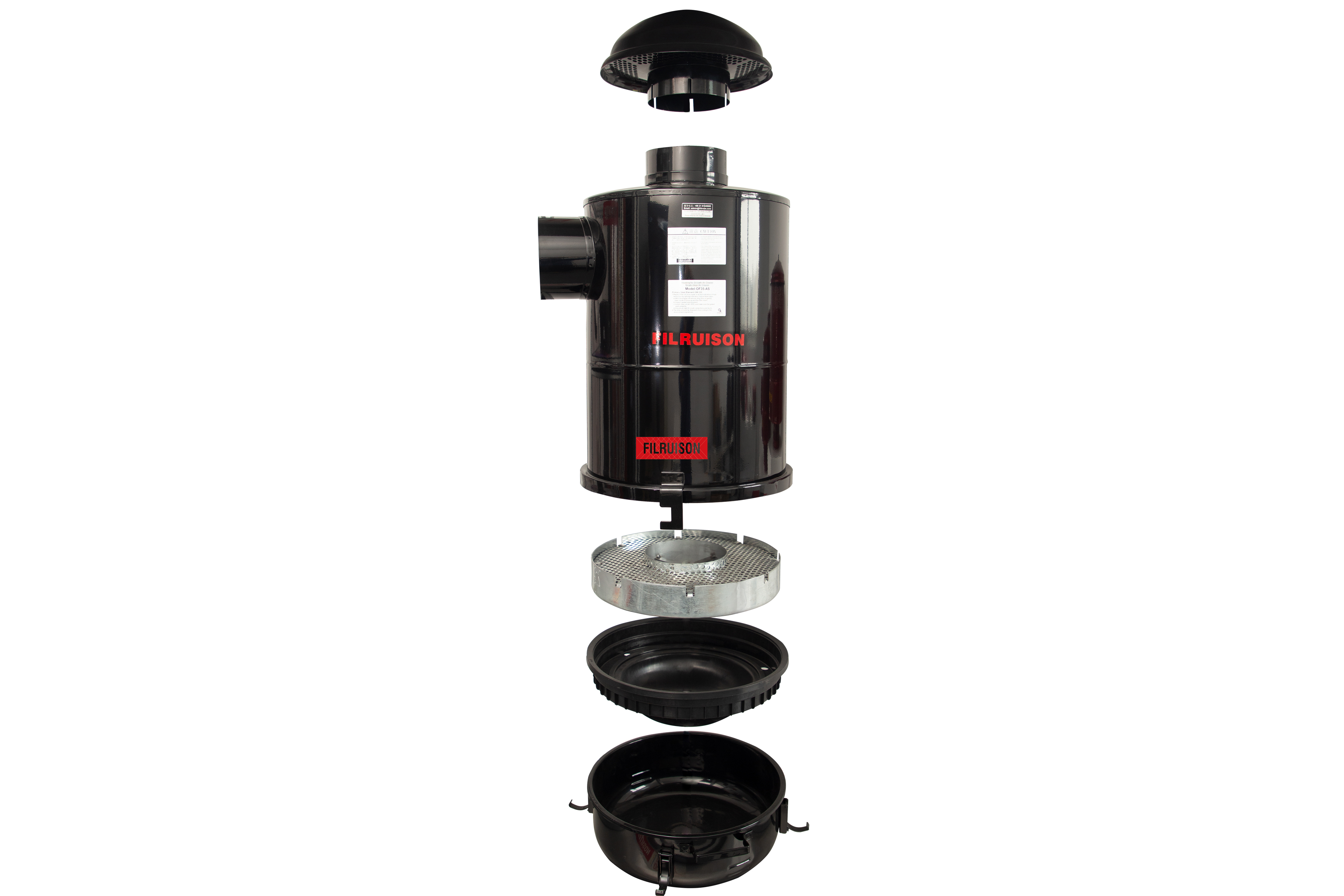
To truly appreciate why specific fluids are necessary, we must look at the fluid dynamics behind the filtration mechanism. Unlike modern dry elements that rely purely on microscopic pores to physically block particulate matter, traditional liquid-based systems utilize a clever combination of velocity and inertial impaction.
The operation begins the moment the engine creates a vacuum. Outside air is drawn forcefully down through a central intake tube. At the bottom of this tube sits a reservoir of liquid lubricant. As the high-velocity air reaches the liquid surface, it is forced to execute a rapid, 180-degree hairpin turn to travel back upward toward the intake manifold.
Dust, dirt, and heavy debris carry significantly more momentum than the air itself. Consequently, they cannot make this sudden directional change. These heavier particles crash directly into the fluid pool. They become permanently trapped in the sludge settling at the bottom of the bowl.
After the air makes the turn, the purification process continues. The airflow travels upward through a dense, woven wire mesh element. The high-speed air passing over the liquid pool atomizes a tiny amount of the fluid. This carries a fine mist upward to keep the wire matrix constantly wetted. Any ultra-fine particulate matter that managed to survive the initial impact is caught by this sticky, wetted wire maze.
The most frequent question among equipment restorers and heavy machinery operators is identifying the correct fluid for the reservoir. The golden rule established by original equipment manufacturers decades ago remains steadfast today. You should generally use the exact same motor oil that goes into your engine crankcase.
Historically, a straight-weight SAE 30 conventional motor oil was the factory standard for summer and warm-climate operations. SAE 30 provides the perfect balance of thickness and flow. It is viscous enough to remain in the bowl without being entirely sucked into the engine under high RPM loads. At the same time, it is fluid enough to atomize slightly and coat the upper wire mesh.
For modern operators, the transition to multi-grade lubricants like 10W-30 or 10W-40 is perfectly acceptable. These multi-grade conventional fluids perform exceptionally well in the reservoir. They offer the distinct benefit of remaining pliable during cold morning startups while providing adequate thickness once the engine bay reaches normal operating temperatures.
A persistent myth circulating in maintenance forums is that modern, dedicated filtration fluids are universally superior for all reusable setups. This is empirically false for liquid bath systems.
Dedicated aerosol or liquid foam filter fluids are engineered with heavy chemical tackifiers. They are specifically designed to be extremely sticky so they cling stubbornly to foam cells without dripping. If you pour this tacky Air Filter Oil into a liquid bath reservoir, it will absolutely refuse to flow. It will instantly congeal and completely clog the lower wire mesh. This chokes the air intake of the engine and ruins the filtration dynamics. Always stick to standard, liquid engine motor oil.
Selecting the right fluid is rarely a one-size-fits-all scenario. You must evaluate your specific operating environment, the type of machinery, and the concentration of airborne debris you expect to encounter.
Your local climate should dictate your viscosity choice. As a general rule of thumb, use SAE 30 or 10W-40 for hot summer operations above 60 degrees Fahrenheit. For moderate fall weather, a 10W-30 works beautifully. If you are plowing snow in freezing temperatures, step down to a much lighter SAE 10W or 5W-30 to prevent the fluid from congealing into a solid block.
The operational demands of a classic weekend cruiser driven occasionally on paved roads differ vastly from a heavy-duty backhoe working in a dry construction site. High-demand industrial equipment requires massive airflow. For example, modern engineered replacements for heavy machinery can demand airflow capacities up to 28 cubic meters per minute. When dealing with such high-volume systems, maintaining the correct fluid viscosity is critical. If the oil is too thin under a 28 cubic meters per minute vacuum, it will be pulled directly into the intake manifold.
Recently, there has been a notable shift in the agricultural and heavy-duty maintenance sectors regarding filtration. While the broader automotive industry aggressively pushes for high-efficiency dry synthetic media, industrial operators are rediscovering the longevity of liquid bath systems. Industry analysts note a growing appreciation for zero-waste, reusable components in extreme dust environments.
Instead of tossing expensive paper cartridges into landfills every week during harvest season, operators are realizing the commercial value of traditional setups. Maintaining a rugged Oil Bath Air Filter with standard, recyclable lubricants aligns perfectly with modern sustainability goals while drastically reducing seasonal maintenance budgets.
Understanding the empirical differences helps equipment owners make informed decisions about their machinery upgrades.
Feature | Traditional Liquid Bath | Modern Dry Paper |
|---|---|---|
Dirt Capacity | Exceptional. Can hold pounds of mud and heavy debris without choking. | Limited. Surface pores clog quickly in extreme dust storms. |
Maintenance | Requires manual scraping, solvent washing, and fluid replacement. | Simple swap-and-go disposable cartridge. |
Airflow Dynamics | Can become slightly restrictive at maximum engine RPMs. | Offers excellent high-end airflow characteristics. |
Sustainability | 100% reusable. Zero physical waste generated. | High waste generation. Cartridges go straight to the landfill. |
Proper maintenance is the only way to ensure this technology continues to protect your engine block. The process is straightforward but requires careful attention to detail to prevent accidental contamination.
Safety is always the first priority. Ensure the engine is completely off and cool to the touch. Unfasten the retaining clips securing the housing. Carefully lift the heavy metal assembly straight up. It is vital to keep the unit level. You do not want to spill dirty, abrasive sludge onto the engine block or directly into the exposed intake throat. Immediately place a clean shop rag over the engine intake to prevent debris ingress.
Once removed to a workbench, separate the upper mesh housing from the lower fluid reservoir. Pour the contaminated fluid into an appropriate waste recycling container. You will likely find a thick, clay-like sludge compacted at the bottom of the bowl. Use a plastic scraper to remove this hardened mud completely.
Next, submerge and wash the wire mesh element using a safe solvent like diesel fuel or a dedicated automotive parts cleaner. Agitate the mesh vigorously to dislodge trapped particles. Use a stiff-bristled nylon brush to work the solvent deep into the wire matrix. Finally, allow the wire mesh to air-dry completely in the sun. Reassembling the Oil Bath Cleaner while it is still soaked in combustible solvents can lead to engine backfires upon startup.
Refilling the reservoir requires precision rather than guesswork. Look closely at the inside or outside of the lower bowl for a stamped indicator line. Place the clean, dry bowl on a perfectly level surface. Slowly pour your chosen conventional motor oil into the reservoir until the meniscus reaches the exact indicator line. Reassemble the unit and ensure all rubber gaskets seat properly to prevent vacuum leaks.
Even seasoned mechanics can fall victim to widespread misconceptions regarding vintage filtration systems. Avoiding these common pitfalls is essential for prolonged equipment longevity.
Pouring fluid past the stamped indicator line is a critical error. When overfilled, the high-velocity intake air will pull raw liquid directly into the intake manifold. In gasoline engines, this causes severe exhaust smoking and heavy carbon buildup. In diesel equipment, aspirated motor oil can cause a catastrophic engine runaway condition. The motor consumes its own lubricant as fuel and accelerates uncontrollably until internal failure occurs.
Conversely, if the fluid level is too low, the incoming air will not make contact with the liquid pool. The inertial impaction process fails. The wire mesh remains dry, and raw abrasive dust is sucked directly into the cylinder walls. This destroys your Engine Air Filter capability entirely.
Some operators suggest using heavy gear oil to prevent the fluid from being sucked into the engine. Others recommend automatic transmission fluid for its cleaning properties. Both are incorrect choices. Gear oil is far too viscous. It will not atomize to wet the wire mesh, severely restricting airflow. Automatic transmission fluid contains specific friction modifiers and high-detergent additive packages that are unnecessary and potentially disruptive to the simple mechanical trapping process required here.
Standard conventional motor oil, carefully matched to your local climate viscosity requirements, remains the absolute best choice for a traditional liquid filtration system. The principles of inertial impaction demand a fluid that is thick enough to trap heavy dirt but light enough to properly coat the internal wire mesh.
While these systems require slightly more elbow grease than simply swapping out a modern disposable paper element, their incredible dirt retention and infinite reusability make them a brilliant piece of mechanical engineering. Maintaining your equipment properly not only protects your engine internals but keeps heavy-duty machinery breathing freely during the toughest jobs.
Do not wait until your engine begins to suffer from restricted airflow or abrasive dust ingestion. Pop the hood, unclip that heavy metal housing, and inspect the bottom of your reservoir bowl today. If you are restoring a vintage tractor or upgrading a heavy-duty backhoe, selecting the right high-capacity filtration components is crucial. Explore professional-grade solutions tailored for extreme environments at Syking Technology to ensure your engine receives the ultimate protection it deserves.
Usually, no. Once you fill the bottom bowl to the designated fill line and start the engine, the intake airflow will naturally pull a fine mist of fluid up into the mesh to wet it automatically. However, lightly misting the wire mesh with standard motor oil during the reassembly process can provide immediate filtration protection on the very first startup before the natural misting process fully begins.
Yes, you certainly can use synthetic fluid, but it is entirely unnecessary. The primary job of the fluid in this application is simply to trap and hold dirt, not to lubricate fast-moving internal parts at extreme combustion temperatures. Cheaper conventional motor oil works just as effectively for trapping dust and is much more cost-effective.
The service interval depends entirely on your driving conditions and environment. For a classic car driven exclusively on clean paved roads, servicing the unit once a year is usually sufficient. Conversely, for a tractor operating in heavy dry dust, you may need to clean it and change the fluid daily or weekly. Inspect the fluid regularly. If it is thick with sludge and dirt, it is time to change it immediately.
No. Dedicated air filtration oil is highly tacky and chemically designed specifically to cling to foam cells without dripping. If poured into a liquid reservoir, it will not flow properly. It will fail to atomize into a mist and will severely choke the airflow of your engine by permanently clogging the wire mesh.
Running the unit without any fluid completely neutralizes its filtering ability. Without the liquid pool at the bottom to catch heavy particles and wet the upper wire mesh, the system acts as an empty tube. Abrasive silica dust, dirt, and debris will bypass the dry wire mesh entirely and enter the combustion chamber. This leads to rapid piston ring wear, scored cylinder walls, and eventual engine failure.
Absolutely. In environments like dry agricultural fields, mining sites, or desert off-roading, a standard dry paper filter can become completely clogged with dust in a matter of hours, starving the engine of oxygen. A liquid bath system, however, can absorb massive amounts of heavy dirt into the oil sludge at the bottom of the bowl while continuing to allow air to flow freely through the wetted wire mesh above it.
