- All
- Product Name
- Product Keyword
- Product Model
- Product Summary
- Product Description
- Multi Field Search

Views: 0 Author: Site Editor Publish Time: 2026-08-04 Origin: Site


In high-dust environments like mining, agriculture, and heavy construction, engine air intake restriction drives unplanned downtime, accelerated engine wear, and massive maintenance budgets. Traditional static pre-cleaners and standard filtration systems require frequent manual cleanouts and filter swaps. In continuous operations running around the clock, pausing heavy machinery for air intake maintenance directly degrades production yield, increases labor costs, and risks introducing ambient dust into the clean combustion loop during field servicing. Shifting to self-cleaning technology mitigates these bottlenecks, but the effectiveness of the upgrade depends heavily on proper sizing, integration, and vendor reliability. This guide outlines the technical criteria and operational frameworks required to evaluate pre-cleaner technologies and select a qualified supply partner to keep your heavy machinery running efficiently.
Inadequate pre-filtration creates a cascading series of operational failures across heavy equipment fleets. The baseline costs begin with primary filter replacement frequency. When pre-cleaners fail to separate heavy particulate matter, the primary filter rapidly loads with dust. This creates severe airflow restriction, leading to immediate fuel efficiency degradation. Engines starved of oxygen burn richer fuel mixtures, wasting diesel and reducing power output. Furthermore, the labor hours lost to manual cleanouts mean your crew spends more time wrenching and less time working on actual production tasks.
The mechanical consequences of silica and particulate bypass are severe and immediate. When primary filters fail or tear under heavy loading, abrasive dust enters the combustion chamber. This destroys turbocharger impellers, coats mass airflow sensors, and scores cylinder walls and piston rings. The resulting engine rebuilds cost exponentially more than upgrading the initial filtration system. You will see oil consumption spike and blow-by increase as the piston rings lose their seal against the scored cylinder walls.
Beyond mechanical failure, manual filter maintenance presents significant operator health and safety risks. Manual blowouts and cleanouts expose maintenance staff to toxic respirable crystalline silica dust. Implementing an automatic dust ejector precleaner mitigates this risk by keeping the dust contained and automatically expelled, directly supporting occupational health compliance. Operators no longer need to stand on tracks or tires to bang out filters in the field.
Continuous operation means machinery must run during peak demand windows with minimal scheduled maintenance. In mining sites or peak harvest agriculture, unplanned stops are cost-prohibitive. Equipment must operate reliably without daily air intake interventions. A combine harvester in the middle of a soybean field or a haul truck at the bottom of a copper pit cannot afford to shut down for twenty minutes every shift just to clear a clogged air intake bowl.
To understand the impact of intake restriction, consider the following operational metrics affected by poor filtration:
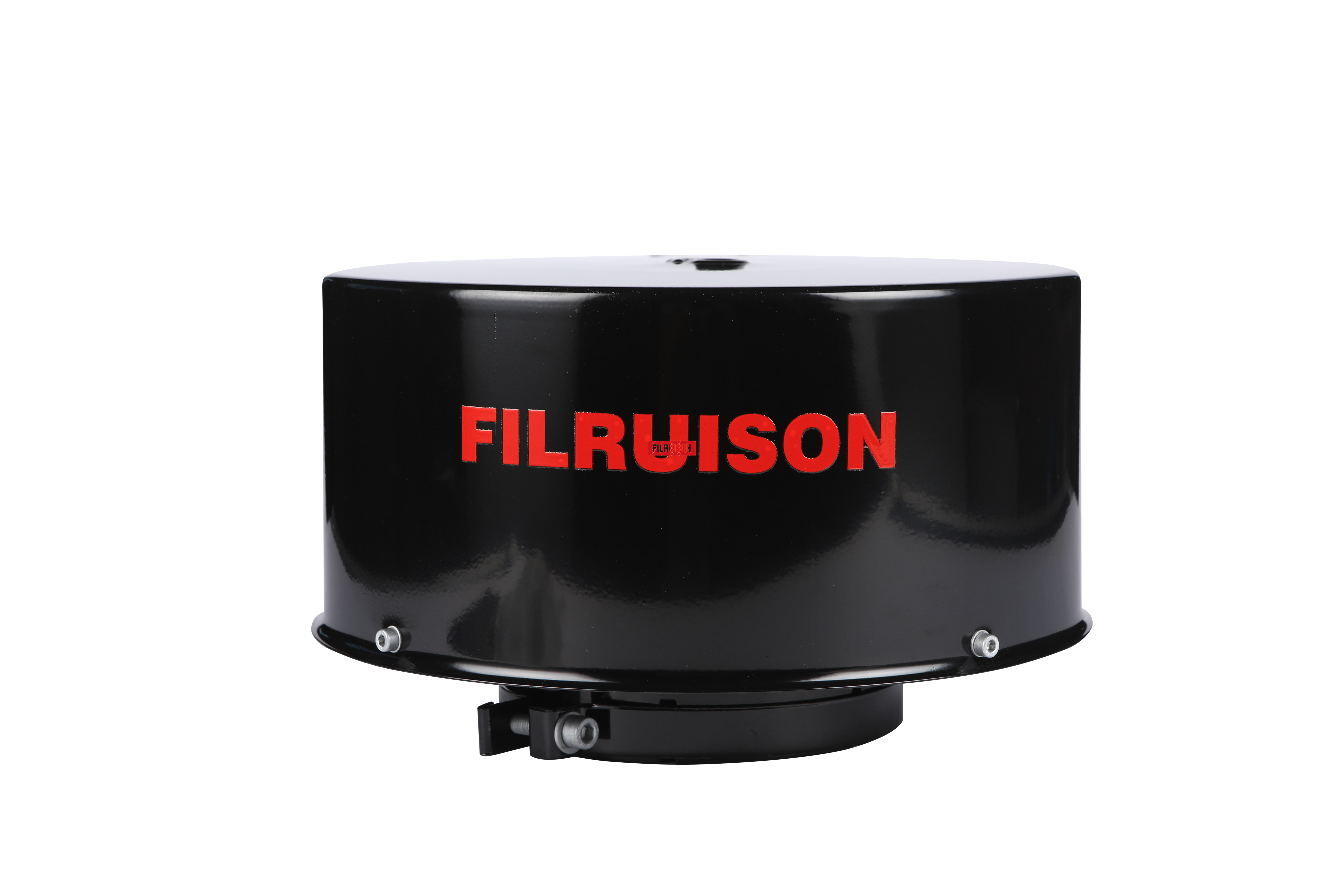
Static systems rely on intake suction to spin air, collecting dust in a clear bowl that requires manual dumping. While better than nothing, they fill rapidly in severe environments. Active ejector systems continuously expel dust via exhaust aspiration or motorized scavenge fans. The mechanical operation of an automatic dust ejector ensures that separated particulate is immediately removed from the housing, making it the baseline requirement for uninterrupted continuous operations. You connect a scavenge line from the pre-cleaner housing to the exhaust stack, utilizing the venturi effect to pull the separated dust out and blow it away.
Centrifugal ejection uses system-generated airflow to spin out heavy particles, effectively handling coarse dust. Active two-stage impulse or reverse-pulse systems use compressed air pulses to dislodge fine dust from filter elements. Centrifugal systems excel in heavy, coarse dust environments, while reverse-pulse systems are often deployed where ultra-fine or high-moisture dust rapidly cakes on standard media. Reverse-pulse systems require integration with the machine's onboard air compressor, adding complexity but offering superior performance in specific applications like underground tunneling.
Many manufacturers use the term maintenance free engine precleaner in their marketing materials. While self-cleaning systems eliminate the need for daily dust bowl emptying, they are not entirely free of inspection requirements. Operators must still conduct periodic visual inspections for housing integrity, verify bearing wear on motorized units, and check exhaust connection security to ensure the scavenging vacuum remains intact. A cracked scavenge hose will immediately disable the self-cleaning function, turning the unit back into a static collector.
Here is a comparison of pre-cleaner technologies based on field performance:
| Technology Type | Dust Ejection Method | Maintenance Requirement | Best Application Environment |
|---|---|---|---|
| Static Centrifugal | Manual bowl dumping | Daily visual check, frequent dumping | Light construction, on-highway trucks |
| Exhaust Aspirated | Venturi vacuum via exhaust | Periodic hose inspection | Mining, heavy earthmoving, agriculture |
| Motorized Scavenge | Electric fan extraction | Bearing and wiring checks | Stationary generators, low-exhaust heat units |
| Reverse-Pulse | Compressed air blasts | Air valve and compressor checks | Underground mining, ultra-fine dust |
There is an inverse relationship between aggressive particulate separation and intake restriction. Highly restrictive vanes may separate more dust but can starve the engine of air. Establishing benchmarks for acceptable initial restriction, measured in inches of water gauge, ensures the engine operates within manufacturer specifications. Buyers must request verified ISO 5011 testing data to confirm efficiency for specific micron sizes rather than relying on generalized claims. A unit that separates 99% of 20-micron dust might only separate 50% of 5-micron dust, which is the exact size that causes the most engine wear.
Standard static filters suffer a linear pressure drop as they load with dirt. In contrast, high-quality automatic dust ejector precleaners maintain consistent intake pressure and volumetric efficiency over thousands of operating hours. This consistency prevents the engine control module from constantly adjusting fuel trims to compensate for fluctuating air density. Consistent airflow keeps combustion temperatures stable and prevents the premature degradation of exhaust aftertreatment systems.
Housing materials must match the operating environment. UV-resistant polymers offer lightweight durability for some applications, while powder-coated steel or aluminum is necessary for high-vibration off-highway use. Evaluating the durability of moving parts, such as impellers and bearings, helps predict potential failure modes of active scavenging systems before they cause unexpected downtime. In sub-zero environments, certain plastics become brittle and shatter under impact, making metal housings the only viable option for winter logging or arctic mining operations.
When evaluating technical specifications, consider these critical factors:
A reliable self cleaning air pre-cleaner supplier must provide application-specific engineering. Sizing a unit based solely on pipe diameter rather than the engine's cubic feet per minute requirements leads to catastrophic underperformance. Look for suppliers who offer custom airflow calculations, integration schematics, and computational fluid dynamics modeling for specific engine models. If a supplier simply asks for your intake pipe size and ships a unit, they are not providing the engineering support required for heavy-duty continuous operations.
Evaluate the supplier's ability to provide direct-fit kits, custom hoods, or brackets for major heavy machinery brands. Seamless integration prevents installation bottlenecks and ensures the pre-cleaner mounts securely without modifying the original equipment manufacturer's structural components. Cutting and welding on a leased machine or a machine under factory warranty is often prohibited, making bolt-on retrofit kits an absolute necessity for fleet managers.
Assess the supplier's inventory management and lead times for critical components like scavenge hoses, exhaust aspirators, and control valves. Furthermore, evaluate warranty structures to determine if they cover continuous operational hours or if they are strictly limited by standard calendar years, which may not reflect actual machine usage. A machine running 24/7 will accumulate 8,760 hours in a single year, far exceeding the typical usage profile of standard construction equipment.
Upgrading older machinery presents physical integration risks. Hood clearance issues, vibration-induced mounting failures, and routing exhaust aspiration lines in tight engine compartments can complicate installation. To mitigate these risks, require 3D CAD models or physical fitment trials from the supplier before committing to a fleet-wide rollout. You must also ensure that the exhaust system generates enough velocity to create the necessary vacuum for the aspirator without causing excessive exhaust backpressure.
Common installation pitfalls include:
Upgrading to a self-cleaning air pre-cleaner protects heavy machinery in severe environments and keeps operations running continuously. To ensure a successful implementation, take the following steps:
A: The primary advantage is continuous operation. It actively expels dust and debris from the intake system using exhaust aspiration or a motorized fan, eliminating the need for operators to manually empty dust bowls during shifts.
A: While often called a maintenance-free engine precleaner, it still requires basic visual inspections. You do not need to empty it daily, but you must periodically check hoses, clamps, and housings for physical damage or leaks.
A: Sizing must be based on the engine's maximum airflow requirement, measured in cubic feet per minute. Sizing purely by the intake pipe diameter can lead to excessive restriction or poor dust separation.
A: When properly sized, they do not reduce engine power. By keeping the primary filter clean, they maintain consistent airflow and prevent the power loss associated with heavily restricted, dirty filters.
A: The best material depends on the application. UV-resistant polymers are excellent for agriculture, while heavy-duty mining equipment often requires powder-coated steel or aluminum to withstand extreme vibration and impact.
A: Exhaust aspiration uses a venturi pipe welded into the exhaust stack. As exhaust gases flow past the venturi, it creates a vacuum that pulls separated dust from the pre-cleaner housing through a hose and blows it out the exhaust.
