
Views: 0 Author: Site Editor Publish Time: 2026-10-20 Origin: Site


Heavy-duty engines operate in the most unforgiving environments on the planet. From dusty open-pit mining sites to sprawling agricultural fields during harvest, airborne debris constantly threatens engine integrity. A Centrifugal Air Pre Cleaner serves as the primary line of defense. It protects these critical powertrains from ingesting abrasive particles. This ultimately extends engine life and significantly reduces maintenance overhead.
However, these highly efficient filtration devices occasionally experience a problematic aerodynamic phenomenon known as a stall. When this occurs, the system stops filtering effectively. The main engine filter is suddenly put at immediate risk of premature clogging. This comprehensive guide breaks down the fluid dynamics behind these devices. We will explore exactly why stalling happens and provide actionable troubleshooting steps to keep your equipment running flawlessly.
Before diagnosing a failure, we must establish how the intake system functions under normal conditions. Positioned at the very beginning of the air intake sequence, this device acts as a preliminary filtration stage. Its primary job? Separate the heaviest, most abrasive particles from the raw air before they ever reach the delicate paper media of the main filter.
The physics behind this operation rely heavily on centrifugal force. Imagine a combine harvester working through a dry wheat field. As contaminated air gets pulled into the housing by the engine's intake vacuum, it encounters stationary angled vanes or a dynamic spinning rotor. These components force the incoming linear airflow into a rapid, circular vortex.
Particulate matter, like dirt, sand, and moisture, is significantly denser than air molecules. It cannot navigate the tight turning radius of the vortex. Consequently, centrifugal force continuously pushes this heavier debris outward against the interior walls of the chamber. Once separated, the contaminants are expelled back into the environment through a dedicated ejection louver or rubber valve. Only purified air continues downward into the engine.
In fluid dynamics, the concept of a stall is mostly associated with aviation. Just as an airplane wing loses lift when smooth airflow separates from its surface, a pre-cleaner loses its filtration capability when the air inside the chamber loses its organized, high-speed vortex shape. A stall represents a sudden and complete disruption of rotational airflow.
When this aerodynamic collapse occurs, the immediate physical result is a dramatic drop in Spin Velocity. The air stops rotating efficiently. In models equipped with moving parts, the internal rotor slows to a crawl. It might even seize entirely while the engine continues to run.
The consequences are immediate and detrimental. Without the necessary rotational speed, centrifugal force dissipates. Heavy dust is no longer pushed to the outer walls for ejection. Instead, the contaminated air flows straight through the housing. It bypasses the separation process entirely. This sends a concentrated, abrasive load of dirt directly into the primary air filter. Rapid degradation and potential engine wear inevitably follow.
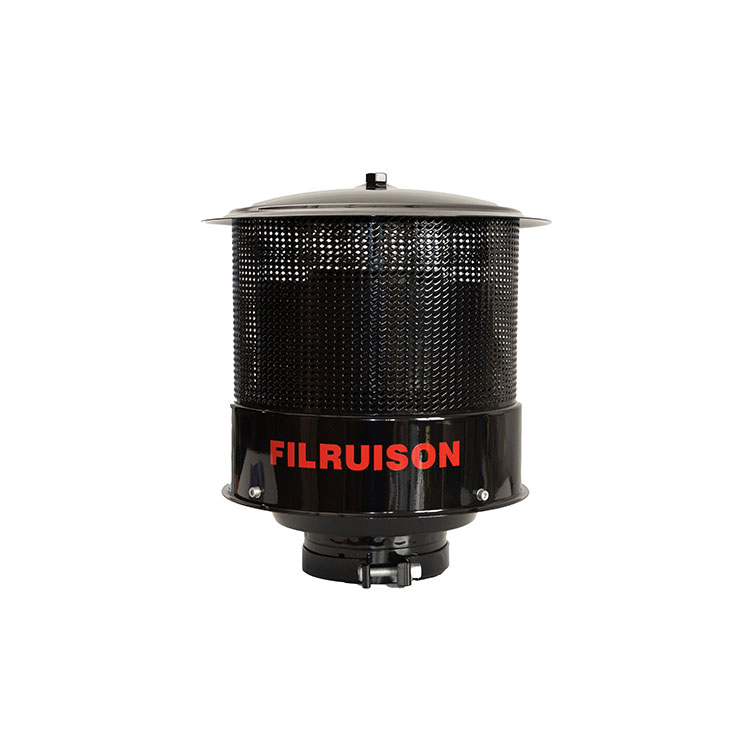
Understanding the root causes of a stall requires examining the relationship between airflow mechanics, physical hardware, and environmental conditions. Stalls rarely happen without a specific trigger. Field observations point to several primary reasons why these devices experience rotational failure.
Centrifugal separation is not a passive process. It demands kinetic energy. These units require a specific minimum Airflow Rate, measured in Cubic Feet per Minute, to function correctly. The engine’s intake vacuum provides the necessary energy to spin the air. If a machine is left idling for extended periods, the volume and velocity of the air being drawn into the intake may fall below the operational threshold. Without enough air velocity pushing against the internal components, the system simply lacks the kinetic energy to maintain rotation. This results in a classic aerodynamic stall.
Furthermore, one of the most frequent engineering errors in heavy equipment maintenance is installing an improperly sized unit. Pre-cleaners are not universally compatible. Installing a chamber that is too large for the engine's maximum airflow rating is a guaranteed catalyst for stalling. The air simply expands into the oversized housing, slows down, and fails to rotate. Conversely, a unit that is too small will severely restrict airflow, starving the engine of oxygen.
The continuous expulsion of debris is critical to maintaining internal aerodynamics. The ejection valve acts as the system's exhaust point for solid matter. During operation in damp environments, wet mud, decaying leaves, or oversized agricultural chaff can accumulate and clog this port. If the dirt cannot exit, it rapidly builds up along the interior walls. This accumulation alters the internal geometry of the chamber. It creates severe turbulence that eventually chokes the airflow until it stalls.
While these systems are designed with initial intake screens to block large objects, severe operating environments present unpredictable physical hazards. Sturdy twigs, large pebbles, or industrial plastic can occasionally bypass the screen. Once inside the main chamber, these hard objects can become wedged between the outer housing and the moving components. Unlike an aerodynamic stall caused by low airflow, this creates an immediate mechanical binding. It physically prevents movement regardless of engine demand.
Heavy machinery frequently operates in sub-zero temperatures or highly saturated environments. Freezing rain, heavy wet snow, or highly adhesive clay particles present unique challenges. When supercooled moisture or sticky clay enters the pre-cleaner, it coats the internal stationary vanes and housing walls. This coating drastically alters the carefully engineered aerodynamic profile. As ice or mud builds up, it changes the angle of attack on the blades, causing flow separation and resulting in a turbulent stall.
To fully diagnose a stalling issue, we must look at the fluid dynamics underlying the phenomenon. In engineering terms, a pre-cleaner stall shares characteristics with the rotating stall observed in axial compressors and centrifugal pumps.
Smooth centrifugal separation relies on attached airflow. This means the air molecules smoothly follow the contours of the internal vanes without breaking away. However, when highly turbulent air enters the intake, the airflow becomes unstable. This instability creates localized adverse pressure gradients within the chamber.
When the pressure gradient becomes too high, the boundary layer of the air physically separates from the surface of the blades. This creates dead zones, which are pockets of stagnant, recirculating air that consume kinetic energy but contribute nothing to rotation. As these dead zones propagate, they completely halt the centrifugal separation process.
Looking at recent developments in heavy machinery maintenance, there is a distinct industry-wide shift toward predictive diagnostics to combat airflow disruptions. Historically, fleet managers only realized a pre-cleaner had stalled after the primary filter collapsed under heavy dust loads. Today, the integration of IoT sensors and advanced telematics is changing the landscape. Modern equipment increasingly monitors intake vacuum restriction in real-time. By analyzing airflow data, operators can detect the subtle pressure drops indicative of an impending aerodynamic stall before it leads to catastrophic engine failure. This proactive approach underscores a broader industry consensus: maintaining uninterrupted centrifugal separation is no longer just a maintenance task, but a critical component of maximizing diesel engine uptime and lifecycle profitability.
Identifying a stall in the field before it causes engine damage is a critical skill for equipment operators and maintenance technicians. The following symptoms are clear indicators of a stalled unit:
Premature Filter Clogging: The most obvious sign is that the primary air filter requires replacement or cleaning significantly faster than the manufacturer's recommended interval. If the primary filter is choked with heavy dust, the pre-cleaner is failing to separate it.
Visual Stoppage: On units equipped with transparent bowls or visible top rotors, you may observe that the internal components are completely stationary while the engine is running at operating RPM. This indicates an immediate loss of pre-filtration.
Loss of Engine Power: As the primary filter gets choked with the dust that bypassed the stalled unit, the engine struggles to breathe. The operator will likely notice sluggish acceleration, reduced torque, and decreased fuel efficiency.
No Debris Ejection: The ejection valve should consistently expel dirt during operations in highly contaminated environments. If the valve remains completely clean or inactive, it confirms that centrifugal separation is not occurring inside the housing.
If diagnostic symptoms point to a stalled system, immediate intervention is required. Following a systematic troubleshooting process ensures the root cause is addressed without causing further damage to the intake system.
Step 1: Inspect and Clean the Housing. Always begin by turning off the engine and ensuring the equipment is safely locked out. Open or remove the housing according to the manufacturer's specifications. Visually inspect the interior for physical blockages. Remove any twigs, rocks, or hardened mud that may be obstructing the Pre Cleaner Rotor or the stationary vanes.
Step 2: Clear the Ejection Port. Locate the ejection valve. If the unit utilizes a rubber duckbill valve, squeeze it manually to ensure it is flexible. It should not be stuck closed by dry rot, and must be free of internal mud plugs. Use a soft brush to clear the pathways.
Step 3: Check Intake Piping for Leaks. A stall is not always the fault of engine RPM. It can easily be caused by vacuum leaks. Inspect the rubber boots, clamps, and piping between the pre-cleaner and the engine intake manifold. A cracked pipe will draw air from the path of least resistance. This bypasses the unit and reduces the air velocity inside the chamber.
Step 4: Verify Free Movement. For models with moving parts, manually spin the rotor with your fingers. It should spin freely with minimal resistance. If it feels gritty, binds up, or refuses to turn, the internal bearings have likely seized due to dust intrusion or water damage. This requires an immediate replacement of the assembly.
Preventative maintenance is significantly more cost-effective than reactive troubleshooting. Implementing a strict maintenance protocol ensures the equipment maintains optimal aerodynamics and operates flawlessly in harsh environments.
First, establish a visual inspection schedule based on the operating environment. In standard construction, a weekly check may suffice. In contrast, high-dust environments like open-pit mining or dry agriculture demand daily visual inspections of the internal components and ejection ports.
Second, periodically wash the components. Remove the unit and wash it with warm, soapy water to remove sticky clay and oil residue. It is critical to avoid using high-pressure washers directly on the unit. High-pressure water can force its way past bearing seals. This displaces the grease and causes premature bearing failure.
Additionally, regularly check the condition of the Dust Ejection ports. Rubber valves are highly susceptible to dry rot, tearing, or stiffening over time. Replace these inexpensive rubber components annually to ensure they open and close correctly under pressure.
Finally, operators should be trained to monitor engine RPMs. Avoid prolonged engine idling in heavily contaminated air. If the equipment must idle in a dust cloud, operators should periodically rev the engine to spike the airflow. This forces the system to spin up and eject accumulated debris.
The most effective way to eliminate stalling issues permanently is to ensure the correct equipment is purchased and installed from the beginning. Avoiding stalls starts fundamentally with proper sizing. Procurement managers and mechanics must match the pre-cleaner's documented airflow operating range strictly to the engine's maximum air intake requirements. Guessing based on pipe diameter alone will inevitably lead to performance issues.
To make the selection process actionable, we must move beyond abstract concepts. When evaluating a new installation, compare the technical specifications directly against your engine's demands. Premium units are engineered with advanced vane geometries that maintain high rotational speeds even when engine airflow rates fluctuate during variable workloads.
For example, upgrading to advanced systems like the SYKING TECH KC Series or PC32 series provides a distinct operational advantage. Their specific internal geometry ensures consistent centrifugal force and reliable debris ejection.
| Feature / Specification | KC Series Air Pre-Cleaner | PC32 Pre-Cleaner |
|---|---|---|
| Best Application Environment | Extreme dust, mining, and heavy construction equipment. | Agricultural machinery, medium-duty trucks, and generators. |
| Stall Resistance Technology | High-speed dynamic rotor design for continuous centrifugal force. | Optimized static vane geometry to maintain vortex at lower RPMs. |
| Maintenance Requirement | Self-cleaning ejection system, minimal manual intervention. | Periodic visual inspection of the transparent debris bowl. |
| Airflow Adaptability | Highly stable across rapid engine RPM fluctuations. | Excellent steady-state flow for consistent load operations. |
By preventing rotor stalling under demanding conditions, this type of advanced filtration technology safeguards heavy machinery investments. It drastically reduces overall downtime and lowers the total cost of ownership.
In summary, a stalled centrifugal air pre cleaner completely fails to protect your engine. This aerodynamic collapse typically happens due to insufficient airflow, severe physical blockages, or incorrect sizing that prevents the system from maintaining rotational speed. When the vortex stops, abrasive dust bypasses the pre-cleaning stage and heads straight for your primary filter.
Regular, proactive maintenance and daily inspections are your best defense against these costly filtration failures. Always ensure you match the unit size perfectly to your engine's airflow requirements. Keep a close eye on the ejection ports for trapped dirt.
By understanding the fluid dynamics of your intake system and upgrading to a premium, anti-stall model, you can effectively safeguard your engine. If you are experiencing frequent stalls or premature filter wear, it is time to evaluate your current setup. Visit SYKING TECH to explore our advanced range of pre-cleaners. Find the perfect match for your heavy-duty equipment and eliminate intake failures for good.
If properly sized, no. These devices are engineered to process specific volumes of air with minimal restriction. However, if the unit stalls due to a massive blockage, or if it is sized too small for the engine's requirements, it can create a severe intake restriction. Matching the correct airflow capacity is crucial for optimal performance.
Rotational speed varies significantly by model design and current engine RPM. However, it typically spins at several thousand RPMs during normal operation. This high-speed rotation is absolutely necessary to generate enough centrifugal force for effective particle separation and continuous debris ejection.
No, they are entirely self-powered and require no electrical wiring. They rely solely on the engine's natural intake air vacuum to draw air in. This vacuum drives the internal rotor or forces the air through stationary guide vanes to create the necessary centrifugal spin.
This usually indicates that the ejection valve is physically clogged with mud or debris, preventing the dirt from escaping. Alternatively, the unit may have aerodynamically stalled because the airflow rate is too low. This means there isn't enough kinetic energy to push the separated debris out of the ejection port.
To determine the correct Cubic Feet per Minute requirement, you need your engine's displacement, maximum RPM, and volumetric efficiency. For a four-stroke engine, the formula is generally: Engine Displacement in Cubic Inches multiplied by Maximum RPM, divided by 3456. Multiply this result by the volumetric efficiency, typically 0.85 for naturally aspirated engines or up to 1.5 for turbocharged models. Always consult the engine manufacturer's exact specifications to ensure you select a pre-cleaner that will not stall.
Yes, indirectly, a stalled unit poses a significant threat to a turbocharger. When the pre-cleaner stalls, heavy particulate matter bypasses the initial separation phase and rapidly clogs the primary paper filter. This creates an extreme vacuum restriction. The turbocharger must work exponentially harder to pull air through the choked filter, which can lead to overheating, seal failure, or even catastrophic compressor wheel damage due to surging.
