
Views: 0 Author: Site Editor Publish Time: 2026-09-21 Origin: Site


Quick Answer A 20x20x1 MERV 11 air filter captures up to 85% of fine particles—including pet dander, smog, and dust mites—making it highly effective for improving indoor air quality. However, its dense pleated media increases static pressure, which can restrict airflow in older or improperly sized HVAC systems. For standard commercial and residential environments, a MERV 11 filter provides an optimal balance if the blower motor is rated for the pressure drop. This guide evaluates MERV 11 airflow dynamics to help you determine the right filtration strategy for your system.
Key Takeaways
The Minimum Efficiency Reporting Value (MERV), established by the American Society of Heating, Refrigerating and Air-Conditioning Engineers (ASHRAE), provides a standardized measurement of a filter's ability to capture particulates across specific size ranges. During ASHRAE testing, filters are evaluated on their capture efficiency in distinct brackets, including the 1.0 to 3.0-micron range and the 3.0 to 10.0-micron range. A MERV 11 rating indicates that the filter is highly capable of trapping fine particles that lower-rated filters simply let pass. Specifically, it captures a high percentage of particles between 1.0 and 3.0 microns, which includes pet dander, fine dust, auto emissions, and dust mites, making it a significant upgrade for indoor air quality.
The physical dimensions of a 20x20x1 filter present a specific engineering challenge for achieving this level of filtration. The "1" indicates a nominal one-inch depth, which severely limits the amount of physical space available for the filter media compared to thicker four- or five-inch commercial filters. To achieve a MERV 11 rating within a one-inch depth without completely blocking airflow, manufacturers must use a pleated design.
Pleating folds the synthetic filter media back and forth into a V-shape, significantly increasing the total surface area exposed to the air stream. This expanded surface area allows the filter to capture a high volume of microscopic particles while providing enough pathways for air to pass through. By increasing the surface area, pleating also reduces the velocity of the air as it passes through the media, which enhances the filter's ability to trap particles and reduces overall aerodynamic drag. Without these pleats, a flat piece of MERV 11 media in a 20x20 frame would act almost like a solid wall, immediately choking the HVAC system. The pleated geometry is the fundamental mechanism that allows a 20x20x1 MERV 11 air filter to balance strict particulate capture with necessary air volume delivery.
While pleating mitigates airflow restriction, the dense synthetic fibers required to achieve a MERV 11 rating inherently create a physical barrier. When the HVAC blower motor pushes or pulls air through this barrier, it encounters resistance. This resistance causes a pressure differential across the filter known as static pressure drop, conceptually measured in the HVAC industry in inches of water column.
Every HVAC system is designed to operate within a specific total external static pressure range. The air filter is just one component contributing to this total resistance, alongside ductwork, evaporator coils, and dampers. If the resistance from a 20x20x1 MERV 11 air filter pushes the total static pressure beyond the blower motor's maximum rated capacity, the system cannot circulate enough air to function correctly.
The impact of this restriction depends heavily on the type of blower motor installed in the system. Older systems typically utilize fixed-speed motors. When these motors encounter the high resistance of a MERV 11 filter, they simply move less air, leading to poor temperature control and potential coil freezing. Conversely, modern systems often feature variable-speed motors designed to maintain a constant airflow. When a variable-speed motor encounters a restrictive filter, it will automatically ramp up its RPM to overcome the resistance. While this maintains air volume, it significantly increases energy consumption and accelerates motor wear.
Important limitation: Upgrading to a MERV 11 filter without verifying system compatibility can cause severe operational issues. Evaluators must monitor the system for the following warning signs of airflow restriction:
Because system compatibility varies based on blower capacity, motor type, and ductwork design, selecting the right filter requires comparing MERV 11 against other common filtration tiers. Understanding the operational trade-offs of each tier is essential for technical evaluators aiming to optimize both air quality and system longevity.
MERV 8 serves as the standard baseline for most commercial and residential systems. It prioritizes maximum airflow and energy efficiency while capturing larger particles like pollen, lint, and heavy dust. For systems with older motors or marginal ductwork design, MERV 8 is often the safest choice to prevent static pressure issues.
MERV 11 acts as the middle ground. It offers enhanced capture of fine particulates, making it ideal for environments where air quality is a priority—such as offices near busy roads or facilities requiring enhanced dust control—without introducing the extreme density of higher tiers. However, it requires a blower motor capable of handling moderate static pressure increases.
MERV 13 represents the maximum standard filtration for non-hospital environments. It captures microscopic particles like bacteria and virus carriers. While highly effective for air purification, a one-inch MERV 13 filter introduces the highest risk of airflow restriction. Implementing MERV 13 often requires advanced systems specifically calibrated for high static pressure drops or retrofitting the filter housing to accept thicker media.
| Filter Tier | Primary Target Particles | Airflow Resistance Level | Optimal Application |
|---|---|---|---|
| MERV 8 | Pollen, dust mites, lint, mold spores | Low | Standard systems prioritizing airflow and basic dust control. |
| MERV 11 | Pet dander, smog, fine dust, auto emissions | Moderate | Environments requiring improved air quality with compatible blower motors. |
| MERV 13 | Bacteria, virus carriers, microscopic allergens | High | Advanced systems specifically calibrated for high static pressure drops. |
For standard environments, a 20x20x1 MERV 11 air filter often provides the most practical balance. It significantly improves indoor air quality over a MERV 8 filter by capturing the fine particulates that cause respiratory irritation, yet it is less likely to cause the severe system short-cycling associated with MERV 13 filters. However, this balance is only maintained if the filter is replaced before particulate loading exacerbates the static pressure drop.
The relationship between a filter's lifespan and its airflow resistance is not linear. As a 20x20x1 MERV 11 air filter captures particles, those particles become lodged in the synthetic fibers, effectively shrinking the available pathways for air to pass through. This process, known as dust loading, creates a layer of particulate matter on the surface of the media. Initially, this loading temporarily increases the filter's efficiency by creating an even tighter web for trapping smaller particles. However, it simultaneously causes the static pressure drop to skyrocket.
To prevent severe airflow restriction, a 20x20x1 MERV 11 filter typically requires replacement every 1 to 3 months. The exact frequency depends entirely on the environmental particulate load and system run time. Facilities with high foot traffic, nearby manufacturing dust, seasonal pollen spikes, or multiple pets will load a one-inch filter much faster than a controlled, low-traffic office environment.
Failing to adhere to a strict replacement schedule negates the delicate balance of a MERV 11 filter. Once the media is fully loaded, the airflow restriction mimics the effects of an incompatible, overly dense filter. This leads to frozen coils, overheated motors, and degraded indoor air quality. Furthermore, excessive static pressure can cause the filter media to buckle or tear, allowing unfiltered air to bypass the filter entirely and foul the sensitive internal components of the HVAC system.
Standard HVAC filtration relies entirely on the static push or pull of a blower motor against a fixed filter media. While a 20x20x1 MERV 11 air filter is sufficient for standard commercial and residential use, environments with extreme particulate loads—such as mining, construction, agriculture, and heavy manufacturing—exceed the physical limitations of static filtration. In these heavy-duty environments, dust loading happens in hours rather than months, making standard one-inch HVAC filters obsolete and necessitating active pressure management systems.
Shanghai SYKING Industry Technical co.,Ltd. has specialized in overcoming these extreme airflow and filtration challenges since producing its first precleaner in 1975. With over 45 years of experience, SYKING engineers solutions that do not rely on static pressure alone. Instead of forcing air through a single dense barrier that quickly clogs, heavy-duty industrial systems utilize multi-stage separation and active environmental monitoring to maintain continuous airflow.
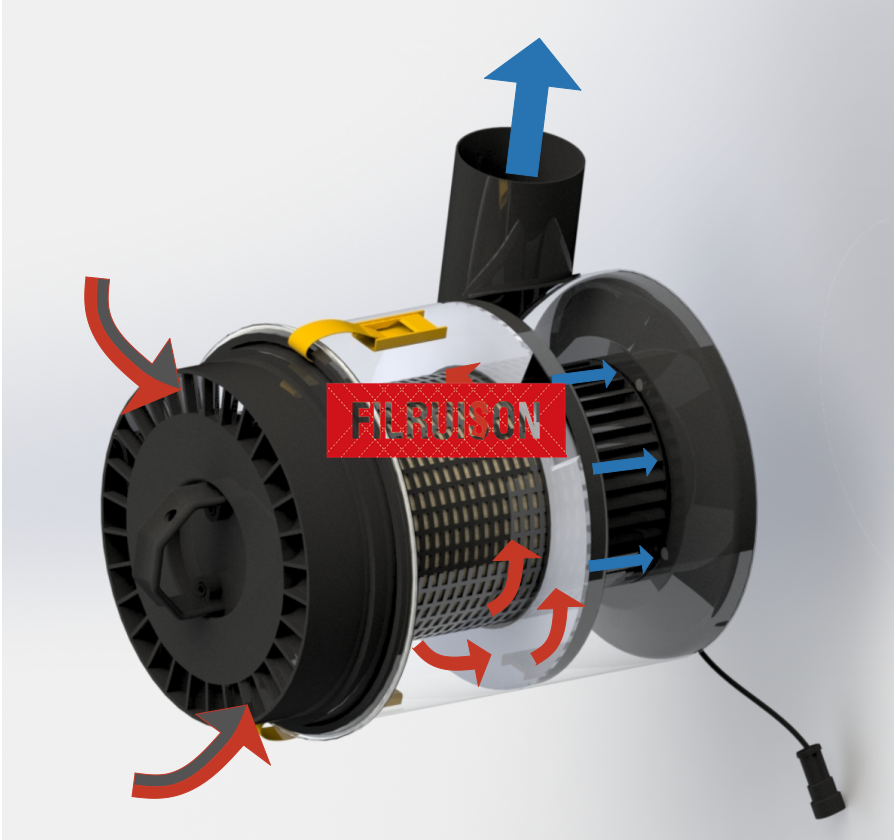
For example, the Intelligent Cabin Overpressure Air Filtration Unit operates on DC24-48V and fundamentally changes how particulate resistance is handled in heavy machinery and industrial cabins. It utilizes vortex centrifugal pre-dust separation to remove the bulk of heavy particulates before they ever reach the fine filtration media. By using centrifugal force to spin dust out of the air stream, this pre-separation stage prevents the rapid dust loading that chokes standard filters.
Furthermore, the unit features a CCU controller that offers three distinct operation modes. This intelligent controller automatically adjusts the fan speed based on the cabin pressure difference, actively compensating for any increase in airflow resistance as the fine filters gradually load. It also activates alarm protection if safe operating limits are reached, ensuring the system never suffocates.
For broader heavy-duty applications, advanced systems like the DCF Series Air Filter integrate into comprehensive air quality strategies that prioritize continuous operation in harsh conditions. By separating the initial dust load from the fine filtration stage and actively managing fan speeds, industrial filtration systems achieve a balance of air quality and airflow that static one-inch HVAC filters simply cannot replicate.
Yes, if the older system's blower motor is not rated for the increased static pressure drop. The denser media of a MERV 11 filter forces the motor to work harder to pull air through the system. Over time, this continuous strain can lead to motor overheating, increased wear on mechanical components, and eventual system failure. Always check the HVAC manufacturer's specifications for maximum allowable static pressure before upgrading from a lower-tier filter.
Yes. While pleating increases the surface area to help facilitate airflow through dense media, a pleated MERV 11 filter will still have higher airflow resistance than a standard, flat fiberglass filter. Fiberglass filters are highly porous and offer minimal resistance, but they only capture large particles like lint and heavy dust, offering very little air quality improvement compared to pleated synthetic media.
MERV 11 filters are sufficient for standard commercial and residential environments with moderate particulate loads, such as offices or homes with pets. However, they are entirely insufficient for heavy-duty industrial environments with extreme dust loads. Industrial settings require specialized equipment, such as heavy-duty precleaners and active overpressure units, to handle the volume of particulates without choking the airflow.
The most reliable method is to consult your HVAC system's manual to find the maximum allowable pressure drop for the blower motor. If the specifications are unavailable, a qualified HVAC technician can perform a static pressure test on your system to measure the exact resistance in inches of water column. This test will determine if a MERV 11 filter will keep the system within safe operating limits without causing undue strain.
Standard HVAC filters cannot withstand heavy-duty industrial environments. Evaluate your equipment's specific filtration and overpressure requirements by consulting SYKING's technical specifications and scenario assessment tools to ensure optimal performance in extreme conditions.
