
Views: 0 Author: Site Editor Publish Time: 2026-09-08 Origin: Site


Quick Answer: Airflow restriction occurs when filter media creates physical resistance, reducing the volume of air passing through a ventilation system. While standard hvac register filters are sufficient for static indoor environments, applying these basic passive filters to heavy machinery cabins causes severe airflow restriction and system failure due to extreme particulate loads. To protect operators and equipment, industrial cabins require specialized overpressure units that actively monitor and adjust to pressure differences, ensuring continuous clean airflow without the dangerous pressure drops associated with standard indoor air filters. This article helps technical evaluators determine the correct active filtration solutions for high-dust industrial environments.
Key Takeaways:
Air filtration relies on porous media to intercept and capture airborne particulates. As air is forced through this media, the physical structure of the filter fibers creates aerodynamic drag. This inherent resistance to airflow is known as airflow restriction, and it manifests as a measurable pressure drop across the filter, typically measured in Pascals (Pa) or inches of water gauge. The higher the efficiency of the filter—meaning its ability to capture microscopic particles—the denser the media must be, which inherently increases the baseline airflow restriction.
In any ventilation system, engineers must calculate the available static pressure, which is the amount of force the system's fan can generate to push or pull air through the ductwork and filters. If the airflow restriction exceeds the fan's static pressure capacity, the volume of air moving through the system decreases dramatically. This reduction in volumetric airflow compromises the system's ability to provide adequate ventilation, cooling, or pressurization. To mitigate this restriction, industrial filters often utilize deep pleating to increase the surface area of the media. However, even with increased surface area, the fundamental physics remain: pushing air through a dense barrier requires significant mechanical energy.
Furthermore, as a filter captures particulates over time, these particles embed in the media, reducing the available pathways for air to pass. This process, known as filter loading, causes the airflow restriction to increase continuously throughout the filter's operational life. As the system attempts to pull more air through a loaded filter, the resistance places severe strain on the blower motor, eventually leading to a complete loss of effective airflow if the media is not replaced or bypassed.
Important limitation: All physical filtration systems inherently restrict airflow to some degree.
Because airflow restriction is an unavoidable physical reality, filtration systems must be matched precisely to their specific environmental particulate loads. Standard indoor air filters are engineered exclusively for static building environments where dust concentrations are low and highly predictable. In a residential or commercial building, an HVAC vent filter is designed to capture common household dust, textile lint, and pet dander. These passive filters rely entirely on the limited static pressure generated by the building's central blower unit to pull air through the media. Standard indoor environments also benefit from pre-filtered outdoor air intakes and sealed building envelopes, which keep the overall particulate burden exceptionally low.
However, applying the concept of a standard register filter to a heavy machinery cabin—such as those operating in the mining, construction, or agricultural sectors—creates immediate and severe operational hazards. Industrial environments are highly dynamic and characterized by extreme concentrations of airborne particulates, including abrasive silica dust, soil, heavy debris, and diesel particulate matter. A wheel loader or excavator operates directly at the source of particulate generation, often engulfed in continuous dust clouds. If a passive indoor air filter is deployed in these harsh conditions, the media will experience rapid and overwhelming particulate accumulation.
This rapid loading drastically accelerates airflow restriction. As the filter media blinds over with heavy dust, the pressure drop spikes far beyond the capacity of a standard passive ventilation setup. Because passive systems lack the dedicated mechanical force required to overcome this sudden, extreme resistance, the volumetric airflow into the machinery cabin plummets.
The immediate consequence of this restriction is a dangerous loss of cabin pressurization. Without a sufficient volume of incoming filtered air, the internal cabin pressure drops below the external atmospheric pressure. When this occurs, hazardous external dust and toxic aerosols bypass the filtration system entirely, leaking through door seals, window gaskets, and micro-cracks directly into the operator's breathing zone. Therefore, the passive filtration model utilized by standard hvac register filters is fundamentally incompatible with the safety, structural, and operational demands of heavy machinery.
To resolve the critical failure of passive filters in high-dust environments, industrial machinery requires active mechanical systems designed specifically to overcome severe airflow restriction. Instead of relying on a weak central blower to pull air through a restrictive barrier, active cabin overpressure units utilize dedicated, high-power fans to forcefully push filtered air into the enclosure. This active mechanism ensures that the cabin maintains a continuous positive pressure relative to the outside environment, physically preventing external dust from infiltrating the operator's space.
Shanghai SYKING Industry Technical co.,Ltd. engineers specialized systems to manage these dynamic pressure differences in extreme environments. For example, the Intelligent Cabin Overpressure Air Filtration Unit operates on a robust DC24-48V power supply. This dedicated voltage range is critical, as it allows the unit to integrate seamlessly with the heavy machinery's existing heavy-duty alternators and battery banks, avoiding the need for fragile inverters. This provides consistent mechanical force to push air through high-efficiency filtration media, effectively overriding the natural airflow restriction that would otherwise choke a passive ventilation system and ensuring a steady supply of clean air.
Crucially, managing this active airflow requires precise, automated control to prevent over-pressurization. Excessive cabin pressure can cause severe operator discomfort, such as ear pain, and can place undue structural strain on the cabin's environmental seals, potentially blowing out weather stripping or making doors difficult to open. The SYKING CCU controller actively monitors the environment and automatically adjusts the unit's fan speed based on real-time cabin pressure differences. If the internal pressure rises too high due to fluctuations in external wind or sudden changes in filter resistance, the CCU controller intervenes immediately. It is specifically programmed to stop the fan completely when the pressure difference exceeds 200Pa. This intelligent automation ensures that the system delivers continuous clean air and maintains a safe positive pressure without ever exceeding the structural or ergonomic limits of the machinery cabin.
While active overpressure units effectively manage airflow restriction at the cabin level, comprehensive industrial filtration requires addressing the particulate load before it ever reaches the primary filter media. If an active unit is constantly bombarded with heavy debris, even the most robust fan will eventually struggle against the resulting pressure drop. This leads to increased energy consumption, frequent filter replacements, and unnecessary maintenance downtime. To mitigate this, industrial operators must implement multi-stage filtration strategies that include heavy-duty pre-cleaning to intercept the largest contaminants.
A PC series air pre-cleaner utilizes centrifugal force to separate large particulates, heavy dust, and moisture from the air intake before the air enters the primary filtration system. As air is drawn into the pre-cleaner, internal vanes spin the air rapidly, forcing heavier particles to the outside walls via inertia, where they are safely ejected through a discharge port. By removing the bulk of the contaminant load upfront, the pre-cleaner significantly reduces the rate of particulate accumulation on the finer filter media. This proactive separation minimizes the rapid onset of airflow restriction, extending the operational life of the primary filters and reducing the mechanical strain on the overpressure unit's fan. By preventing premature filter blinding, operators can significantly extend maintenance intervals, reducing both the direct cost of replacement filters and the indirect cost of taking the machinery out of service.
Developing an effective, multi-stage Solution requires deep expertise in industrial environments and airflow dynamics. SYKING has 45 years of experience in industrial filtration, having produced its first set of precleaners in 1975. This extensive historical focus on heavy-duty applications underscores why industrial machinery requires specialized, multi-stage active systems rather than the single-stage passive filters used in standard building ventilation.
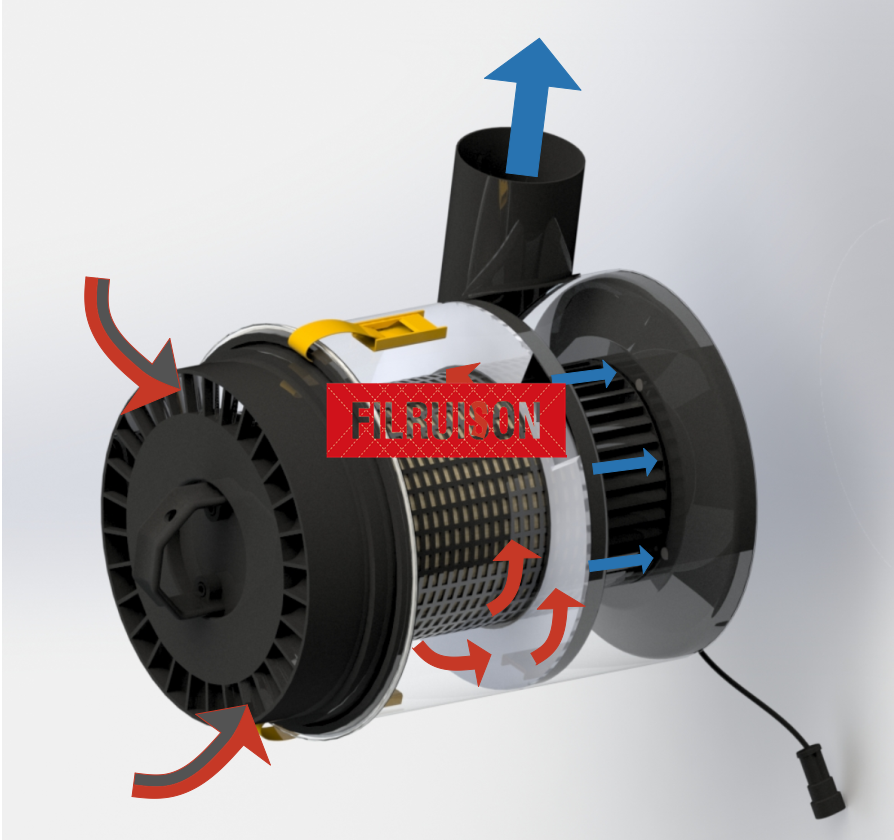
Excessive airflow restriction reduces the volume of clean air entering the cabin. In industrial settings, this loss of air volume prevents the system from maintaining positive pressure, allowing hazardous external dust and aerosols to leak into the operator's environment through unsealed gaps.
An HVAC vent filter is a passive barrier designed for static, low-dust indoor environments, relying entirely on a building's central fan. A cabin overpressure unit is an active, motorized system designed for dynamic, high-dust industrial environments. It utilizes dedicated power to force air through dense media, actively maintaining positive pressure inside a machinery cabin.
Positive pressure ensures that the air pressure inside the cabin is slightly higher than the atmospheric pressure outside. If there are any leaks in the cabin's seals, the higher internal pressure pushes air out, preventing external dust and contaminants from entering the operator's breathing zone.
Intelligent controllers monitor the pressure differential between the inside and outside of the cabin in real-time. For example, the SYKING CCU controller automatically adjusts the fan speed to maintain optimal pressure and is programmed to shut the fan off entirely if the pressure difference exceeds 200Pa, protecting both the operator and the cabin structure from over-pressurization.
***
To ensure your heavy machinery operators remain protected in high-dust environments, it is critical to evaluate your current filtration capabilities against the realities of airflow restriction. Download our technical selection guide for industrial cabin overpressure units, or review our comprehensive checklist for upgrading machinery filtration systems to maintain safe, positive cabin pressure.
