
Views: 0 Author: Site Editor Publish Time: 2026-09-18 Origin: Site


Quick Answer: When replacing air filters in industrial mobile equipment cabins, upgrading to an intelligent overpressure system provides superior operator protection compared to standard passive filters. These advanced units actively trap PM2.5, pollen, and virus aerosols while maintaining a stable positive pressure inside the cabin. By utilizing a CCU controller to automatically adjust fan speeds based on real-time pressure differences, intelligent systems prevent hazardous external air from entering the cabin. This guide evaluates the transition from standard filters to intelligent overpressure units to support procurement and technical upgrades.
Key Takeaways:
Industrial mobile equipment operates in highly contaminated environments where standard ventilation is entirely insufficient. Heavy machinery cabins—whether utilized in mining, construction, or rail transit—require robust air filtration systems capable of protecting operators from a continuous barrage of microscopic hazards. The baseline requirement for these heavy machinery cabin filters is the ability to actively trap fine particulate matter, specifically PM2.5. In industrial settings, PM2.5 often consists of silica dust, diesel exhaust particles, and metallic shavings, which pose severe respiratory risks upon prolonged exposure. Furthermore, the filtration system must be capable of capturing environmental allergens like pollen and biological hazards such as virus aerosols, ensuring a comprehensive protective envelope for the operator.
Beyond particulate capture, industrial mobile equipment cabins face strict electrical and operational constraints. Unlike stationary industrial HVAC systems that rely on high-voltage alternating current from a grid, mobile units must integrate seamlessly with the vehicle's onboard electrical architecture. Filtration systems designed for these environments typically require a DC24-48V power supply to function reliably. This specific voltage range ensures that the overpressure unit can operate continuously under conditions of heavy vibration and fluctuating engine loads, drawing power directly from the machinery's heavy-duty alternators and battery banks.
Meeting these baseline requirements ensures that the filtration unit can run without draining the equipment's primary power reserves or failing during critical, high-contamination operations. Procurement teams must prioritize these specific environmental and electrical parameters when evaluating any mobile equipment cabin air filter replacement strategy, as failing to meet these criteria will result in inadequate operator protection and frequent system failures.
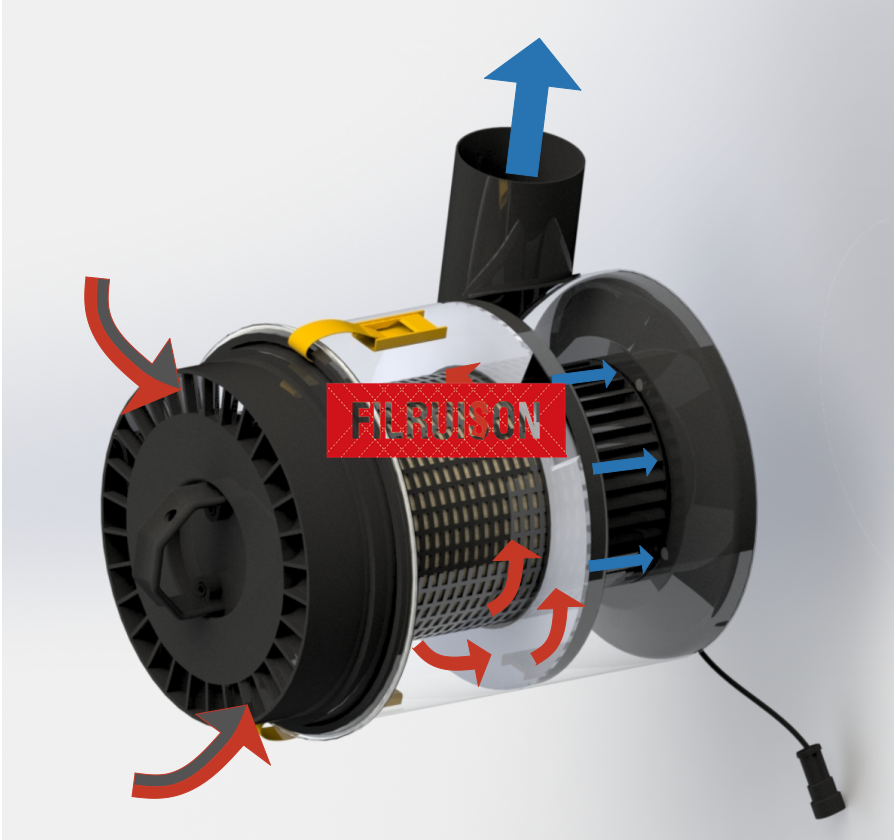
Transitioning from baseline environmental requirements to specific hardware solutions requires evaluating the operational differences between traditional and advanced systems. Standard passive cabin filters rely entirely on the vehicle's existing HVAC blower to push air through a pleated media. While they provide basic dust capture, they do not actively manage the atmospheric pressure inside the cabin. Because they operate passively, any degradation in the filter media or drop in blower efficiency immediately compromises air quality. More importantly, passive systems cannot prevent contaminated air from bypassing the filter and entering through compromised door seals, window gaskets, or structural micro-cracks.
Conversely, an industrial cabin overpressure system is an active, purpose-built unit. It continuously forces highly filtered air into the enclosed space to create and maintain a stable positive pressure. By keeping the internal cabin pressure slightly higher than the external atmospheric pressure, the system ensures that air only flows outward. This active pressurization guarantees that external contaminants cannot leak into the cabin, even if the physical seals of the machinery are imperfect.
| Feature | Standard Passive Cabin Filters | Intelligent Overpressure Units |
|---|---|---|
| Filtration Method | Passive air flow driven by existing HVAC blower | Active air intake and dedicated pressurization |
| Pressure Maintenance | Cannot guarantee positive cabin pressure | Actively maintains stable positive pressure |
| Particulate Blocking | Captures larger dust and debris | Traps PM2.5, pollen, and virus aerosols |
| Airflow Control | Fixed or manually adjusted by the operator | Automatically regulated based on pressure differences |
| Seal Dependency | Highly vulnerable to leaks in cabin seals | Overcomes minor seal leaks via outward airflow |
The active pressure regulation highlighted in intelligent overpressure units depends entirely on precise electronic management. This continuous management is executed by a Central Control Unit (CCU) controller, which serves as the operational brain of the intelligent cabin filtration system. The CCU controller continuously monitors the atmospheric variance between the cabin interior and the external environment. Based on these real-time pressure differences, the controller automatically adjusts the fan speed to ensure the positive pressure remains stable.
If a door is opened or a seal temporarily fails, the pressure inside the cabin drops. The CCU controller detects this pressure delta falling below the target setpoint and instantly ramps up the fan's speed to compensate, forcing more filtered air into the space to rebuild the protective barrier. Once the door is closed and pressure stabilizes, the controller reduces the fan speed to maintain equilibrium, thereby optimizing power consumption and reducing unnecessary wear on the blower motor.
While maintaining positive pressure is critical for blocking contaminants, excessive pressure can pose severe structural risks to the cabin seals and cause physical discomfort, such as eardrum strain, to the operator. The system must balance continuous protection with strict safety limits.
Important limitation:
Understanding the electronic control mechanisms allows procurement teams to accurately assess the physical consumable elements that complete the system. The long-term viability of any industrial filtration strategy depends heavily on the durability, efficiency, and lifecycle costs of the filter elements themselves. High-efficiency industrial air filters must be evaluated not just on their initial purchase price, but on their total cost of ownership, replacement frequency, and sustained particulate capture rates under heavy industrial loads.
Procurement managers and technical evaluators should utilize the following checklist when assessing replacement elements for their fleet:
When evaluating long-term operational costs, technical buyers often review high-efficiency options such as the DCF Series Air Filter. According to brand-stated specifications from Shanghai SYKING Industry Technical co.,Ltd., the DCF Series is engineered to save up to 90% in annual costs for replacing filter elements while maintaining up to 95% filtration efficiency. Procurement teams must weigh these manufacturer specifications against their specific fleet usage rates, environmental contamination levels, and operational hours to project actual operational savings for their organization. Reducing the frequency of element swaps directly impacts the bottom line by minimizing equipment downtime and lowering consumable expenditures.
Applying these evaluation criteria to a real-world procurement scenario requires partnering with a manufacturer that possesses a proven track record in heavy industry. Upgrading a fleet's filtration capabilities is a significant capital expenditure that demands reliable hardware and verified industrial application. SYKING has been producing precleaners since 1975, providing decades of engineering data and field testing that directly inform their current active filtration technologies. This historical expertise is crucial when selecting systems that must endure the harshest industrial conditions without failure, as understanding heavy particulate separation is the foundation of extending fine filter life.
This extensive legacy supports complex, large-scale deployments across various heavy industries. For example, SYKING successfully supplied filtration products for a key rail transit project with the CREC Group, demonstrating the system's viability in demanding, high-stakes operational environments. Rail transit track maintenance equipment operates in tunnels or dusty corridors where particulate concentration is extreme. Fleet managers operating heavy machinery in similar conditions must ensure their chosen system can withstand these rigors while operating seamlessly within the standard DC24-48V power parameters of their vehicles.
Implementing an Intelligent Cabin Overpressure Air Filtration Unit transforms a vulnerable mobile equipment cabin into a highly regulated, safe environment. By moving away from passive filters and embracing intelligent, CCU-controlled overpressure systems, industrial operators secure a definitive advantage in occupational safety and long-term maintenance efficiency.
Contact SYKING to request detailed technical specifications, confirm power supply compatibility, or schedule a scenario assessment for integrating intelligent overpressure filtration systems into your industrial mobile equipment fleet.
Intelligent overpressure units are designed to trap microscopic and hazardous airborne contaminants found in industrial environments. Specifically, these advanced systems effectively filter out PM2.5, environmental pollen, and virus aerosols, ensuring the air entering the industrial cabin meets strict safety and occupational health standards.
Positive pressure works by forcing filtered air into the cabin at a higher pressure than the outside atmosphere. This pressure differential ensures that if there are any microscopic gaps in door seals, window gaskets, or structural joints, the air flows outward. This continuous outward flow prevents unfiltered external contaminants from leaking into the operator's breathing zone.
To prevent structural strain on the cabin and physical discomfort for the operator, intelligent systems utilize a CCU controller to monitor internal pressure continuously. If the pressure difference between the cabin interior and the external environment exceeds the strict safety threshold of 200Pa, the controller automatically stops the fan to prevent dangerous over-pressurization.
Industrial mobile equipment operates on distinct electrical architectures compared to stationary facilities or consumer vehicles. Intelligent cabin overpressure filtration units typically require a DC24-48V power supply to integrate safely and reliably with the heavy-duty alternators and battery banks found in heavy machinery and rail transit vehicles.
