
Views: 0 Author: Site Editor Publish Time: 2026-10-26 Origin: Site


Imagine standing in the hardware store aisle or scrolling through endless online spec sheets. The sheer volume of available brands, ratings, and materials can easily overwhelm anyone. Selecting the appropriate filtration media often feels like a daunting task. Choosing the incorrect product doesn't just spike your monthly energy bills. It can inflict permanent, costly damage on your internal HVAC components and leave your indoor environment vulnerable to pollutants.
A comprehensive air filter comparison goes far beyond merely glancing at the initial price tag. It requires a deep dive into critical technical metrics. You must evaluate particulate capture rates, aerodynamic resistance, dirt-holding capabilities, and long-term operating expenses. This guide breaks down exactly what criteria you must evaluate. By following these steps, you ensure a highly cost-effective and system-safe purchasing decision that aligns perfectly with your specific environmental requirements.
Recent shifts in global health awareness and green building initiatives have fundamentally transformed the filtration landscape. Industry data indicates a massive migration away from basic fiberglass throwaways toward high-efficiency synthetic media. Facility managers and homeowners alike are now prioritizing enhanced indoor air quality, pushing standard MERV 8 minimums up to MERV 13 or higher. Furthermore, sustainability mandates are driving the demand for extended-life products. Modern systems demand media that not only captures sub-micron pathogens but also maintains low aerodynamic drag to meet strict energy conservation codes. This dual focus on atmospheric purity and carbon footprint reduction makes understanding technical specifications more critical than ever.
A thorough evaluation must weigh both performance metrics and the long-term financial impact, avoiding the common trap of buying based solely on upfront costs.
Filter efficiency dictates how effectively the media removes airborne contaminants, directly impacting occupant health and safety.
Aerodynamic resistance is a critical metric that affects HVAC airflow rates. Ignoring it leads to massive energy consumption and mechanical strain.
High holding capacity ensures an extended operational lifespan and fewer maintenance interruptions, which is vital for commercial facility management.
Calculating the hourly operational cost provides a much more accurate financial picture by factoring in energy usage, labor, and replacement frequency.
The primary function of filtration is not just to clean the air you breathe. It acts as a physical shield for the sensitive internal components of your climate control equipment. Dust and debris accumulation on heat exchangers or cooling coils drastically reduces thermal efficiency. This often leads to overheating or freezing. A proper evaluation prevents the selection of an overly restrictive medium that could overwork the blower motor. When a motor is forced to pull air through an excessively dense barrier, amp draw spikes. The resulting mechanical strain frequently culminates in premature failure and emergency repair bills.
Different environments demand vastly different levels of atmospheric purity. A standard residential home might only require basic lint and dust removal. In contrast, households with pets or severe allergy sufferers need higher capture rates for microscopic dander and pollen. Regulatory bodies and green building standards now strongly emphasize sustainable filtration that meets strict benchmarks. Consequently, matching the exact filtration tier to your specific environmental contaminants is essential for maintaining a safe, healthy space in both modern homes and commercial facilities.
Facility managers and homeowners alike often treat filtration media as cheap, disposable commodities. This mindset inevitably leads to selecting the lowest-priced option. Field data proves that prioritizing aerodynamic performance over sticker price saves substantial capital. A product with optimal airflow characteristics reduces the electrical load on the fan, directly lowering monthly utility bills. By extending the maintenance intervals, operational savings quickly offset the initial purchase price of a premium-grade product.
The Minimum Efficiency Reporting Value scale, developed by ASHRAE, serves as the industry standard for rating effectiveness. Ranging from 1 to 16 for standard commercial and residential applications, this rating indicates the ability to capture particles of specific sizes, spanning from 0.3 to 10 microns.
MERV Rating | Typical Particle Capture | Common Applications |
|---|---|---|
MERV 1-4 | Dust mites, pollen, sanding dust | Minimum protection, window AC units |
MERV 5-8 | Mold spores, pet dander, hair spray | Standard residential homes, basic commercial |
MERV 9-12 | Lead dust, auto emissions, legionella | Superior residential, hospital laboratories |
MERV 13-16 | Bacteria, tobacco smoke, sneeze droplets | General surgery, cleanrooms, severe allergies |
Understanding this scale is absolutely crucial. It dictates exactly which contaminants will be successfully extracted from your breathing zone.
For environments necessitating absolute purity, standard MERV-rated options are frequently insufficient. High-Efficiency Particulate Air media is rigorously engineered to capture at least 99.97% of airborne particles as small as 0.3 microns. These are indispensable in pharmaceutical manufacturing, infectious disease isolation wards, and sterile cleanrooms. Specifically, when evaluating specialized setups, you must consider activated carbon integrations. These neutralize harsh odors, toxic gases, and volatile organic compounds rather than solid particulate matter.
A common misconception in the industry is that a higher filter efficiency is universally better. This phenomenon is known as the efficiency trap. High-efficiency media utilizes a denser fiber matrix to trap microscopic pollutants. If an HVAC fan is not rated to overcome the increased resistance of a MERV 13 or HEPA upgrade, the entire system will choke. This severe restriction leads to poor temperature regulation and cracked heat exchangers. Capture rates must always be carefully balanced against the maximum allowable static pressure of the equipment.
In technical terms, pressure drop is the decrease in static pressure that occurs as air is forced through dense fibers. Measured in inches of water gauge, it represents the aerodynamic friction the media creates against the air flowing through it. Every single unit creates some level of resistance. The primary goal during procurement is to find a solution that provides the necessary particulate capture while keeping this resistance as low as possible. This ensures the equipment can breathe freely without over-amping the motor.
When scrutinizing manufacturer specification sheets, buyers must clearly distinguish between initial and final resistance. The initial metric reflects the aerodynamic friction of a brand-new, completely clean unit. As the equipment operates and captures airborne debris, the microscopic air pathways become restricted. This causes the resistance to steadily climb. The final metric represents the maximum recommended resistance before a replacement is mandatory. Understanding both figures helps facility managers accurately predict performance throughout the entire lifecycle.
There is a direct, highly measurable correlation between aerodynamic resistance and energy consumption. According to fundamental fan affinity laws, as resistance increases, the blower motor must consume exponentially more electrical power to maintain the same volume of airflow. Operating at a high resistance acts much like a clogged artery. It forces the climate control system to run longer, harder cycles to heat or cool a space. By selecting a medium with a lower operating resistance, property owners significantly slash their electricity usage.
Often referred to as Dust Holding Capacity, dust capacity is a laboratory-measured metric indicating the total weight of synthetic dust a unit can retain before reaching its maximum allowable final resistance. Measured in grams, this is a direct indicator of operational lifespan. A higher capacity means the medium traps a substantially larger volume of contaminants before its airflow restriction becomes detrimental. This is an exceptionally vital metric for heavy industrial environments.
The physical geometry of the design plays a massive role in its overall holding capability. Flat-panel fiberglass options have a very limited surface area. They clog rapidly and demand frequent replacement. In contrast, pleated synthetic designs fold the media into rigid V-shapes. This clever pleating process packs significantly more square footage of active media into the exact same dimensional frame. The expanded surface area allows air to pass through at a lower velocity. It distributes the dirt load evenly and drastically increases capacity without prematurely spiking resistance.
For commercial facility managers, comparing holding capacities is absolutely essential for optimizing preventative maintenance schedules. Units with low capacities require constant monitoring and frequent change-outs. This drives up labor costs and causes frustrating operational downtime. By investing in high-capacity solutions, such as the robust DCF series, facilities successfully extend their maintenance intervals. This predictability allows for accurate budget forecasting and frees up maintenance staff to focus on critical infrastructure tasks.
Relying solely on the sticker price is arguably the most common and costly error made during procurement. A cheap flat-panel unit might initially seem like a bargain compared to a pleated alternative. If that cheap unit requires replacing every 30 days, causes the system to draw 15% more electrical power, and demands constant labor to swap out, its actual operational cost is exceptionally high. Upfront pricing completely ignores the mechanical realities of filtration.
To gain a crystal-clear financial picture, decision-makers should calculate the exact cost per hour of operation. The formula is straightforward. Add the initial unit price to the expected energy costs derived from the average aerodynamic resistance, plus the labor costs required for installation. This total sum is then divided by the expected lifespan in operating hours. Using this empirical calculation allows buyers to compare a short-lived commodity against a premium solution on an entirely equal playing field.
Total Cost of Ownership expands upon the hourly metric by factoring in the long-term impacts on the HVAC equipment itself. A unit that maintains a low resistance profile extends the life of the blower motor and drastically reduces the frequency of mechanical repairs. This metric should always serve as the ultimate financial tie-breaker in any purchasing decision. When buyers shift their perspective to the total financial impact over the next 12 months, they invariably choose higher-quality solutions.
Spun glass filters represent the most basic and antiquated option on the market. Their primary advantage is that they are extremely inexpensive and offer a very low initial resistance. They will not choke airflow. They typically rate between MERV 1 and 4, meaning their capture efficiency is incredibly poor. They only catch large debris like lint and heavy dust, offering zero protection against allergens or microscopic pathogens. Their abysmal holding capacity means they must be discarded and replaced monthly.
Pleated synthetic media is the standard recommendation for most modern residential and commercial applications. Manufactured from tightly woven polymer fibers, they offer an outstanding balance of performance metrics. Ranging from MERV 8 to MERV 13, they successfully capture a significant portion of harmful indoor pollutants. Because of their advanced pleated geometry, they offer high holding capacity and a highly manageable resistance profile. Their extended lifespan makes them highly cost-effective.
Washable options are frequently marketed as an eco-friendly, one-time purchase. Empirical field data often reveals significant drawbacks. They typically offer lower capture rates and can easily develop dangerous mold colonies if not dried completely after a wash cycle. Electrostatic variants utilize self-charging fibers to attract particles like a magnet. While effective initially, they quickly lose their electrostatic charge as they become coated in dirt, causing efficiency to plummet rapidly.
When evaluating options for a home, occupants must assess their specific living conditions. The square footage of the property, the local climate, and the presence of pets all heavily influence the final decision. A standard household without pets might thrive perfectly on a MERV 8 rating. Households with multiple shedding pets or asthma sufferers should look toward MERV 11 or 13 upgrades. The critical constraint remains ensuring the residential blower motor can comfortably handle the upgraded density without freezing the evaporator coil.
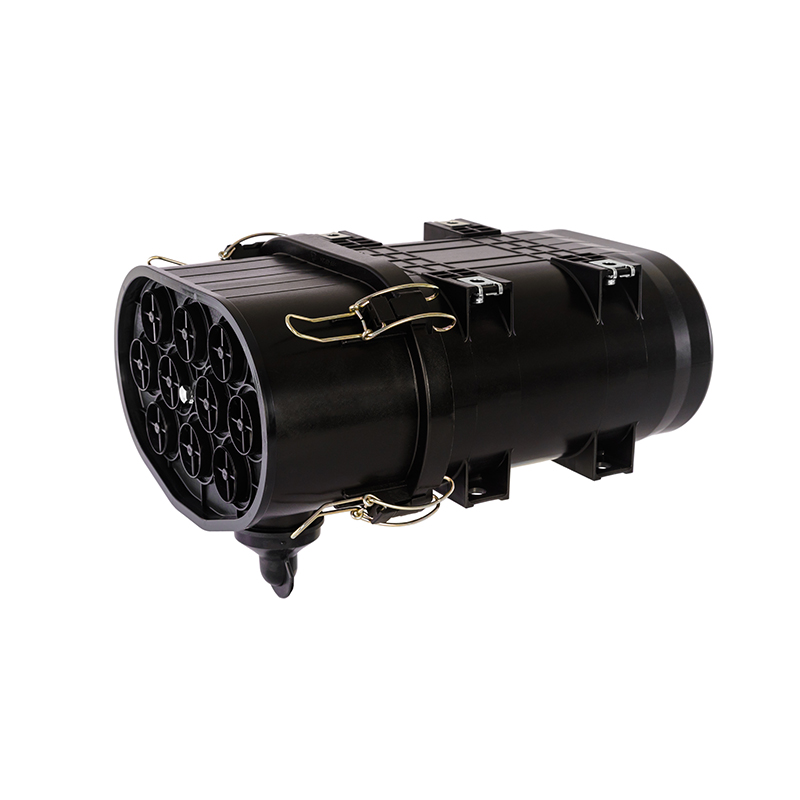
Heavy-duty environments like woodworking shops, metal fabrication plants, and chemical processing facilities face extreme particulate loads. These harsh conditions would completely destroy a standard residential unit in minutes. These applications require specialized dust collection systems engineered specifically for continuous, high-volume operation. When evaluating industrial-grade solutions, facility managers must prioritize robust structural construction and massive holding capacities. Integrating advanced components like the DCF15B series ensures that extreme particulate loads are handled efficiently without causing premature system failure or violating strict occupational safety regulations.
Before ever looking at product catalogs, consult your HVAC system technical manual. Identify the correct physical dimensions. Most importantly, locate the maximum allowable resistance limits and the highest recommended MERV rating for your specific blower motor.
Determine exactly what specific pollutants need to be mitigated. Are you trying to eliminate basic household dust, industrial chemical fumes, or microscopic seasonal allergens? Answering this dictates the minimum efficiency rating or the need for specialized materials like activated carbon.
Gather the specification sheets for your top choices. Look at them side-by-side to find the operational sweet spot. You want the product that offers the highest particulate capture rates with the lowest possible aerodynamic resistance.
Do not rely on the retail sticker price. Run the numbers using the operational cost formula. Factor in the holding capacity to estimate the true lifespan, calculate the anticipated energy draw, and determine which option provides the lowest Total Cost of Ownership over a full 12-month period.
A truly successful procurement strategy requires stepping back and looking at the big picture. You must carefully balance capture efficiency, aerodynamic resistance, dirt-holding capacity, and the true hourly cost of operation. The best product on the market is highly subjective. It depends entirely on your specific mechanical constraints and your unique indoor air quality goals. Take the time to check your equipment manual today, evaluate how your current media is performing, and use these engineering criteria to upgrade your filtration strategy safely and economically. If you are managing heavy-duty commercial or industrial environments, visit Sykingtech to explore advanced filtration solutions engineered for maximum durability and efficiency.
There is no single most important factor; it is a careful, calculated balance of multiple metrics. Ensuring the aerodynamic resistance is fully compatible with your specific HVAC system is absolutely critical to prevent severe mechanical damage. This is closely followed by selecting the appropriate capture efficiency to meet your environmental health goals.
Not necessarily. While a higher MERV rating clearly indicates superior particulate capture, it frequently corresponds with a much higher airflow resistance. This increased density can severely restrict airflow, potentially causing catastrophic damage to climate control systems that are not engineered to handle such heavy aerodynamic loads.
High resistance acts as a physical barrier in your ductwork. It forces the system blower motor to work significantly harder to push conditioned air into the room. This elevated workload drastically increases daily energy consumption, raises utility bills, and can eventually cause the system to overheat or freeze up due to inadequate air circulation.
To determine the true expense, add the initial purchase price of the unit to the estimated energy cost generated by its airflow resistance, plus the labor cost required for installation. Finally, divide this total sum by the product expected lifespan in operating hours to reveal its true financial impact.
This metric dictates the total volume of physical debris a unit can retain before it becomes overly restrictive and unsafe for the equipment. A higher capacity indicates that the product will operate efficiently for a much longer duration. This directly reduces the frequency of replacements and lowers ongoing maintenance labor expenses.
Replacement frequency in commercial settings depends heavily on the specific environment, particulate load, and the holding capacity of the chosen media. Standard commercial buildings may require quarterly replacements, while heavy industrial facilities might need monthly change-outs. Utilizing differential pressure gauges provides the most accurate indicator of when a replacement is actually necessary.
In most standard residential and light commercial systems, upgrading directly to a true HEPA filter is not possible without significant modifications. HEPA media creates immense aerodynamic drag that standard blower motors simply cannot overcome. Upgrading usually requires installing a dedicated bypass filtration system with its own supplemental fan.
